

How To Know If A Mango Has Spoiled
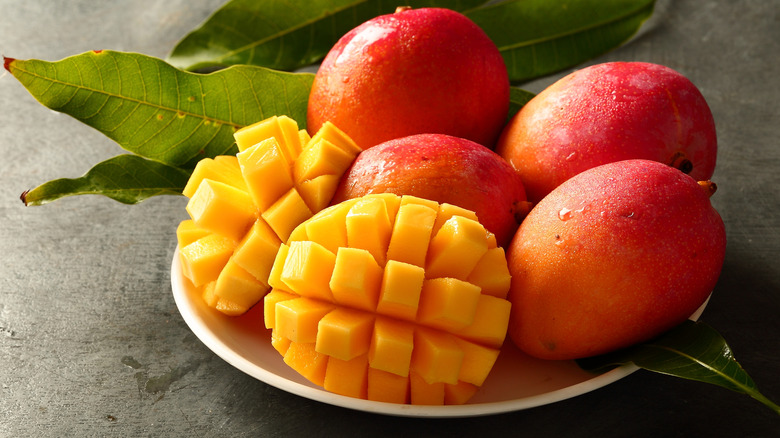
There are so many good reasons to keep fresh fruit around your kitchen, from the health benefits to the delicious taste. However, it does come with one unfortunate downside: fruit left to sit for too long can spoil and end up destined for the trash. While some fruit shows obvious, unmistakable signs it's past its prime (think of the blackening of banana peels), others can be more difficult to determine, either because the signs are more subtle or the fruit is less familiar. If you've got a mango you're unsure of, there are several ways to figure out if it's spoiled, simply by using a combination of your eyes, hands, and nose.
First, it's important to know that appearance alone isn't always a sure way to tell whether a mango is no longer good to eat. Mangos come in varieties with differences in size, shape, and color when ripe. This means what might appear overripe for one variety could be ideal or even underripe for another. However, there are some telltale visual signs, including wrinkled skin, dark or discolored spots on the skin, oozing, and, of course, visible mold.
When in doubt, give the mango a squeeze. Overripe or spoiled mangos will feel unpleasantly soft or mushy. Any rancid or sour odors are also a dead giveaway that the fruit should be tossed or composted.
Picking and storing mangos properly

Although all mangos left uneaten will eventually begin to spoil, it's possible to hold off this fate longer through proper storage. Mangos should be kept at room temperature until they reach ripeness, but once they do, they should be refrigerated to slow further ripening. At that point you have about five days. If that still isn't enough time, consider peeling and cubing the mango to freeze it for up to six months.
The most critical part of the process of avoiding spoiled mangos may actually come before it even reaches your kitchen. Mangos are what are known as climacteric fruits, the scientific term for fruits that continue to ripen once picked. Because of this, choosing the right mango at the store requires anticipating when it will be at the ideal stage of ripeness. Give the fruit a gentle squeeze; the firmer the flesh feels, the further it is from ripe. With this in mind, mangos that won't be needed for a few days should be purchased firmer, as they'll soften over time, while mangos purchased soft are at higher risk of spoiling days later. Those should be saved for buyers looking for a mango that's close to ripe already. One way to confirm that it's just about ready is to smell the stem: Already ripe candidates often produce a fruity aroma.
Dialing in the perfect level of ripeness can be a challenge for infrequent mango buyers. So, don't despair if you've got a mango that's a bit too soft, as it can become your go-to breakfast bread. Still, be on the lookout for the visual, textural, and scent-based signs that your mango has gone from simply overripe to truly spoiled. Once you know them, they're hard to miss.