

Strangely, Ice Cream Once Used Whale Poop As Flavoring
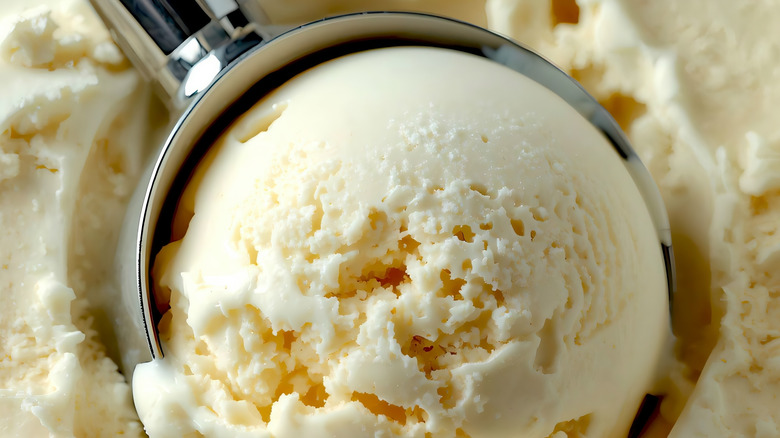
One of the earliest recorded recipes for ice cream called for an ingredient few people today would (or could) reach for as a flavoring agent: ambergris, a grayish-white substance that's a byproduct of sperm whale waste. If that sounds off-putting, Lady Anne Fanshawe, the Englishwoman who wrote the recipe in an unpublished cookbook, also suggested that home chefs could use orange flower water or mace (a spice similar to nutmeg) instead.
At the time, though, the inclusion of ambergris wasn't at all strange. By then, the substance had long been prized for the complex aromas it lent to food, drink, and perfume. It was one of the now-unusual foods people ate in the Victorian era, though scientists believe humans have been fetching it from the ocean for more than 1,000 years.
But are we actually talking about whale poop? Well, yes and no. Sperm whales eat hundreds of squid each day, and the indigestible beaks and pens sometimes accumulate in the whale's intestines to form a waxy mass over many years. After the whale expels this mass, the material hardens in the ocean and develops a distinctive aroma through prolonged exposure to light and sea water.
Ambergris lost its popularity as a flavoring agent in desserts
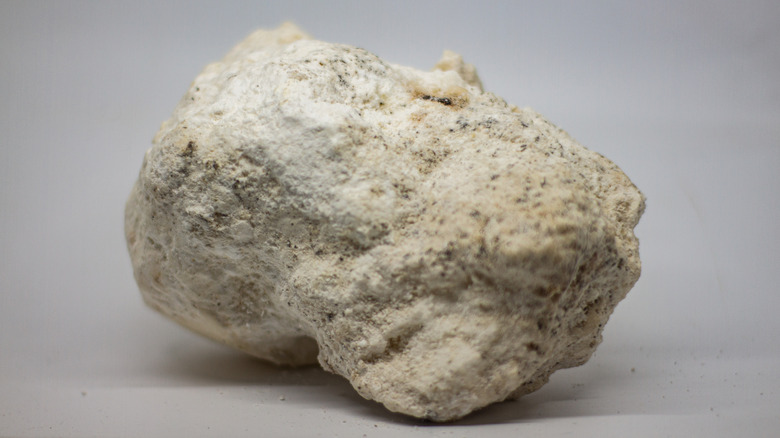
Well before Lady Anne Fanshawe's ambergris ice cream, the substance was an ingredient not in food but in perfumery. Often used as a base note, its scent was rich, earthy, and musk-like, with a mild oceanic smell and complementary notes of tobacco and sandalwood. Ambergris eventually became a luxury culinary ingredient because of its rarity, with chefs adding it to desserts like ice cream and decadent savory items like bread pudding. In Europe and beyond, ambergris was commonly added to alcoholic and non-alcoholic drinks over the following centuries, along with sweet treats blended with fruit.
A variety of factors led to ambergris' drop in popularity as a flavoring agent, such as declining sperm whale populations and restrictions on the use of materials derived from them. Vanilla's popularity, meanwhile, was on the upswing once an apothecary to Queen Elizabeth I used the bean as a standalone flavor in 1602 (though the Aztecs had already been cultivating vanilla for years).
In 2013, food historian Sarah Lohman concluded that vanilla is a lot better than ambergris in ice cream when she detailed her recreation of Fanshawe's frozen custard on her blog, Four Pounds Flour. On the other hand, Ivan Day, the historian behind Food History Jottings, combined ambergris with orange flower water and mace in 2012 and found that "Although it was frozen in a brick shape, it was not hard and grainy." He added, "In fact, it was delicious and very creamy."