

Why Meat Shrinks When You Cook It
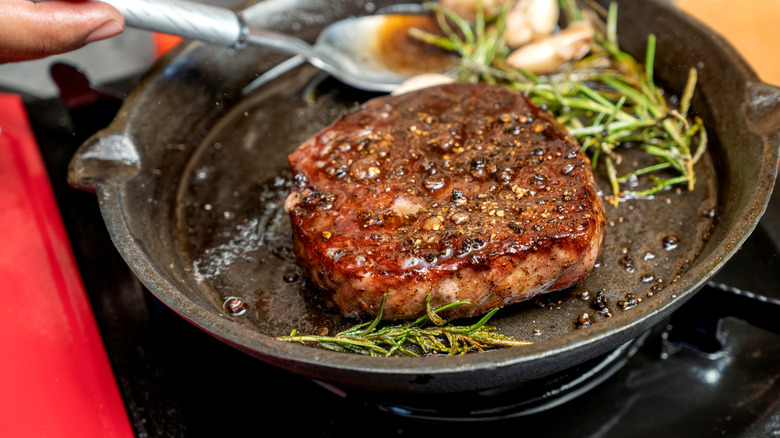
Ever wonder why a quarter-pound burger isn't still a quarter pound once you've cooked it? How about why that steak that looked so hearty and robust on the butcher counter seems so puny once it's pulled off the grill? None of this is unusual. Almost any meat will shrink when you cook it, though the exact amount will vary based on the type. It's because of the components found inside the meat, and how they each react differently to heat.
The explanation lies in the fact that meat isn't simply one substance, scientifically speaking. It comes from the muscle mass of an animal, which is composed of water, proteins, fats, and small quantities of other substances like carbohydrates. When heated, those components react differently, but generally the processes that happen result in the portion of food getting smaller. The water evaporates, the fat renders, and the proteins coagulate. And while those first two processes are visible, you can't watch the proteins change their structure as the meat cooks, making that one less obvious. Combined, these shrink the volume of meat that ends up on your plate.
So is this shrinkage good or bad? Really, it's neither, and it's simply a natural by-product of what happens when meat is heated to a high temperature. For that reason, shrinkage is important to consider when calculating portion sizes for meat dishes. And you can use these effects to your advantage, such as making tallow from fat in the meat.
Moisture, fats, and proteins all contribute to shrinkage
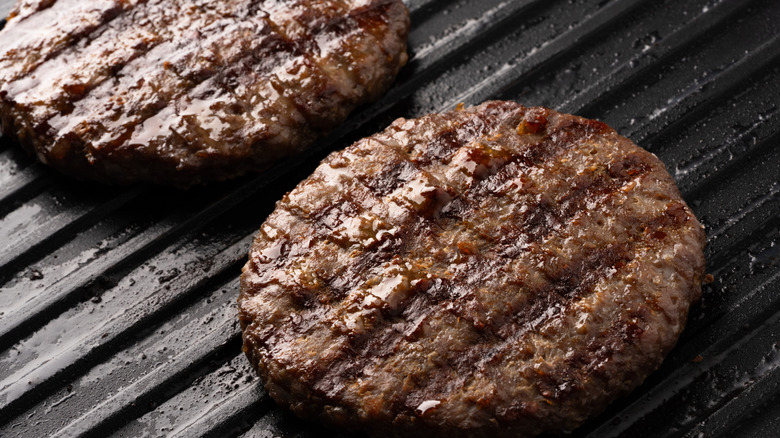
Water converts to steam at 212 degrees Fahrenheit, and that means it begins to evaporate. The USDA says that meat is about 75% water (varying based on type and cut). That water, when heated high enough, will begin to convert to steam and rise out of the meat, leaving behind a smaller piece in both size and weight. That's normal, though you can minimize its effects by being sure not to overcook it.
Something similar happens with the fat, although instead of converting from liquid to steam in the presence of heat, fat changes from solid to liquid. That process is called rendering, and the fat is likely to drip out, remaining on the grill or in the pan. This is especially true for items like burgers, which might be 20% fat in a restaurant-style patty. A burger's loss of volume comes in large part from fat leaving the patty.
There's another, less obvious process going on here. You won't be able to see the proteins in the meat changing structure, but it's happening. With light heat, the proteins denature, meaning their amino acids separate, then coagulate with higher heat by linking with each other in a new, harder structure. The result is tighter and more solid. That process keeps going at high heat and is irreversible — so that's why an overcooked steak becomes tough and chewy, and it's impossible to make it tender again.