

How Many Cups Of Flour Can You Get From A 5-Pound Bag?
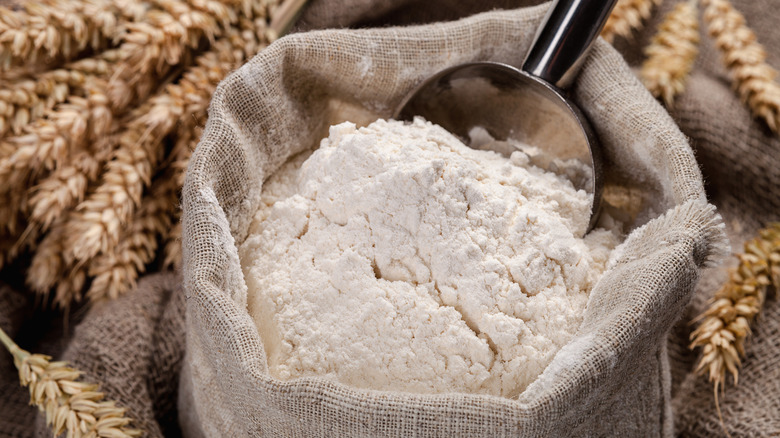
For those who enjoy making bread, pastries, and a whole host of other foods at home, flour is among the most fundamental kitchen ingredients. However, observant cooks and bakers have likely noticed one potentially annoying and confusing discrepancy. While recipes often measure flour with units of volume like cups and tablespoons, bags of the product are labeled by weight. This can leave some folks wondering precisely how many cups of flour you can get from a standard package. There's no definitive conversion rate. However, multiple sources place the ratio somewhere between 3 ½ and 4 cups of flour per pound. Expanded to a common 5-pound bag, this suggests anywhere between 17.5 and 20 cups in total.
There are a few important reasons this answer exists as a range rather than a single number. For example, the true quantity of flour you're using can vary significantly based on whether you scoop it out of the bag directly with your cup or use a spoon, which affects density. The former approach (which is the wrong way to measure flour) can make the powder more tightly packed, causing you to use more than necessary. To a lesser extent, humidity may also affect how the ingredient clumps and sits in the measuring cup, creating more subtle but still potentially important variations. The characteristics of different flour types (such as pastry flour and cake flour vs. bread flour) will play a role as well.
Waste and weighing: other flour aspects to consider

When answering the question how many cups of flour come from a 5-pound bag, it's also worth considering the small but significant amount that home cooks may waste. Any sort of spillage or flour that doesn't make it back into the container after leveling off reduces the available quantity. That means people who can't afford to run out should lean toward the lower end of estimates.
All of these sometimes competing and unpredictable influences are among the biggest reasons recipes and pro bakers often opt for measuring ingredients by weight, rather than volume. This produces a more consistent batter or dough and ensures ingredients are combined in the proper proportions. It also eliminates the decision about whether to use dry or wet measuring cups and removes any question of whether the measurement is properly leveled.
It's also worth noting that flour products sold by different brands may have slight density discrepancies even when they're made for the same purpose. For instance, ¼ cup of Bob's Red Mill's bread flour might weigh more than King Arthur's. So be sure to check the label for specifics on how to convert the volume to weight.