

Why You May Want To Skip Self-Serve Ice Cream On Cruise Ships
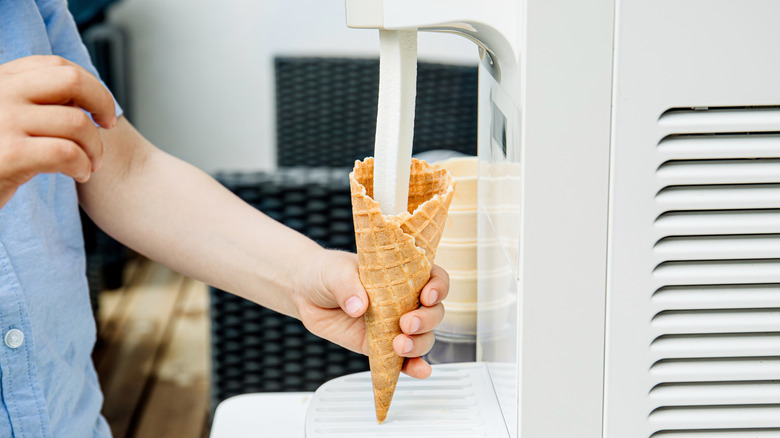
On modern cruise ships, dining options are almost as big a deal as the destinations. However, those who board and start chowing down with reckless abandon may find they regret their decision for reasons beyond the prospect of coming home a little heavier than they left. For a variety of reasons, there are cruise ship foods you should and shouldn't eat. Unfortunately, self-serve ice cream falls into the group worth skipping on your next cruise, primarily due to the risk of an unsanitary experience that could jeopardize your vacation.
The issues are apparent once you consider the process of preparing the self-serve frozen treat at the buffet (an otherwise top spot for dining, according to an exclusive Mashed survey). Diners need to grab a cone or bowl themselves, in both cases presenting the risk of touching other cones and bowls and contaminating them with germs and other unpleasant substances on their hands. And everyone has to touch the machine controls, making it next to impossible to avoid cross-contamination.
Hygiene is extraordinarily important on cruise ships. Gastrointestinal illnesses linked to norovirus and E. coli are unfortunately more common on cruise ships than many realize, with close-quarters making it easy to spread. A cruise ship was even the scene of an outbreak of the potentially deadly hantavirus earlier in 2026. Although typical illnesses on cruise ships are mostly uncomfortable and unpleasant, rather than dangerous or life-threatening, you might still spend more of your vacation in the bathroom or bed than you'd like.
Leave your oceanic ice cream to the professionals
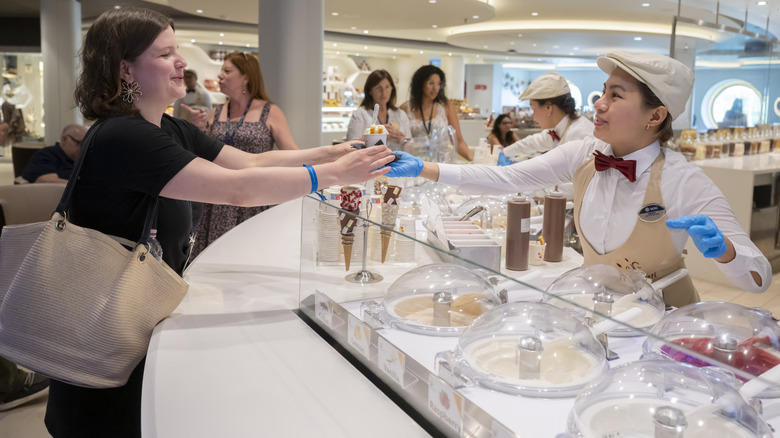
Fortunately, those who love a tasty cone or bowl aren't totally out of luck when they hit the high seas. To avoid contamination from unwashed hands, cruisers should feel free to indulge in the options available at dedicated ice cream shops or other spaces where trained staff members (with gloves) are the only ones who touch the food. These are increasingly common on newer cruise ships. However, it's essential to verify whether additional costs are involved, as it may not be included like the free self-serve buffet ice cream.
Eating potentially risky food is only one of the many mistakes people make when eating on a cruise. Food allergies are another potential problem with self-serve due to cross-contamination. But when it comes to illnesses on cruise ships, it's vital to keep things in perspective. Only a tiny portion of the over 20 million Americans who took a cruise in 2025 ended up sick because of it, regardless of what they ate. The CDC declares an outbreak when it affects at least 3% of the passengers. Meanwhile, frequent handwashing will do wonders to keep you healthy on the high seas. But making good choices, like getting good rest and drinking plenty of water, is also critical, and that includes leaving the cruise ship ice cream to the pros at specialty eateries and avoiding the self-serve area.