

You Probably Haven't Heard The Old West Nickname Cowboys Had For Donuts
Cowboys had some pretty colorful nicknames for the food they ate on the trail. Some of them were self-explanatory — like "bee-sweetenin '" for honey — while others had a sense of playful irony, like "overland trout," the odd name they had for bacon, a decidedly landlocked staple meat. Others, however, really leaned into a crude sense of humor, such as "whistle berries" for beans (you can probably guess why).
The Old West nickname they gave donuts, "bear sign," is firmly in the same camp as whistle berries. They were said to resemble bear droppings, which were often taken as a sign that one was nearby. That may not make donuts sound appetizing, but they probably still made for a great breakfast alongside some cowboy coffee.
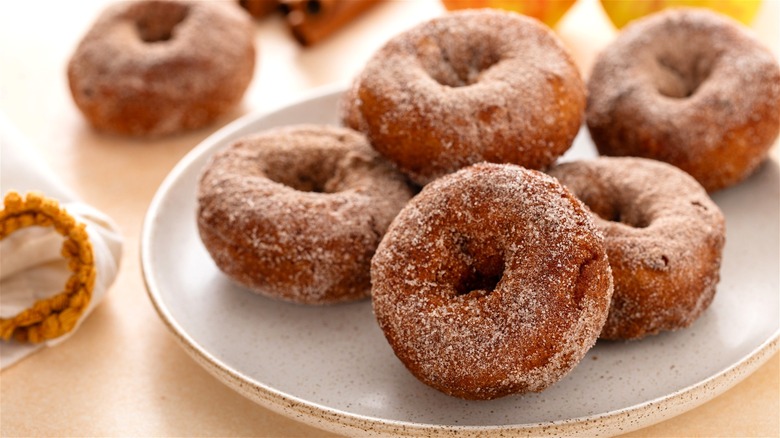
Donuts in the Old West were likely adapted from early Dutch settlers' oliekoecken, which were spiced and sweetened fried dough balls. These didn't have the holes you'll find in today's donuts; the hole itself was an invention of Captain Hanson Gregory in 1847, near the tail end of the Old West era (via the University of Southern California). That non-holed shape and the sticky dough they were made from are what gave cowboys' donuts their lumpy, golden-brown, bear scat-like appearance, along with a name most of us would rather forget.
How these cowboy donuts were made and what they tasted like
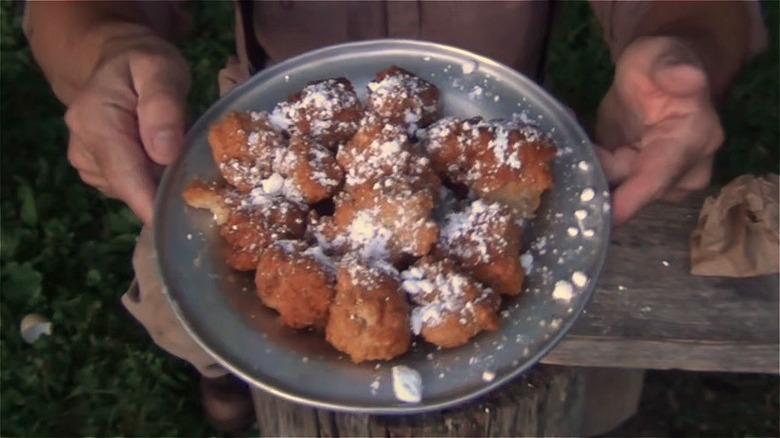
Authentic recipes for bear signs are hard to find, but author Marin Thomas shared one from an 1885 issue of The Daily Missoulian on her now-deleted WordPress blog (accessed via archive.org). The recipe called for a dough made with flour, salt, baking soda, nutmeg, butter, cream, egg yolks, sugar, sour milk, and frothy egg whites. The dough was then shaped and fried in fat until done.
If you're interested in giving them a historically accurate try, YouTube user WayPoint Survival posted a video in 2026 showing how bear signs may have been made on the frontier. While the recipe he used was likewise from 1885, it's unclear if it's the same recipe from Thomas' post. One key difference between the two is that WayPoint Survival adds the step of dusting the bear signs with powdered sugar after they're cooked.
Whichever recipe you use, three key ingredients shared by both likely give bear signs a different flavor profile from conventional donuts. Nutmeg adds a sweet warmth to the dough, while sour milk helps balance things out with acidity just like buttermilk does — also a big reason why bakery donuts often taste better than homemade. Lastly, frying the donuts in fat or lard just like your grandparents used to, instead of oil, lends a mild savoriness to the flavor profile, while also giving the exterior a touch more crunch. All this makes bear signs taste a little more complex than the average donut, which in turn makes them worth trying.