

What Sailors Eat On Submarines
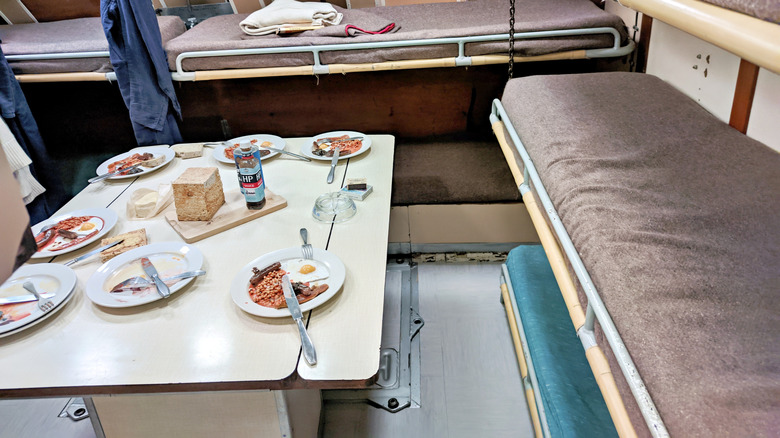
There are a lot of urban legends about military food. Some say it is fairly decent. Some swear it's gruel-like. One subdivision of the military that appears to eat better than the others is the Naval officers and sailors stationed on submarine vessels. Submarines receive a higher food budget than any military division. It makes sense — once the hatch closes, it can take up to 90 days for passengers to see the outside world again, let alone breathe fresh air. The best way to keep up morale? Good food, consistently. The kinds of food and how they're prepared require meticulous planning.
Chefs on a submarine, more properly known as "culinary specialists", have to churn out three quality meals a day for over 100 personnel, without the use of open flames (extremely dangerous in a submarine!), in a narrow kitchen (aka "galley") the size of a walk-in closet. These culinary specialists are often sent to train in culinary schools and high-end restaurants, and some go on to serve as chefs in the White House for shore duty.
The crew's menu covers a diverse range of ingredients and cuisines. Choosing the foods make it on board is a balancing act in which nutritional needs, special occasion treats, and sensible storage are all paramount. The food served can be divided into five broad categories: fresh produce, meals that can be prepped in bulk, themed meals, celebratory food, and preserved food that will keep for the long haul.
Fresh produce
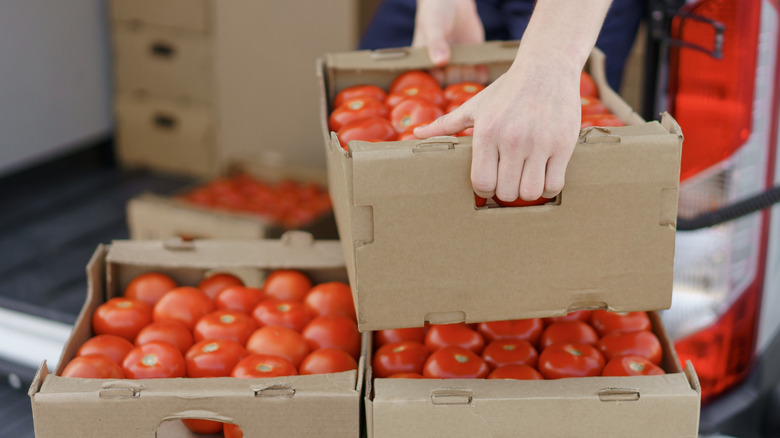
Fresh produce may not be at the top of your mind when you think of food served on a submarine, but it is! Well, at least for the first couple of weeks. Items like leafy greens, berries, bananas, and fresh milk are the last items to come aboard and the first items to be consumed. Prioritizing fresh produce before canned goods is a no-brainer, though you may wonder why it's served at all. From both nutritional and morale standpoints, it is necessary for sailors to enjoy meals as close to what they would have on land.
The menu is designed by a team of experts. Nutritionists help ensure that the sailors get all of the calories and nutrients they need throughout the entire 90 days. Then there are supply officers assigned to logistics, who make sure that all the food inside the submarine is rationed appropriately and has a place to be stored, which is a feat considering how little space they have to work with.
Some produce, like apples, onions, garlic, carrots, and potatoes, last longer. Stored properly, these items do not need refrigeration and provide culinary specialists with some non-canned ingredients to work with as the journey goes on. Eggs, when unwashed and procured from reliable sources, can last about three weeks at room temperature. That said, eggs in the U.S. are often handled differently from the rest of the world, so they get consumed on the submarine fairly quickly.
Batch-cooked meals
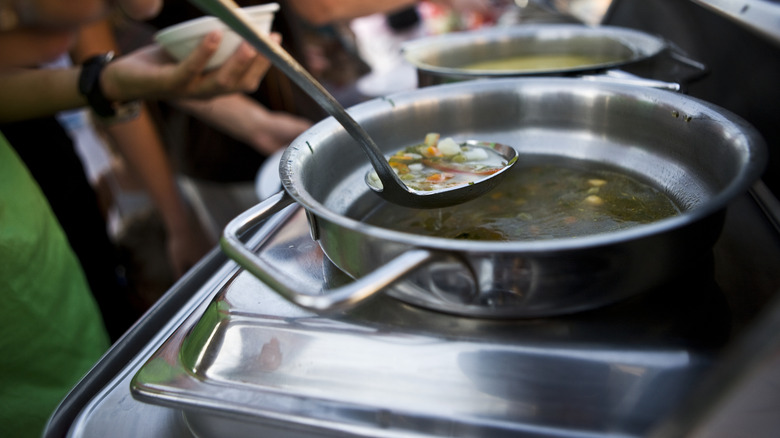
On a submarine, space and time are at a premium. The dimensions of submarine galleys are about 8 feet by 10 feet. With consideration to the space taken up by cooking equipment, there is often only room for one culinary specialist at a time. Nevertheless, this galley needs to churn out enough meals to feed up to 150 people, three times a day — and not all crew members follow the same eating schedule. The best way to get it all done is batch cooking. There is no time or space for made-to-order dishes, with the only exception being crew members who have dietary restrictions.
Some of the meals most appropriate for batch cooking are thick stews or meat dishes that can be prepared in pressure cookers. Culinary specialists will load every inch of their flat-top griddles with dozens of pancakes one morning and sliced steak for breakfast burritos the next, becoming a one-person assembly line. Breads are baked fresh on board, including burger buns and pizza dough, as it does not make sense storage-wise to carry a large number of fresh or frozen loaves. To pull off batch-baked breads, a substantial amount of yeast and flour are brought on board.
Themed meals
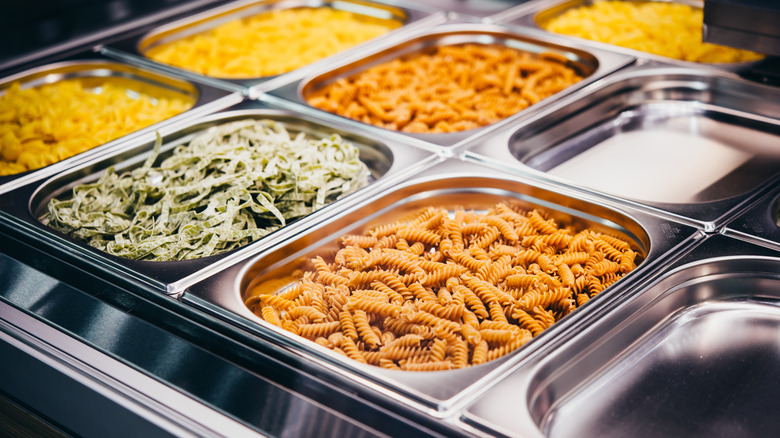
When you are 200 feet underwater on a nuclear submarine, there are no windows. You cannot look outside and tell what time it is, let alone what day it is. Meals are an effective way to mark the passage of time. The crew's meals are served buffet-style three times a day, with the addition of midnight rations, also known as "mid-rats". Breakfast food is often classic staples like bacon, sausage, eggs, and pancakes. Lunch and dinner service include grilled meats, soups, and pastas. Midnight rations are leftovers, sandwiches, canned ravioli, and the like. Coffee is always available, a non-negotiable. As this cycle continues, how do sailors know what day of the week it is? It's as simple as preparing specific meals on specific days.
Every meal on a submarine is meticulously planned for variety to avoid palate fatigue, and is set on a cycle of four or five weeks. Within that cycle, culinary specialists prepare themed meals to help structure the week. For example, if Italian food is served every Thursday, sailors know what day it is when they are eating spaghetti and meatballs. Other themes include "Southern comfort" with fried catfish and black-eyed peas, and pizza nights complete with chicken wings and jalapeño poppers. On ships with weekly movie nights, the snack on offer is, of course, freshly popped popcorn.
Celebratory food
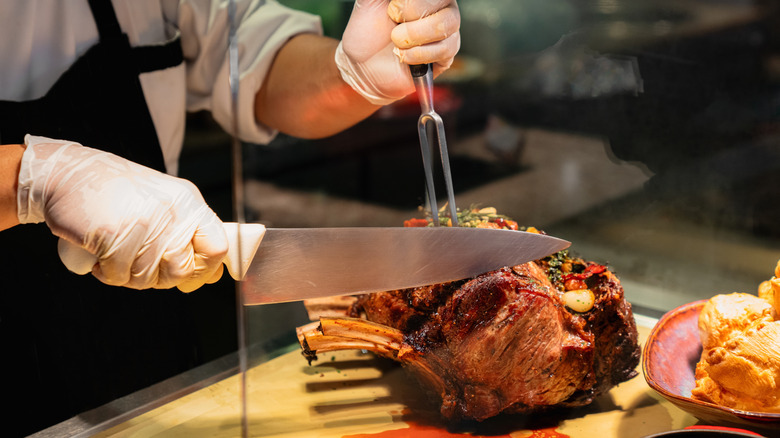
Submarines carry about 110 pounds of food per sailor per patrol, which amounts to about 15,000 pounds of food. All of this needs to be transported on board by hand through hatches, some of which are only wide enough to accommodate one person at a time. Included in this cargo of food are ingredients for special-occasion meals. While routine is definitely important, what is equally signifigant is crew morale, and there are few better ways to improve it than through food. Special occasions call for celebratory meals like steak and lobster. Holidays are acknowledged on a submarine, and the big ones are Independence Day, Thanksgiving, and Christmas. Having a generous serving of turkey with mac and cheese on your plate can help assuage the feeling of missing home.
Desserts are always on offer, and typically include cookies, cake, and ice cream (some submarines even come equipped with soft-serve machines). If it's a crew member's birthday, they may get a chance to choose the cake and frosting flavors served that evening. Celebratory meals can do a lot to boost spirits, but between the regularity of desserts and occasional high-end meals, it's little wonder, then, that submarine sailors purportedly gain about 10 pounds on average during a single deployment.
Preserved food
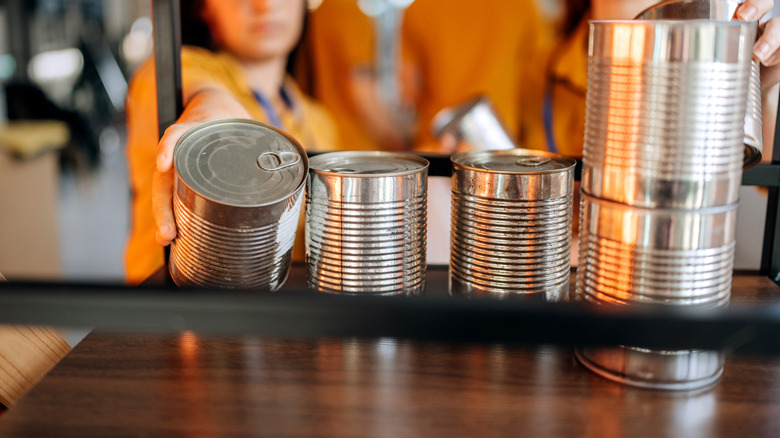
There is only so long you can stretch fresh food. After a while, preserved food is the bulk of what's left. This food is preserved in various forms, be it canned, dehydrated, or frozen. Cans and bottles of shelf-stable food and drinks can be stacked in every nook and cranny of the submarine. These items are also designed to save time. Canned foods are always cooked during the canning process, which helps move things along during meal prep. If you think this pre-cooked convenience comes at the expense of nutritional value, well, this is one of the myths about canned food you can stop believing.
Canned food is so useful on long journeys that submarines would sometimes line the floors of the mess deck with number 10 cans filled with all sorts of food, then cover them with plywood planks and mats so they could be walked on. Many shorter-statured sailors would also have to share their bunk beds with canned goods. Potatoes are often supplied dehydrated so that it's easier to serve mashed potatoes, and milk powder helps sustain the crew long after fresh milk has run out. All the meats are vacuum-sealed and stored in the freezer. Some submarine freezers are packed so tightly that culinary specialists would have to wear headlamps and winter coats to essentially go spelunking in the freezer to look for what they need.