

The Remote Maine Town Known As The State's Lobster Capital
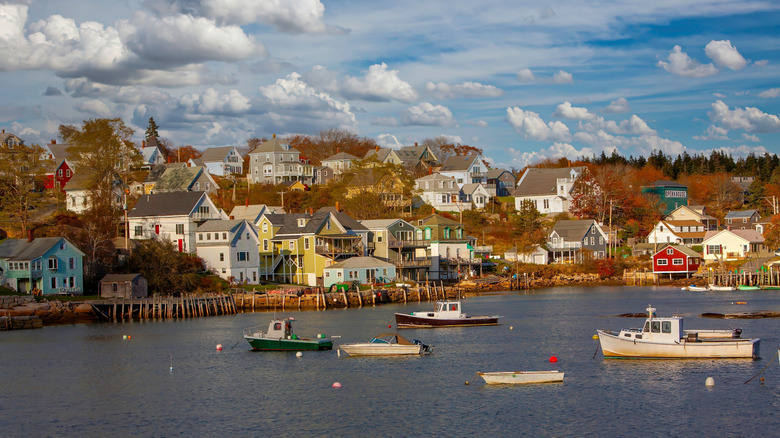
Most people know that Maine dominates U.S. lobster harvests by a large margin, but you've probably never heard of the state's lobster capital. The tiny fishing village of Stonington, located on the end of Deer Isle, is the top spot for catching the crustacean. The town has a fleet of 300 lobster boats that bring in more of the seafood by weight than any other place in the state. In 2023, Stonington lobstermen caught 11.42 million pounds of lobster, valued at $47.87 million according to the Penobscot Bay Press. Not bad for a town with a year-round population that barely tops 1,000.
Stonington, a picturesque hillside settlement overlooking a harbor, started out as a fishing village for mackerel and cod, though it also featured a thriving granite industry. Now, it's all about the lobster — the town even erects a Lobster Trap Tree, made by local children and artists, during the Christmas season.
The remote village is about 75 miles south of Bangor or about 175 miles northeast of Portland, Maine's largest city. You can drive to Stonington via bridge, taking a scenic route that provides some beautiful coastal views. Of course, you can also travel by boat or take a ferry from nearby Isle au Haut, which includes a portion of Acadia National Park. Just know that because of all of the fishing vessels, visitors can only dock their boats for up to two hours.
Why Stonington is a great lobster location
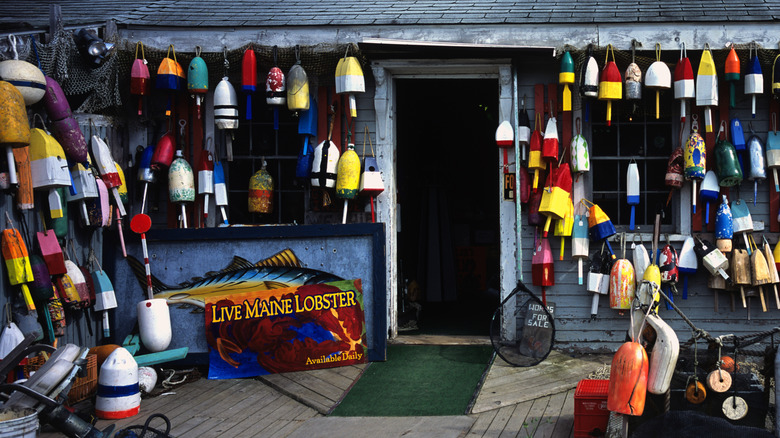
Considering lobster is an expensive menu item, if you order one, you want it to be tasty. Luckily, Stonington's location along the rich waters of the Gulf of Maine is a great spot for harvesting flavorful shellfish. In a video for Greenhead Lobster, a family business selling Stonington-caught seafood to restaurants and businesses around the world, eight-time James Beard award nominee Michael Leviton said he believes the coast of Deer Isle provides a perfect ecology for catching the crustaceans that thrive in cold water. "The depth of flavor that comes from the waters here is really what made all the difference," Leviton said. "The minerality, the temperature, the cleanliness, all of those things contribute to a significantly better product than anywhere else I've seen."
While Stonington is the current leader in lobstering, there are concerns that climate change could impact the Gulf of Maine, just like rising sea temperatures have hurt the lobster industry further south along the coast of New England over the past several decades. For now, though, Stonington's lobstermen are bringing in huge hauls of fresh lobster for seafood lovers everywhere to enjoy.