

What, Exactly, Is A Paring Knife Used For?
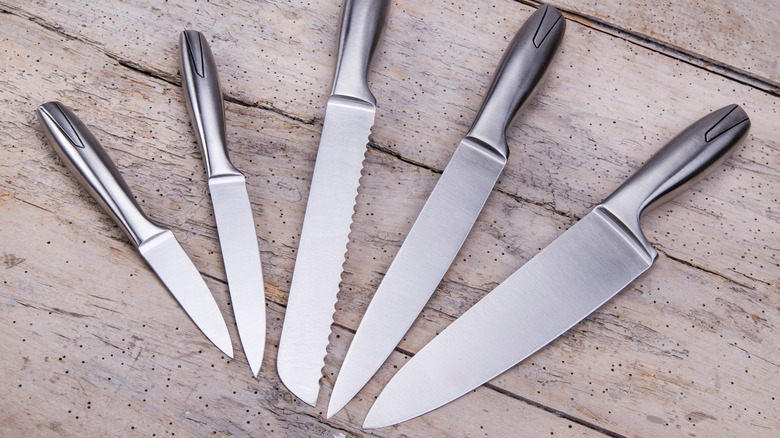
Home cooks typically have a selection of various knives in their kitchen. Often sold as a set, the mix may include everything from a hefty cleaver to a more delicate steak knife. While they will have distinct shapes and sizes, the purpose of each one may not always be clear. For instance, some folks may not understand when to use a paring knife. This short, sharp tool is typically used for kitchen tasks that require some precision.
As it turns out, the explanation is right in the name. As explained by Merriam-Webster, the verb "to pare" descends from older English and French terms that mean "to make, prepare, adorn, trim, cut off." This is a good summation of the tasks a paring knife is used for today. It is one of the most frequently used and versatile kitchen tools.
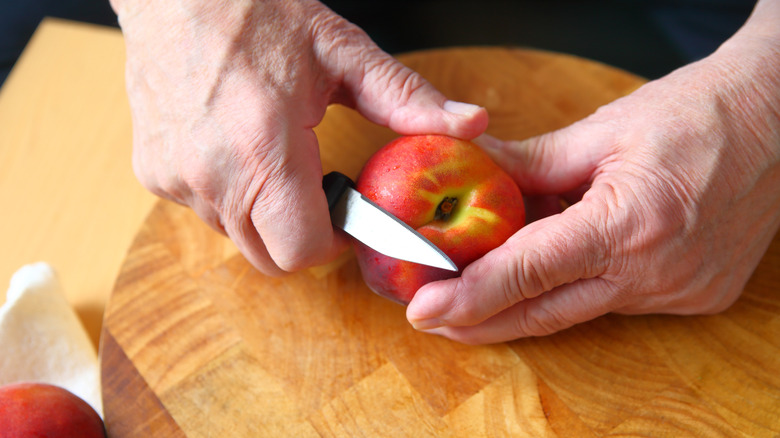
Paring knives typically have a small, straight blade (less than 4 inches in length). The size and weight make it easier to accomplish the kind of delicate movements required for peeling and sectioning fruits and vegetables, deveining shrimp, and other precise cuts. Additionally, you can use them to mince garlic, process herbs, and deseed peppers, among many other potential tasks. Paring knives are also the go-to knife choice for decorative prep, whether home cooks cutting fresh produce for a party tray or scoring baked goods. Blades are available with pointed tips for maximum precision, straight tips for versatility, or rounded tips for safety and use at the table, rather than during prep.
When not to use paring knives
Just as important as knowing what a paring knife is used for is knowing when not to use it and grab an alternative, instead. Using the wrong knife is common, so leave the deboning and fileting to the long, thin knives dedicated for this purpose, and the large-scale prep to chef's knives and cleavers. There are also a variety of other specialized knives, from cheese knives to carving knives, worth investing in for those who frequently need them.
Those looking to add this particular blade to their arsenal should familiarize themselves with what to look for when shopping for a new knife. For example, forged knives (which are made through heating and compressing metal) are typically seen as superior to stamped ones (which are cut from pre-formed sheets). People deem the former more durable, but they also cost more. When it comes to materials, stainless steel (particularly the high-carbon stainless variety) is the top choice. This option combines durability and sharpness.