

Should You Remove The Membrane From Pork Ribs After Cooking Them?
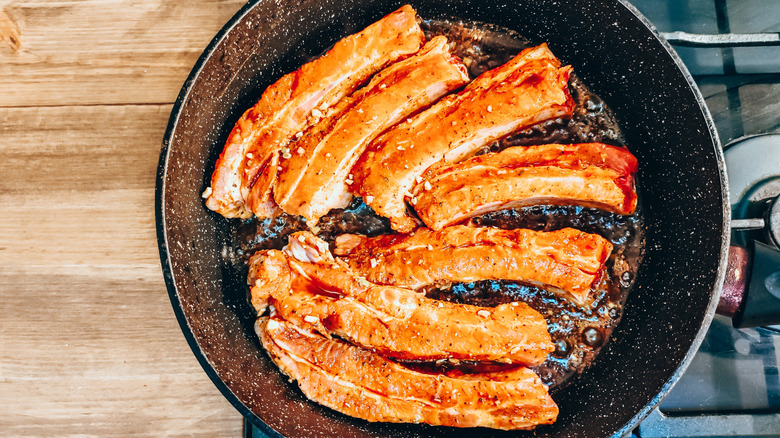
Sometimes, all you want for a meal is to tear into a hunk of meat. Whether it is an elegant T-bone steak, a Renaissance-fair turkey leg, or a simple but well-prepared rack of ribs, few feelings are quite as primal as pulling cooked meat off the bone. There are some seriously delicious ways to make ribs, so if your soul is moved to make pork ribs at home, knowing exactly how to prepare them for cooking is key. You may notice that the bony side (the part where the ribs curl up toward you) does not have much meat at all. What is there instead is a thin membrane that helps hold the whole rack together. It has a bit of a sheen on it, which is why it is also referred to as "silverskin". The question is whether to remove this membrane before or after cooking, or even remove it at all.
The answer depends on two main factors: the kind of eating experience you are going for, and how much effort you are willing to expend on preparing the pork ribs. Different cooks and barbecue pitmasters have diverging opinions. Those in favor of removing the membrane sing praises of how the meat is juicier and falls off the bone. Those who don't remove the membrane are grateful not to expend the energy required to remove it, and prefer the additional texture to chew on while eating.
Scoring the membrane on pork ribs before cooking is an efficient compromise
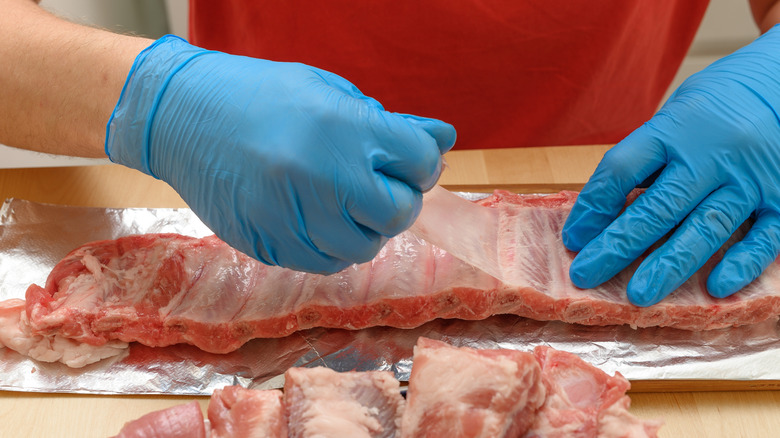
For more tender, less chewy meat, you will likely want to remove the membrane before cooking. To do so, you use a butter knife or a metal spoon to get between the bone and the membrane. Once you can fit your fingers in the gap, pull the membrane with a firm grasp. Barbecue competition cooks tend to remove the membrane as both the marinade and smoke penetrate the meat better, and competition judges will often remark on the chewy texture of the cooked membrane. On the other hand, some cuisines, such as Vietnamese, enjoy and celebrate the texture of cooked gristle. While there are people who say the membrane will render off during grilling, it will not do so completely. An easier, nay, efficient compromise is to use a sharp knife to score the membrane in a crosshatch pattern.
During cooking, the membrane renders gently and retracts over the bone just enough to not compromise your bite, making the chewiness negligible. If you really do not want to chew on it, you can pull it off while eating. It takes seconds for you, and saves the home cook a lot of tugging on slippery gristle. Try out the scoring method with this oven-baked ribs recipe, and there's a good chance your fellow diners won't notice the scored membrane at all!