

White Vs Cleaning Vinegar: How Are They Different?
If you're looking for consistent cleaning power, you don't need to use harsh, expensive synthetic chemical cleaners. For thousands of years, people have been turning to vinegar to remove stubborn residues and stains. Observant shoppers have likely noticed that, although they look the same, cleaning vinegar and white vinegar are sold as separate products. If you're wondering what the difference is between the two, the primary contrast is their strength.
First, it's critical to establish what these two types of vinegar have in common, which is a great deal. On an ingredient level, both contain the exact same components: acetic acid and water. These are created through a distillation process using yeast, which produces a sharp but clean flavor and an odor with little extra character. Additionally, the acetic acid is what gives each style of vinegar its power, whether it's the tang in a salad dressing or the ability to dissolve grime.
Cleaning vinegar: potent, single-use, grime-fighting power
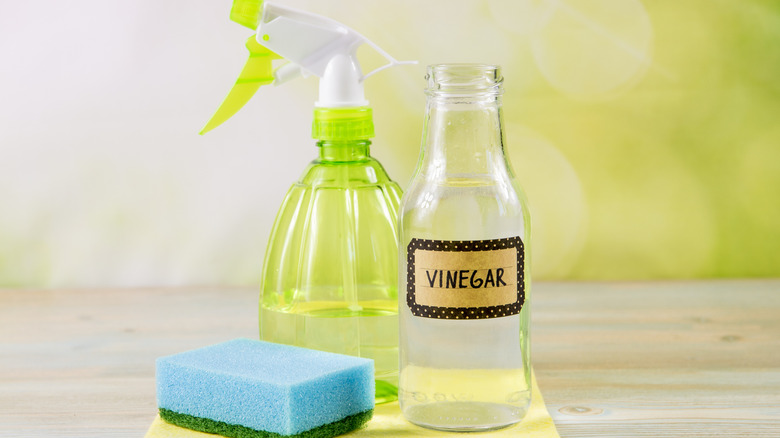
What sets cleaning vinegar apart from typical household white vinegar is its potency. It's typically in the 6% to 8% acetic acid range, a percentage point or two higher than ordinary white vinegar. It's also sold at home improvement and hardware stores, where it can reach an acetic acid level of 30%, which is designed to be diluted as necessary before use.
Although this higher concentration might not sound like a significant difference, even a 1% increase is enough to render cleaning vinegar generally unfit for human consumption. This is compounded by the fact that some cleaning vinegars are mixed with additional substances or cleaning compounds that are also likely unsafe to ingest. The strength also means that those using it should wear gloves to protect their skin and ensure their work area has good ventilation. It can be applied on its own, or mixed with dish soap to create a thicker solution that clings to mineral deposits and soap scum to remove them more effectively.
It's vital to note the types of surfaces vinegar isn't suitable for, typically because of the damage the highly acidic liquid can do to certain materials. These include any type of stone (including marble and granite), stainless steel, cast iron, unfinished wood, or grout.
White vinegar: a versatile kitchen staple
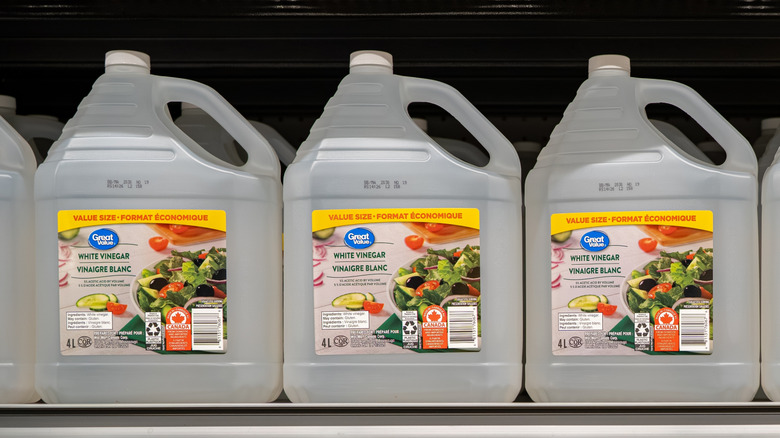
Distilled white vinegar (with about 5% acetic acid) is the familiar type many people have sitting in their pantry, ready to add a zip of acidity to recipes. It's among the most aggressively sharp vinegar flavors, so it should be used with caution to avoid overwhelming other aspects of a dish. However, it's a perfect match for robustly flavored dishes like barbecue, adobo, homemade pickles, or anything that needs an element of brightness with a mostly neutral flavor. Other interesting ways to use white vinegar include making a non-toxic cleaner for fruits and vegetables, a way to help keep cut flowers fresher, and even as a secret weapon to speed up the egg poaching process.
White vinegar can also be used as a cleanser, even if it doesn't have the same power as its housework-focused cousin. You can sub in regular white culinary vinegar for cleaning purposes, but the same restrictions on what materials it can be used on still apply.
There are many types of vinegar with uses as varied as their flavors and origins. While cleaning vinegar and white vinegar seem similar and the difference between them comes down to a percentage point or two in strength, it's a critical distinction to understand. One's a powerful cleaning agent that should be used with care, while the other is a versatile ingredient that provides more limited cleaning power.