

If You Believe This Alcohol Rule, Science Says It's Time To Move On
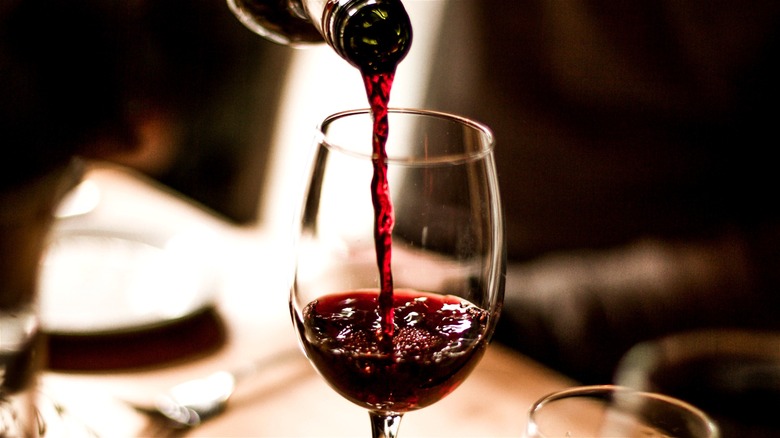
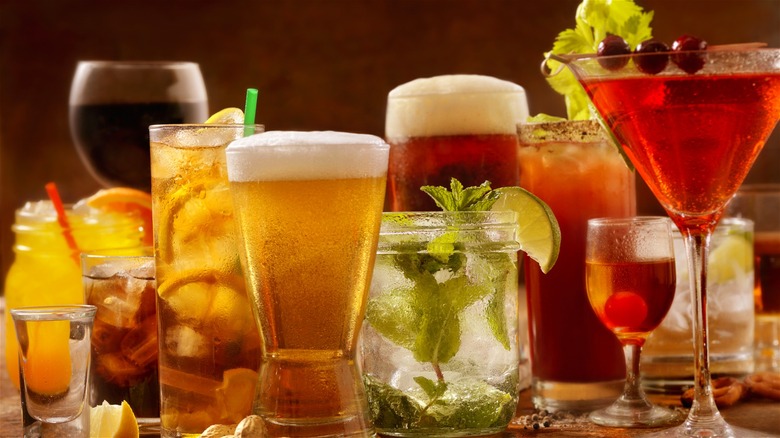
It's a common enough belief that drinking multiple types of alcohol in a single night will lead to a worse hangover the next day that numerous cultures have catchy sayings warning against it. As it turns out, science has proven this to be a myth — mixing drinks, per se, isn't what aggravates hangover symptoms. In fact, some reportedly hangover-proof cocktails like vodka martinis and negronis use more than one liquor, so mixing clearly isn't the issue. Instead, what appears to have an impact is the types of drinks being mixed.
A 2020 study by researchers from the Society for the Study of Addiction (SSA) found that different alcohol types tended to be associated with varying levels of hangover severity; mixing drinks just increases the likelihood that something will hit you harder. Specifically, liquors with higher amounts of compounds known as congeners correlate with worse hangovers, according to a 2010 study in Current Drug Abuse Reviews. This means it might not actually matter if you drink wine before beer or vice versa, or that you're even mixing them at all. Instead, it's how much of the more hangover-inducing drink you're consuming that determines how awful you'll feel in the morning.
According to the SSA, it's also possible we experience "stronger" hangovers after mixing drinks simply because we expect them to. Everything we feel during a hangover is, after all, subjective. If we believe that drinking a bunch of different types of liquor makes us feel worse, we're more likely to evaluate our hangovers accordingly.
Other myths about hangovers debunked by science
The fascinating thing about hangovers is that we still haven't quite figured them out, so current research is slowly debunking all sorts of myths about them. It used to be generally accepted, for instance, that dehydration via alcohol was a cause of hangovers, but a 2024 review of past studies published in the journal Alcohol found that they were just two typically simultaneous effects of drinking. Water consumption wasn't actually found to prevent or alleviate hangovers in any significant way. A separate 2024 review published in Alcohol, Clinical and Experimental Research found evidence to support the theory that hangovers are instead caused by inflammation that happens when the body metabolizes alcohol.
Depending on who you talk to, coffee can make a hangover worse, or it can help you with some symptoms. Both are apparently pretty shaky beliefs. A 2010 study published in The Open Neuropsychopharmacology Journal surveyed over 500 students at Utrecht University in the Netherlands and found that there was no relevant correlation between caffeine and hangover strength. Similar findings were supported by a separate 2014 study on caffeinated beers published in Addictive Behaviors.
It's also often said that hangovers get harder to deal with the older you get, but a 2021 study published in Alcohol and Alcoholism found the opposite to be true. Older participants tended to report having fewer, less intense hangovers than the younger ones. The researchers suggested that this may be because more experienced drinkers simply drink less alcohol, and because pain sensitivity tends to weaken with age.