

The 9 Biggest Changes To Ever Hit KFC
From declining sales, changing market trends, and capricious customer preferences to economic recessions, company acquisitions, and new C-suite appointments, any of these factors can trigger major changes in a restaurant franchise. For KFC, these hurdles led to decisions that altered the way the iconic fried chicken chain did business. Some of those pivots may have been for the better from a financial perspective, but others didn't really benefit the brand.
In the early days, change meant inciting the ire of the founder, Colonel Harland Sanders himself. He was famously protective of his legacy, especially with the recipes that he developed. Today, change could mean two things: alienating loyal customers or getting a new lease on life. KFC has seen a lot of both outcomes, but current executives are hopeful to see more of the second. Some of the chain's biggest transformations have been scary and risky, but as KFC's 96-year history shows, they have also led to more opportunities for growth.
1. KFC's first franchisee sold fried chicken in buckets
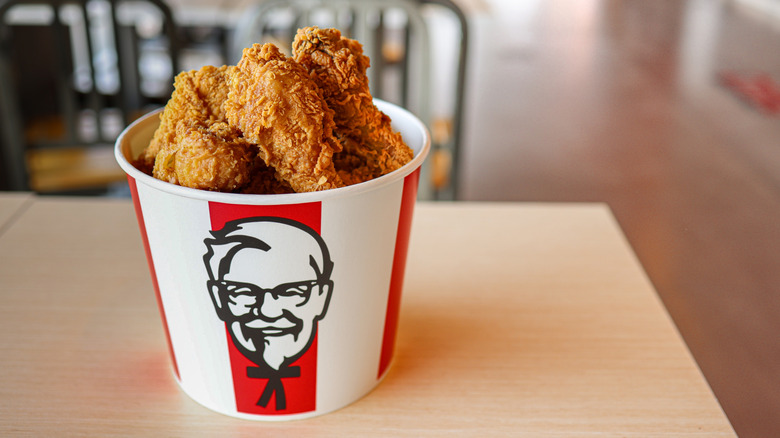
There are takeaway containers so widely used and iconic that people would know their contents without taking a peek. For instance, you know Chinese takeout boxes (which have a surprising origin story) usually contain noodles, fried rice, or stir-fry, and paper buckets with flat, white covers will always be filled with hot, crispy, fried chicken.
KFC is widely acknowledged as the fast-food chain that popularized fried chicken buckets. Although founder Colonel Harland Sanders didn't invent the practical takeout container, the brand's first-ever franchisee, Pete Harman, came up with the idea of the original KFC Bucket Meal in 1957. It had 14 pieces of chicken, biscuits, and a pint of gravy, all conveniently placed in a large paper bucket that one person could easily carry. It was a huge bundle of food designed for housewives who didn't have the time, energy, or will to cook a family dinner.
The bucket meal took off, and it remains a popular go-to menu item in KFCs around the world. When people see a paper bucket with Colonel Sanders' smiling caricature flanked by red stripes, they know there's warm, juicy chicken inside.
2. Colonel Sanders' original recipes and menu were changed
Colonel Sanders was an extremely hands-on founder. He developed the secret blend of 11 herbs and spices that made his Southern-style fried chicken famous, cooked the pieces himself in pressure cookers, and served them in his first eatery in Corbin, Kentucky. When Sanders sold the chain to investors in 1964, he agreed on the condition that his recipes would be untouched. But promises were broken, and things started to change.
Heublein Inc., which acquired KFC in 1971, allegedly switched to cheaper ingredients for the gravy and skipped marinating and dipping the chicken in flour paste before frying, among other things. These changes were ostensibly to reduce costs and make mass production easier. Unfortunately, it also compromised the quality and flavor of the food. Sanders was so displeased by these changes that he publicly told the Louisville Courier-Journal in 1975, "My god, that gravy is horrible ... pure wallpaper paste." Furthermore, he described the new extra-crispy chicken recipe as "a damn fried doughball stuck on some chicken."
The Colonel's harsh critiques of KFC were so bad that a Kentucky franchisee sued him for libel. The case was later dismissed, and the founder continued to be the chain's harshest and loudest critic. Sanders refused to let his name and likeness be used to promote products he didn't like, so he distanced himself from the changes KFC made that he didn't approve.
3. Kentucky Fried Chicken became KFC in 1991
Kentucky Fried Chicken had been a household name for decades before the company decided to officially abbreviate its name in 1991. It wasn't a drastic change since the public had already been using the acronym when talking about the chain. Making it official, however, allowed the company to integrate "KFC" into its logo, signage, takeout containers, and other marketing and branded materials. Three letters were minimal, easier to design around, and it sounded more modern.
There were many theories about why KFC changed its name. One alleged that it was to avoid paying licensing fees to the state of Kentucky, which trademarked the name around that time. There was even a conspiracy theory that KFC grew genetically mutated chickens and therefore couldn't market its food as "chicken." This was later revealed as a smear campaign against KFC China, which won a defamation lawsuit against three tech firms that allegedly gave the rumor legs. But the true reason behind the change was to simply modernize and globalize the brand.
"We want to position KFC to a more contemporary image," the president of KFC USA, Kyle T. Craig, said in a 1991 interview with United Press International. The '90s were a big era for health and fitness, and fat-free and low-calorie food were trendy. As KFC, the chain was able to introduce items like Lite 'n Crispy (skinless fried chicken) and Monterey Broiled Chicken.
4. KFC moved its headquarters from Kentucky to Texas
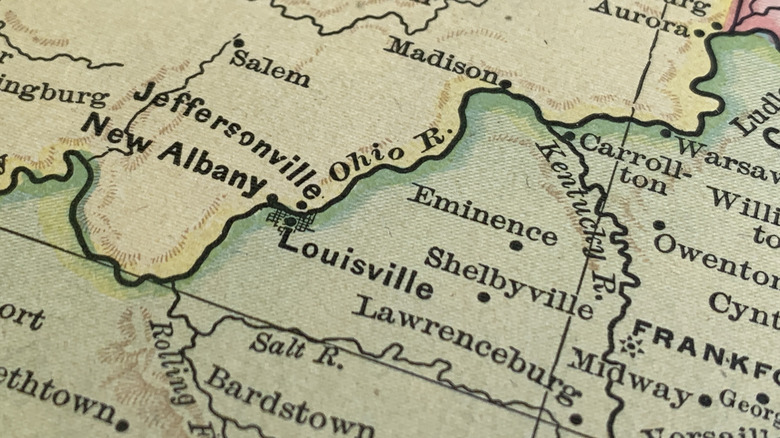
Last year, a major change took place that many considered the end of an era and the start of a new one for KFC. The chicken chain is currently owned by Yum Brands, a multinational fast-food corporation that also owns Taco Bell, Pizza Hut, and Habit Burger & Grill. In February 2025, Yum announced that it would have two strategic locations for all its subsidiaries: one in Plano, Texas, and another in Irvine, California.
This meant that the corporate headquarters of KFC U.S. would be moved from its landmark location in Louisville, Kentucky, to Texas. Many were unsurprisingly dismayed by the news: The KFC corporate office is fondly known as the "White House" and is adjacent to a museum dedicated to Colonel Sanders. "I am disappointed by this decision and believe the company's founder would be, too," Kentucky Governor Andy Beshear said in a statement, noting the chain's heritage and cultural ties to the state (via BBC).
For CEO David Gibbs, the relocation was necessary for all brands under the Yum label. "These changes position us for sustainable growth and will help us better serve our customers, employees, franchisees and shareholders," he said in the announcement. Nearly 100 corporate positions under KFC U.S. were relocated to Texas, while 90 remote positions were poised to make the move within 18 months.
5. Colonel Sanders stopped smiling last year
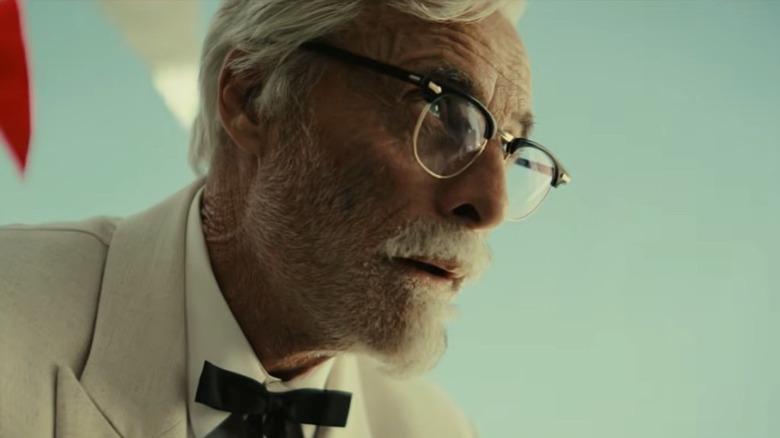
KFC experienced another big change in 2025, shifting from conventional marketing to a more self-aware approach in its promotions. Colonel Sanders' chain was lagging behind Chick-fil-A, Popeyes, and Raising Cane's in sales, with its 2024 earnings ($4.9 billion) amounting to less than a fourth of the first-place holder Chick-fil-A ($22.7 billion), according to QSR. KFC needed a refresh, and at this point, the leadership was willing to take huge leaps — starting by removing the Colonel's smile.
"The Colonel would not be happy about our market share," said Catherine Tan-Gillespie, the newly appointed president of KFC U.S., in a press release. "We're serious about reminding America exactly who we are: the game changer with a relentless pursuit of the best fried chicken. We won't smile until our customers do." Tan-Gillespie admitted the chain had lost its way and it was time to get back on track.
KFC launched the "Kentucky Fried Comeback" in July 2025 with a brand-new ad titled "Obsession." It was a 75-second film that summarized the founding of the restaurant. It featured a much sterner Colonel, and the narrative even leaned into some unpleasant lore about the founder, like how Sanders would throw gravy on the floor if it didn't meet his standards. The chain also offered free buckets of chicken in exchange for constructive feedback as part of the comeback campaign. Under Tan-Gillespie's leadership, KFC is determined to win back customers and catch up to competitors.
6. KFC introduced hand-crafted beverages to its menu
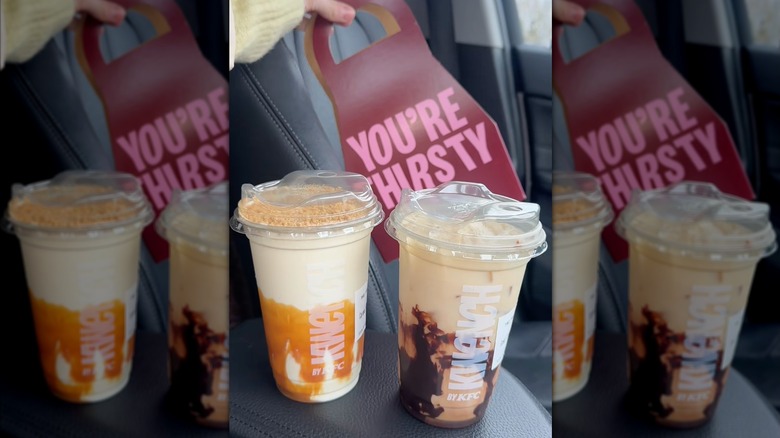
KFC has always been about the chicken: original recipe, extra crispy, bone-in, tenders, nuggets in a bowl, or sandwiched between brioche buns. Biscuits and mash? Yes, sure, they are also among KFC's most popular menu items. What is the chain not particularly known for? Hand-crafted, flavored beverages. But that's about to change because in January 2026, the chain launched Kwench in the U.K. and Ireland.
This new line of specialty drinks is specifically designed to attract Gen Z. The beverages were first rolled out and tested at 38 KFCs in Manchester last year. The Kwench menu offers 11 iced drinks, ranging from familiar fare like iced coffees and cloudy lemonade (lemon juice, sparkling water, and sweetener) to dessert shakes like Caramel Krunch and Strawberry Shortcake. Sales have more than doubled since the test run, which is likely why KFC International decided to further expand its reach.
Plans to expand Kwench to the U.S. are underway. It's important to note, however, that it has an entirely different branding from KFC. Restaurants that will integrate it into their menus will have to make room for Kwench-specific fixtures and furniture. A two-story KFC in Liverpool, for instance, had a dedicated, standalone Kwench bar on the first floor. A similar takeover in U.S. restaurants will be an interesting change, for sure.
7. Boneless chicken became the highlight of the menu
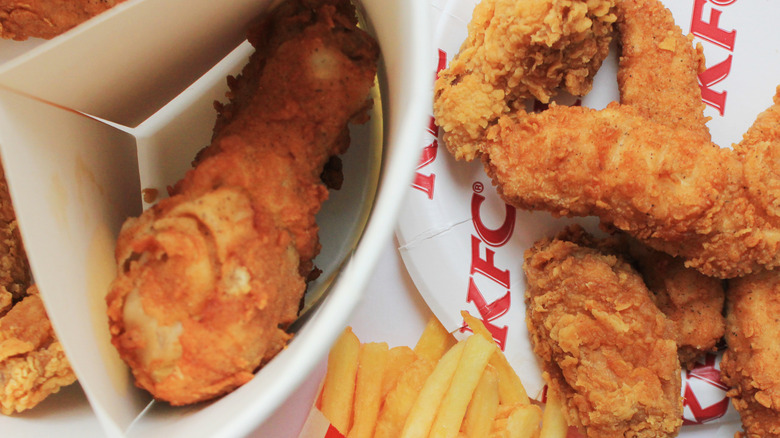
What is arguably the biggest change to come to KFC in recent years is its strategic decision to shift its focus from traditional fried chicken to tenders. In a June 2026 press release, KFC announced that its menu revamp would be global. The original and crispy fried chicken are still available (as the cornerstone of Colonel Sanders' legacy, fried chicken won't be going anywhere anytime soon), but the menu has in recent years been expanded to permanently include boneless options, such as nuggets and hand-breaded, original-recipe tenders. Considering KFC boasts over 34,000 locations now focused on selling boneless chicken and its accompanying dips, only time can tell how big the payoffs for this switch-up will be.
Industry observers say KFC seems to be attempting a Raising Cane's-esque rebrand. Raising Cane's is currently the third-biggest chicken chain in the country and is known for its short, uncomplicated menu that satisfies chicken cravings. But while simplicity became a strong point for Raising Cane's, KFC is banking on a large, diverse menu with plenty of customization options to get more people to come and eat.
8. Marketing shifted from the 11 herbs and spices to dipping sauces
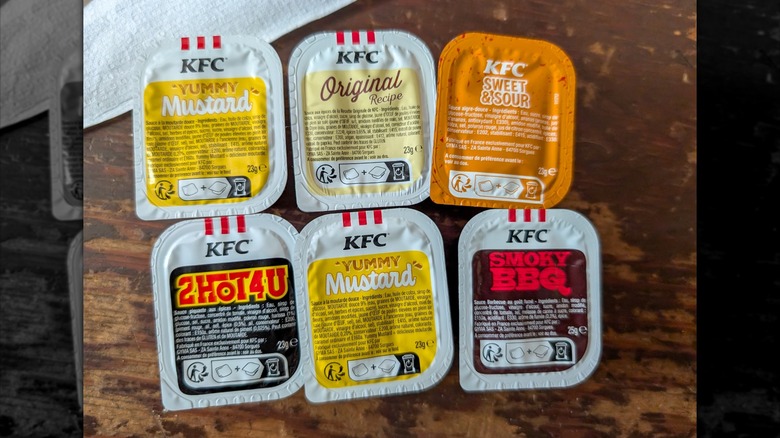
With KFC more focused on selling boneless chicken, you can easily guess what the tenders will come with. Dipping sauces, of course! According to the June press release, pivoting to chicken tenders offers more opportunities for customization. Colonel Sanders' original recipe proved itself long ago, but the company thinks customers are ready to try other ways to enjoy the trademark KFC taste. And so, a noticeable change on menu boards started this year: There are now more sauce flavors to choose from.
KFC went all-in on this bold move. Over 20 sauces are lined up for release on a rolling basis, many of which will be inspired by international flavors. Ahead of their permanent inclusion on the menu, KFC has been dabbling with several limited-time offerings. In the U.S., for example, the chain released two new sauces in May (Honey Chili Crisp and Jalapeño Ranch) and three more in June as part of a promotional deal with the DC movie "Supergirl" (Ruthye's Sweet Chili Revenge, Lobo's Wild Ranch, and Supergirl's Solar Honey Mustard). Additionally, KFC Canada introduced three limited-time sauces inspired by three participating countries in the World Cup.
9. KFC is opening new, experiential, next-gen restaurants
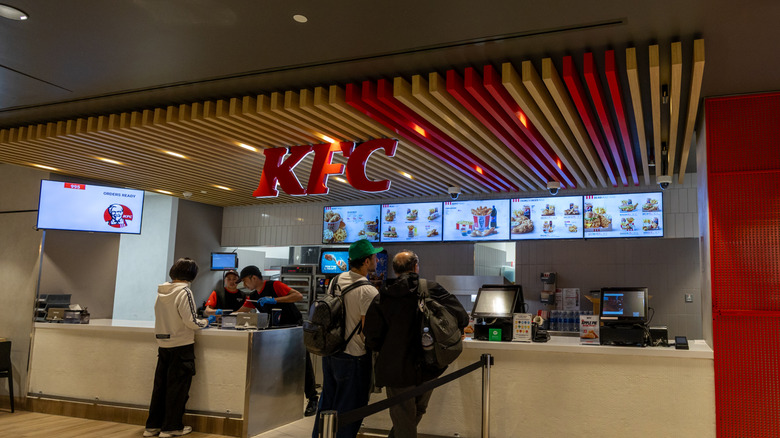
Rounding out the biggest changes ever to hit KFC is its planned transformation from a conventional QSR to a more experiential brand. We're talking about visual and layout changes in physical stores, which will hopefully make the brand more appealing to Gen Z and future generations.
The concept art for the new-and-improved restaurants boasts an al-fresco, open-concept dining floor with both benches and individual seats in strategically placed round tables. The new layout feels more welcoming and dynamic than the usual cafeteria-style restaurant. The first KFC to have the new store design will open in McKinney, Texas, near the Yum Brands headquarters. Its menu is planned to include new sauces and the Kwench drink lineup. The new restaurant prototype will be called "Open House," and it will serve as a test run for what executives say could be the future of every KFC. A second two-story location will also open in Dubai in fall 2026, and it will reportedly feature the boldest iterations of the chain's new concept.
To cap off the store redesign, KFC also changed the visuals of its branding assets. Chicken buckets now have a blown-up photo of Colonel Sanders with "KFC" in bold, red letters on the sides. The paper bags also have the oversized "KFC," which cuts off stylishly at the sides. The boxes typicallly used for biscuits have two lines of KFC taglines, printed in the same red typeface as the three-letter logo.