

What's The Typical Lifespan Of A Crockpot?
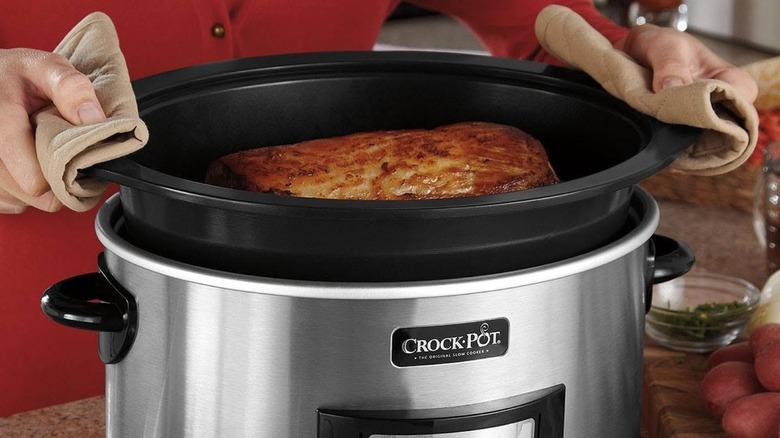
A countertop staple for many home cooks, the Crock-Pot can tackle everything from lamb stew to cube steak recipes made with tenderized top sirloin and slow cooker mashed potatoes. But your trusty Crock-Pot won't last forever. The typical lifespan of this appliance varies, depending on the model, frequency of use, and how well you've maintained your mighty machine. One Reddit user, for example, said that their slow cooker went on the fritz at six years old, while other cooks have used the same Crock-Pot several times a week for 10 years running.
Launched in 1971, this popular slow cooker brand was marketed as a convenient tool for working women. Over the decades, its name has become synonymous with the wider slow cooker category, with different models' features ranging from elementary to high-tech. Today, slow cooker recipes can still make your life easier. Whether you choose a traditional manual model or a set-it-and-forget-it version that lets you program cook times hours in advance, understanding the right way to use your Crock-Pot helps you make the most of this handy kitchen assistant — and it's also key for the cooker's longevity.
Basic or programmable, petite and portable, or big enough for crowd-sized meals, Crock-Pot products have a limited one-year warranty. According to the company's website, when the product is used for normal functions and cared for according to the brand's instructions, you can expect it to be "free from manufacturing defects for one year."
Make your Crock-Pot last with proper care
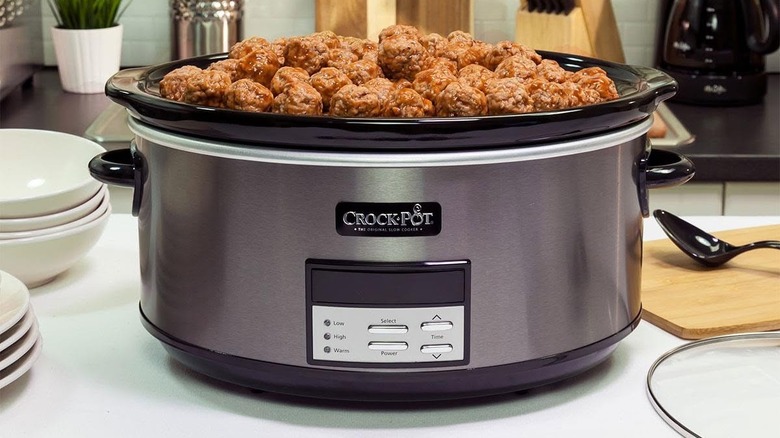
To keep your Crock-Pot in fighting form well past its warranty period, follow a few basic maintenance rules, like making sure it's squeaky-clean before stowing it away. (There's nothing nastier than finding remnants of last week's feast when you're starting tonight's dinner.) Soaking hot pots in cold water may be routine with other cookware, but not slow cookers. While sturdy, the Crock-Pot's stoneware pot and tempered glass lids may be sensitive to severe temperature fluctuations. A blast of cold water could cause it to crack, so cool it to room temperature before soaking.
Most modern Crock-Pots have removable stoneware inserts that are dishwasher-safe. You can usually pop the lid in there, too. If you prefer to hand-wash both, opt for a gentle cleaning solution and tools, and steer clear of steel wool, scouring pads, or anything abrasive that might damage the stoneware. And to state the obvious: Never, ever immerse the heating base in water or any kind of liquid.
While the beauty of the Crock-Pot is that you can cook your meal unsupervised, if you plan to be away from home, like for an eight-hour workday, choose recipes that can simmer all day at low heat. Dishes that bubble away at high heat cook faster, requiring oversight. If your dish isn't covered with enough liquid, or if the pot is under- or over-filled, the food can gunk up the bottom or become leathery. Neither scenario is appetizing, and both may pose safety hazards.