

Dry Pork Ribs? This Simple Vinegar Trick Will Solve Your Problems
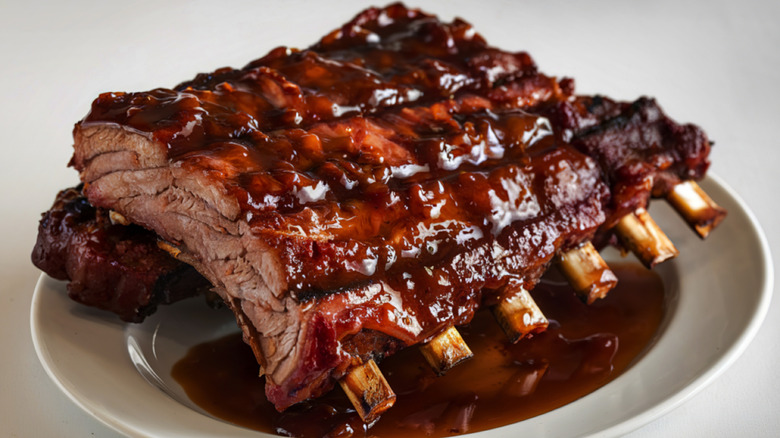
You've prepped the grill, loaded up on barbecue sauce, and got your hands on a nice rack of ribs — or three. The stage is set for a meal of rich and succulent meat. The last thing you want is to end up biting into some dry, chewy bits of pork. Don't want to risk fumbling your next barbecue — or your budding pitmaster reputation? Try one of our go-to tips for getting the tastiest, juiciest ribs. All you need is some good old fashioned apple cider vinegar.
Many meat connoisseurs know that wrapping your ribs in tin foil is a must to lock in moisture. Some cooks may simply let the meat's own juices do the work of what's essentially a grate-top braise, while others may only add barbecue sauce. But to really take their taste and texture up a notch, you'll want to incorporate some vinegar to the ribs' steam bath. In addition to the sweet, tangy flavor it provides, apple cider vinegar introduces some all-important acid to the mix. This acid works to break down the tough connective tissues and muscle fibers in the pork ribs. This not only softens the meat, but also allows it to soak up and retain its juices. When combined with barbecue sauce, the ACV really helps to infuse ribs with more moisture and flavor. Hey, you can't argue with science — or your taste buds.
How and when to wrap your ribs in a vinegar mixture
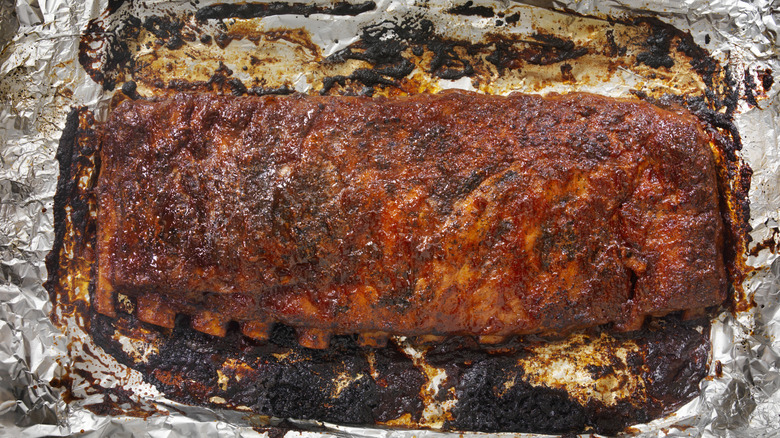
As with most tough cuts of meat, ribs are best cooked low and slow. Plan to pull this vinegar trick out of your chef's hat at about the half-way point of cooking your rack over indirect heat (a method which prevents burning the crust and drying out the inside before the pork can really tenderize). If you're going for six-hour cook time, then this should occur about three hours into the process. At around that point, the crust sets and the meat reaches an internal temperature of 150 to 170 degrees Fahrenheit. Now, it's time to wrap — and tenderize.
Just note that you don't want to go overboard with your liquid. Adding barbecue sauce too early can cause the sugars to char — and not in a good way. (So don't slather it on the meat during the first three-hour period in hopes of making the meat moister.) To bubble up the perfect braise for wrapped ribs, all you need is about a ¼ cup of both the vinegar and the barbecue sauce. Add this mixture to the foil as you encase the meat and give them about another two hours before removing.
FYI, this approach to barbecuing ribs is called the 3-2-1 method: three hours on the grill, two hours wrapped, and one hour to finish with your favorite glaze. While easy and effective, it's not the only way you can use apple cider vinegar to keep your pork ribs moist. A popular alternative is to go the spray route, which involves spritzing ACV (or other acidic liquids like beer or juice) onto the meat throughout the smoking process.