

What's The Difference Between Knockwurst And Bratwurst?
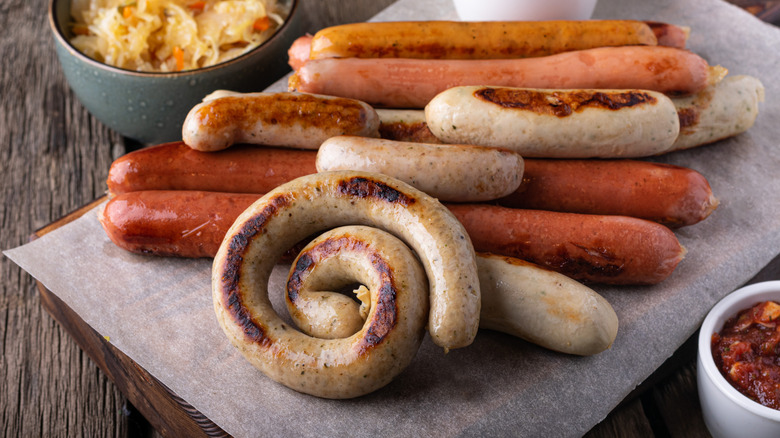
Sausage fans have a lot to love about German cuisine. There's a seemingly limitless number of combinations of meat, spices, and other ingredients packed into casings and grilled, boiled, smoked, or otherwise cooked to perfection. Two of the most popular varieties are bratwurst and knockwurst, but those without extensive knowledge of the types of German sausages and how they're made may struggle to distinguish one from the other. What sets bratwurst and knockwurst apart comes down to differences in the type of meat and seasonings used, the style of casing, and how the sausages are prepared and eaten.
There are also a few important similarities between the two. Both are primarily made from finely chopped or ground pork, one of the most common meats found in German cuisine. Bratwurst and knockwurst are both served in link form, rather than the ground or patty sausages found in other cultures. When one variety isn't available, a dish can be prepared using the other with relatively minimal changes to the final result, compared to subbing in another type of sausage. At their core, however, bratwurst and knockwurst are distinct products, and those with discerning palates can identify the notable ways in which they differ.
Knockwurst: snappy and smoked with vibrant garlic flavor

Knockwurst traces its origins to northern Germany's Holstein region, where it's believed to have been invented in the mid-16th century. Although it's less well-known than bratwurst, it's among the top tier of wursts and can be used to make currywurst, a heavily spiced street food dish that is counted among the iconic German foods to try before you die.
Beyond the pork base that it shares with brats, knockwurst is typically supplemented with veal or beef. Sometimes spelled knackwurst, the sausages are plump and short, and have a characteristic "snap" when the casing is bitten through. This snap is what gives knockwurst its name, derived from the German verb "knacken", which means to crack or snap. Commercially sold knockwurst is also almost always fully cooked, typically via smoking to imbue extra flavor.
The dominant flavor in knockwurst, other than smoked pork, is garlic. Pepper and mustard seed are also common flavorings. The precooking process is partially responsible for the denser, firmer nature of most knockwurst. It also means that there's no need to worry about ensuring they reach proper doneness. All that's necessary to reheat knockwurst is boiling or pan-frying to crisp up the exterior.
Bratwurst: a historic icon with varied spices and cooking methods
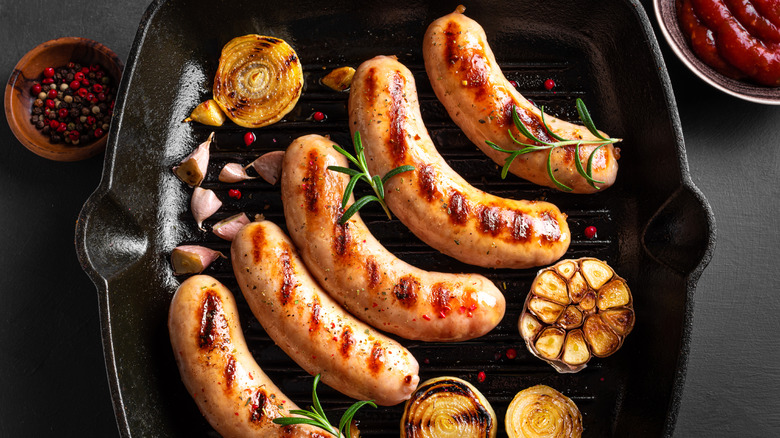
Bratwurst has served as a notable part of German cuisine since the 1300s, when the first documented evidence of it emerged in the south-central city of Nuremberg. It's a pork-based sausage, although ground veal or beef can be added. The meaty flavor is accentuated by seasonings like marjoram, pepper, coriander, nutmeg, and caraway. Although they can become "snappy" with proper cooking, bratwurst casings are typically softer and less taut than knockwurst.
While bratwurst is sometimes sold fully cooked like knockwurst, it's also often available raw. Home cooks therefore need to follow food safety precautions so that the meat reaches a high enough temperature to render it safe (160 degrees Fahrenheit). Grilling or simmering on the stove in liquids like beer are the most common and often most flavorful ways to prep bratwurst, but it's possible to boil or bake them, too.
Knockwurst and bratwurst can be easily swapped for one another and paired with similar sides. Both work well with homemade sauerkraut or nestled into your favorite bun. Still, knowing the difference between these wursts can help you make the best decisions about your next German meal.