

Cowboy Steak Vs Ribeye: How Are They Different?
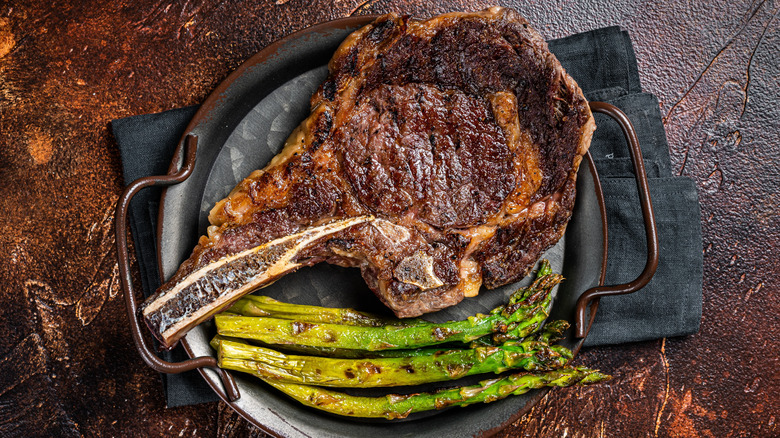
There are many cuts of steak to choose from when you're dining at a nice steakhouse or grilling up a feast at home. Some cuts are better quality than others, and with quality comes a higher price tag. There are definitely some delicious inexpensive steak cuts out there — flat iron won first place on our ranking of the cheapest steak cuts — but if you're going to splurge, a well-marbled ribeye is one of the best. When looking at ribeye options, you may notice something called a cowboy steak or cowboy ribeye. While cowboy and regular ribeye steaks both come from the ribcage, there are a few key differences to know.
The biggest difference between ribeyes and cowboy steaks is that basic ribeyes can be boneless or bone-in, while cowboy steaks are always bone-in, with the short, cleaned bone sticking out. Cowboy ribeyes also tend to be thicker than a bone-in ribeye, with cowboys coming in at 2 to 3 inches thick compared to a ribeye's 1 to 1½ inches. This thickness means cooking a cowboy ribeye will typically take longer. The bone and its marrow being present during cooking slightly alters the flavor, making the meat near the bone juicier. Overall, there isn't much difference in taste — the real contrast is visual, as the inclusion of the frenched bone makes a cowboy ribeye a more showy cut of steak on the plate.
Is there a difference between a cowboy steak and a tomahawk?
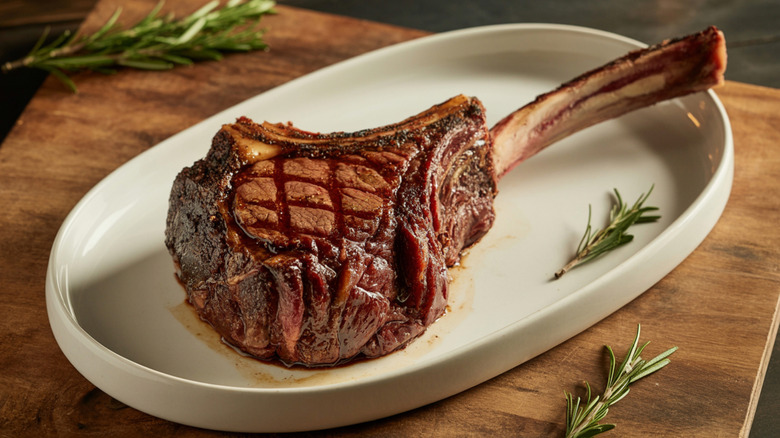
In addition to your classic ribeye or the cowboy cut, you might also see the tomahawk ribeye on a restaurant menu. In some cases, the tomahawk label is being used as a synonym for the cowboy steak, but there actually is a difference. The truth about tomahawk steak is that it's an even thicker ribeye cut with a dramatic bone length.
The exposed bone on cowboy ribeyes isn't super long and undergoes "frenching," where the meat and fat around the bone have been trimmed away. A tomahawk bone, while still frenched, is longer than a cowboy bone, with the exposed part typically measuring 5 or so inches (though it can be longer). You may also find that tomahawk steaks are even thicker or bigger than cowboy steaks. But the flavors don't differ, so if you're choosing between the two, you're just choosing how theatrical you want your steak to be.
At restaurants, cowboy and tomahawk cuts tend to be more expensive than your boneless ribeye, though they are sometimes served in bigger portions, often intended to be shared. Bone-in steaks are also trickier to cook at home than boneless ribeye due to a need to focus on cooking by temperature, so they're probably best left to someone with experience preparing steak. With this in mind, the tomahawk is a great option if you're looking to impress your guests, especially when served with a few great steak side dishes.