

Japanese Vs Chinese Fried Rice: How Are They Different?
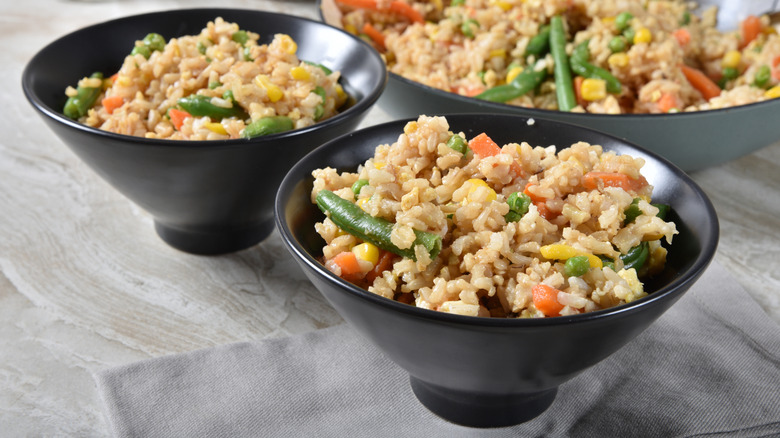
Fried rice is one of those iconic Asian foods that appears on more than just Chinese restaurant menus. But it's a simple dish that isn't only for professional chefs. Fried rice is easy to throw together, especially when you don't know what to do with leftover rice. Home cooks have stir-fried different combinations of already cooked rice with eggs, vegetables, and proteins for at least one and a half millennia.
A little known truth about fried rice is that it's believed to have originated in the Yangzhou region in eastern China during the Sui dynasty (581–618 AD) when boatmen began mixing cooked rice with scrambled eggs. This simple technique and delicious flavor proved so popular that fried rice has evolved over time to include more ingredients, and it has spread well beyond China's borders. In the 19th century, Chinese immigrants brought fried rice to Japan, where people embraced it. With rice being a staple of the Japanese diet, it was a natural fit.
However, there are differences between Chinese and Japanese fried rice, plus Japan has two styles, one with more of a Chinese influence than the other. Keep reading to learn about these different styles of fried rice.
What, exactly, is Chinese fried rice?
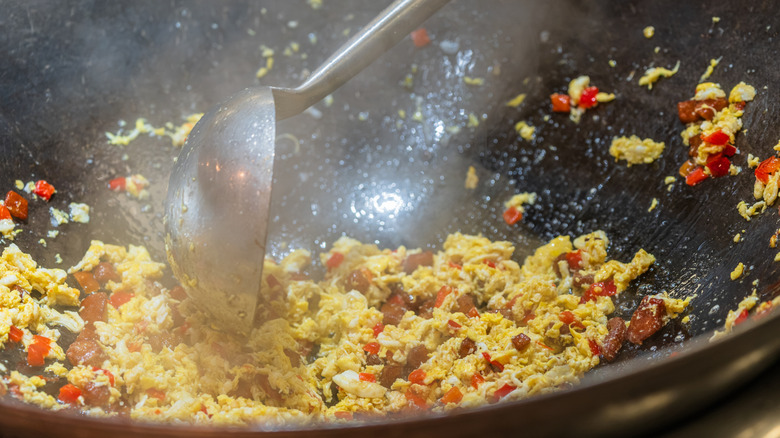
One mistake that people make when cooking fried rice from scratch is that they use rice that is not dry enough. Freshly made rice has a higher moisture content, making it stickier and more likely to clump together. When making Chinese fried rice, it is not essential to use leftover rice, which has had time to dry out, but it does still make the result less clumpy. A long grain rice like Thai jasmine or American long grain white rice is ideal. A medium grain rice also works. The eggs and vegetables should also be cooked before being added to the rice. Additions like soy sauce, oyster sauce, fish sauce, hoisin sauce, and sesame oil are common flavorings that add salt and savoriness to the dish.
A wok is the preferred and more traditional cooking method, but a skillet will do in a pinch. Woks are deeper and allow for bigger movements when tossing the ingredients while they cook. The slanted sides also provide a more even temperature, which is important because Chinese fried rice is cooked over a high heat. When to add each ingredient varies by chef, but it is important that they are all thoroughly mixed together and cooked through.
What, exactly, is Japanese fried rice?
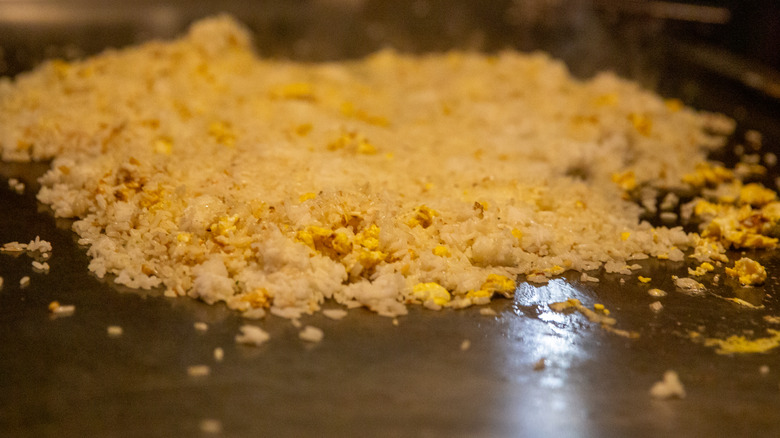
The Chinese name for fried rice "chǎo fàn" became "chahan" in Japanese. This is the type of fried rice that was brought to Japan by Chinese immigrants in the 1800s. The other common Japanese name is "yakimeshi," which literally means fried or grilled rice. Yakimeshi is more often used in western Japan (Kansai region) while chahan is the preferred term in the east (Kanto region). Both use Japanese short grain rice, which has more starch than long grain rice, making it stickier. Although the terms are sometimes used interchangeably, there are differences.
Chahan is the rice that is served in Chinese restaurants in Japan, but it can be made at home as well. When making chahan, the first ingredient to go into the wok is egg, which is soon followed by the rice. Once the rice and egg are mixed, the other ingredients and sauces follow. It is basically the same as Chinese fried rice.
In yakimeshi, on the other hand, the rice goes first, then the other ingredients follow. As a result, the dish is sometimes more moist than traditional fried rice. A wok, skillet, or iron griddle may be used. In Japan, fresh white rice is considered the best kind of rice and should be enjoyed plain, so it is the leftover rice that goes into yakimeshi. Other leftovers can also go in, such as cooked vegetables, meat, and so on. Yakimeshi is a great way to clean out the fridge!