

Want Juicier Steak? Marinate It With This Sweet Ingredient
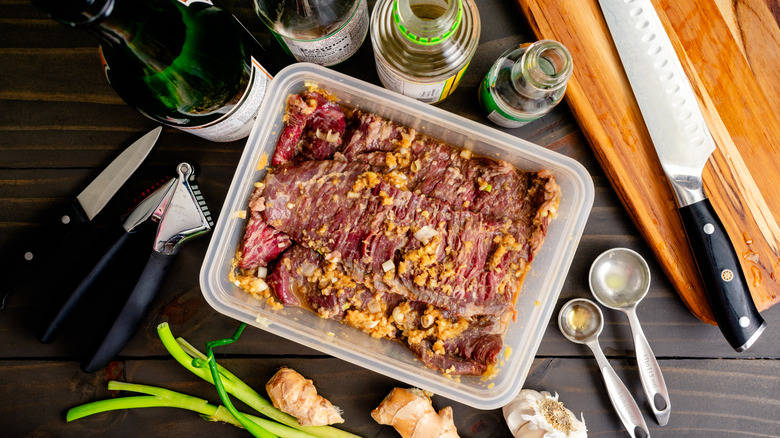
With a high-end piece of beef, a marinade might not be necessary, but a carefully constructed marinade will seriously upgrade most steaks. While many marinades primarily serve to impart flavor to the meat, certain ingredients can improve the texture as it sits. For instance, acids and enzymes have tenderizing effects, but one kitchen staple will actually prevent the meat from drying out: honey.
Marinating meat is likely a use for honey you've never thought of, but the benefits are science-backed. Honey is a hygroscopic ingredient, and that means it naturally contains a relatively low amount of water but easily absorbs moisture from its surroundings. So, it'll draw moisture into the meat, which results in less moisture loss during cooking. In fact, according to the journal Molecules, testing shows honey-based marinades help meat lose less volume during cooking compared to no marinade at all or a sugar-based marinade.
In addition to honey's hygroscopic properties, it works because a coating of the marinade remains on the surface of the meat even once the steak has been removed from the liquid. That prevents the meat from making direct contact with the heat (like the flame of a grill), so the temperature remains lower inside the steak, resulting in less moisture evaporation. Honey is also more acidic than sugar, and acids help meat retain moisture when cooking.
Here's what to know for your honey steak marinade
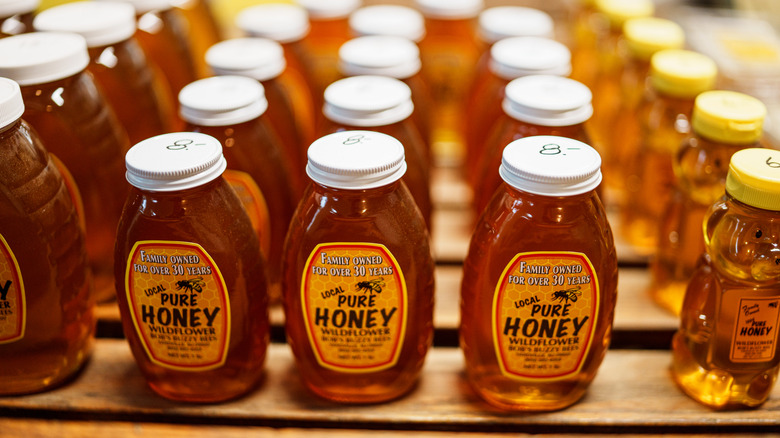
Meat shrinks as it cooks, and a large part of that is from moisture either dripping out or evaporating from the heat. Honey can get in the way of that process (called cooking loss). The 2020 study in Molecules showed the amount of cooking loss varies based on what the meat has been marinated in. In the study, unmarinated meat lost around 35% of its weight, similar to the roughly 34% loss with a sugar marinade — but the difference was statistically significant compared to the honey-marinated samples, which lost between 28% and 33% of their weight.
The study found the type of honey matters, too, with common honeybee honey marinades resulting in higher cooking loss while rarer honey varieties, like acacia and gelam, making bigger differences. The study's authors theorized this might be due to the different acidity levels among these types of honey.
What does that mean for your kitchen? Look for honey that's acidic, such as raw honey (which retains more of its natural acids as it's less processed). Incorporate the honey into your favorite steak marinade recipe, roughly ¾ cup honey for each cup of sugar the recipe calls for, then marinate for one to eight hours (but generally no more than 24 hours). Use a reverse sear method, cooking it gently over low heat first, and then finishing it by searing over higher heat, being careful not to burn the sugars remaining on the outside.