

Regular Vs Smoked Paprika: How Are They Different?
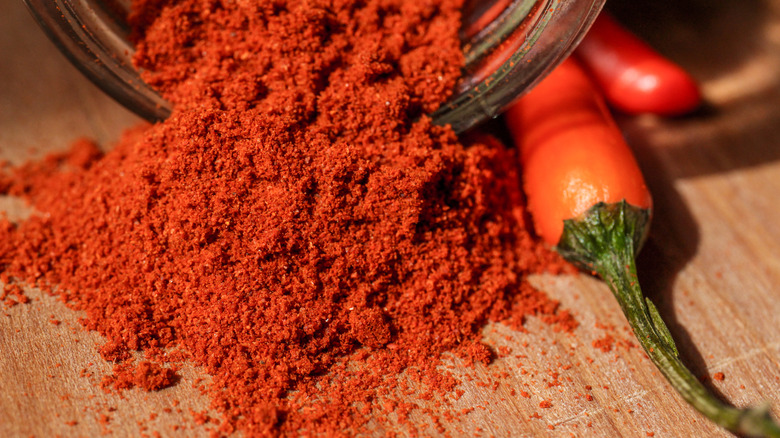
Paprika is a vibrant red spice that's found in everything from deviled eggs to Hungarian stews. It's even used as a flavoring and natural food coloring in meats, sauces, and packaged goods. It is the national spice of Hungary, but as anyone with Hungarian heritage will tell you, not all paprika is created equal. One of the top paprika producers, Hungary has eight different paprika classifications ranging from sweet to mild to hot. Although the Eastern European country certainly takes its paprika seriously, it's not the only paprika powerhouse. Spain also has its own variations on paprika, including a savory, smoked paprika.
So how did two very different countries on opposite sides of Europe come to prize the same colorful spice? Colonization, what else? Originating from Capsicum annuum plants, paprika comes from peppers — typically bell peppers and other sweet varieties. On his famous voyage to and from the Americas, Christopher Columbus brought back pepper seeds to the king and queen of Spain. Meanwhile, on the other side of the continent, the Turks introduced peppers to Hungary in 1569, during the Ottoman Empire. In both cases, red peppers eventually became interwoven in the countries' cuisines.
Most U.S. grocery stores primarily carry some version of regular paprika, but knowing how to use it is another story. That goes for smoked paprika as well, if you have access to it. While at first glance these different types of paprika may look similar, key differences exist between regular and smoked paprika.
Regular Paprika
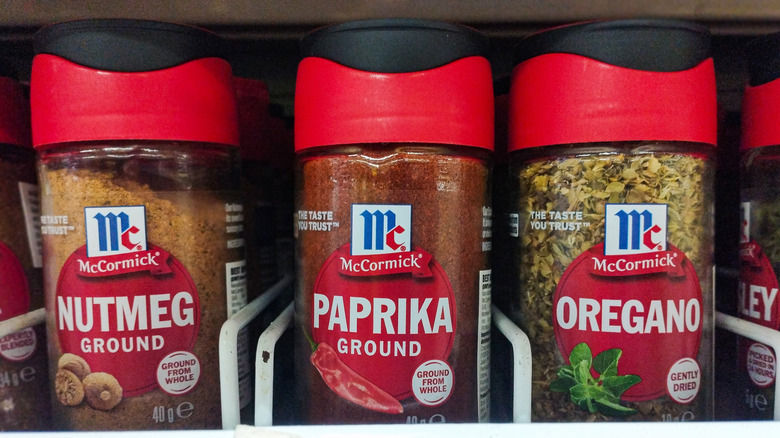
In the U.S., spice bottles simply labeled "paprika" are generally referring to ground red pepper powder that's either sweet or slightly hot. During processing, the inclusion or removal of a pepper's seeds and inner membrane can affect its heat level, with hotter varieties measuring on the lowest end of the Scoville Scale.
Although most commonly associated with Hungary or Spain, don't assume the paprika in your spice cabinet is from either country. McCormick, for example, sources its paprika peppers from India (via YouTube). Other grocery store brands may source peppers from California or South America. If you want authentic, quality Hungarian paprika, you'll need to look for Szegedi or Kalocsa paprikas, which have the European Union's Protected Designation of Origin (via European Commission). That means paprikas that are labeled as such must come from peppers grown and processed in those regions. Spanish paprika also has Protected Designation of Origin from either the Mallorca, La Vera, or Murcia regions, the latter of which is a mild, unsmoked version.
Regardless of where it comes from, regular paprika is versatile enough to work as both a garnish and a full-on cooking spice. Paprika lends its flavor and color to foods and can range from bright orange-red to reddish brown, depending on the pepper variety, processing method, and even how the powder is stored. In the U.S., it's commonly sprinkled over deviled eggs, potato salad, and packaged hummus, while Hungarian cooks use it as a foundational ingredient in flavorful dishes like goulash and chicken paprikash.
Smoked Paprika
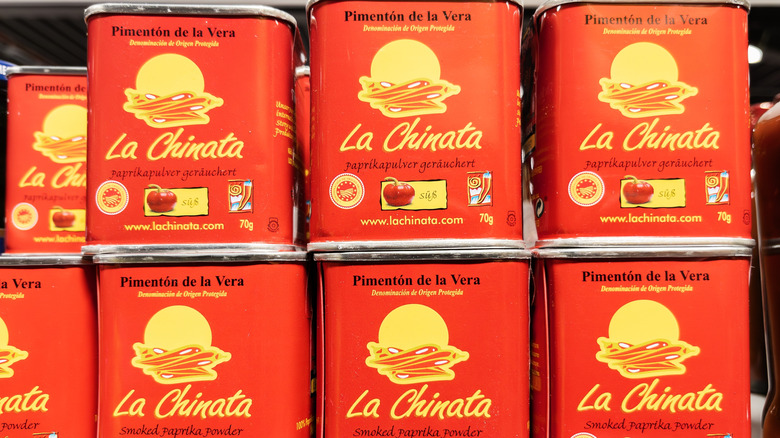
Smoked paprika, on the other hand, is primarily Spanish in origin. Also known as pimentón, smoked paprika is made by drying red peppers over oak fires for two weeks (via Smithsonian Magazine), infusing them with a smoky, woody flavor. The most famous smoked style comes from La Vera, Spain, where production of the spice has persisted for generations and is celebrated with an entire museum dedicated to smoked paprika.
Outside of the smoked flavor, Spanish paprikas are further classified as either dulce (sweet), agridulce (bittersweet), or picante (spicy). Spanish paprika also tends to have an earthier flavor profile than Hungarian paprika, which is generally prized for its sweeter, fruitier flavor. If you want to verify whether it is authentic Spanish smoked paprika, look for the Pimentón de la Vera logo, which is part of the Protected Designation of Origin program.
Smoked paprika is especially useful when you want to add a smoky, almost grilled flavor without actually smoking or grilling the food. In Spain, pimentón is used in traditional dishes like patatas bravas, huevos a la flamenca, and chorizo, but its uses extend far beyond Spanish cuisine. It can add smoky depth to stews, meat rubs, leafy greens, and sauces. That characteristic makes it a useful ingredient when you want more than the color and mild pepper flavor of ordinary paprika. Because the smoky flavor is so distinctive, however, swapping one paprika for the other can substantially change a dish and isn't recommended. Ultimately, that's the key difference between the two. Aside from the obvious differences — the country of origin and how the peppers are processed and used — it's the taste.