

Does A Bottle Of Scotch Last Forever?
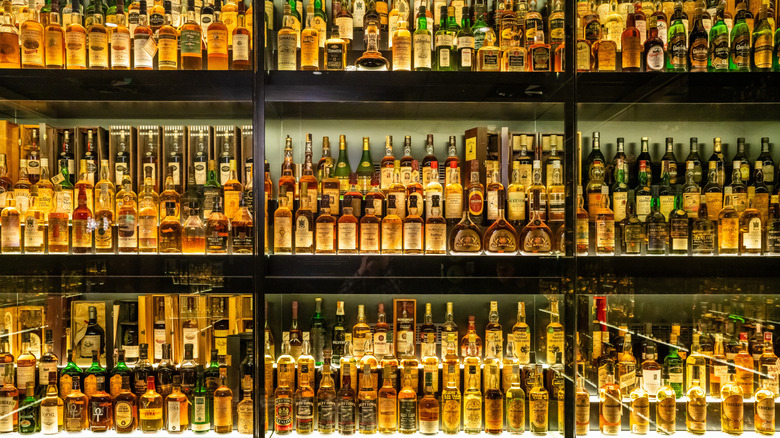
Stashing away a high-end or otherwise special bottle of booze isn't uncommon among those who appreciate fine spirits or a classic cocktail. This is especially true with liquor like Scotch, which is not only known for its diverse range of flavors but also for the important differences created by the aging process. However, those who've got a bottle that's been sitting on their bar for a while may wonder whether the Scotch inside truly lasts forever. The reality is the answer varies between opened and unopened bottles.
Scotch typically starts to show a noticeable decline in quality between six months and two years after opening. Although it never goes truly "bad" in the sense that it becomes unsafe to drink, opened bottles continue to reduce in quality and character due to oxidation and light and temperature changes. Although it might technically last forever, it eventually becomes a question of whether anyone would want to drink what's left inside.
On the other hand, unopened bottles of Scotch can truly survive indefinitely, as long as an adequate airtight seal is maintained. This is especially true when the bottle is stored properly, which means upright, out of direct sunlight, and in stable temperatures between 55 and 70 degrees Fahrenheit. Without any air to oxidize the spirit and its only contact being with the glass bottle, Scotch's flavor and aroma profiles are essentially frozen in time.
Bottle aging doesn't work like barrel aging
While older whiskey is often sought after by collectors and fans, it's critical to understand that simply keeping a bottle for many years isn't the same as long-term aging. The type of aging whiskey connoisseurs prize happens, not in the bottle, but in the barrel. That's because barrel aging allows direct interaction with the wood and environment, which helps develop the more nuanced flavors that aged spirits are known for. In an airtight glass bottle at high proof, this process doesn't continue, meaning the whiskey is stable in its current state until opening. That's different from aging wine, where the product continues to develop even in its final vessel.
This potential for unopened bottles to last forever is among the most important things you should know before taking another sip of Scotch. Other important factors include its many varieties, growing popularity, and the difference between traditional consumption with water and more modern Scotch cocktails. However, the difference in lifespan between opened and unopened bottles can be a key factor in determining whether you open that special bottle or leave it on the shelf a little longer. Just don't expect a more developed final product when you eventually sample it, if you choose to wait.