

5 Tips For Buying The Best Baby Back Ribs At Grocery Stores
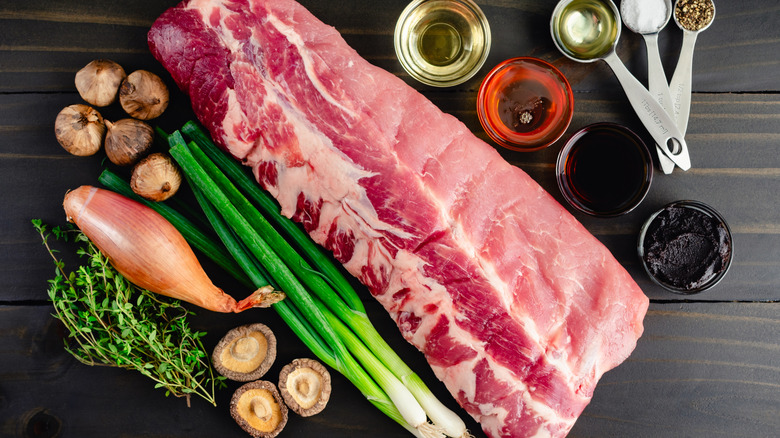
Delicious grilled, smoked, or even just at home with the perfect oven temperature, baby back ribs are a barbecue favorite across the country. Once cast off as excess waste, ribs became a staple in barbecue joints in the American South during the early 20th century. Now, you'd be hard-pressed to find a barbecue restaurant without ribs on the menu — or for that matter, a grocery store without baby back ribs in the meat department. How can you know which ribs are better than others for your next cookout (or another seriously delicious way to make ribs)?
When choosing baby back ribs — not spareribs, which are a little different — look for good meat coverage with no exposed bones, a deep pink color on the pork, and good marbling but not too much fat. Price matters, too, and premium products may be more likely to hit those marks. Baby back ribs come with a tough membrane underneath, so ask the butcher to remove it to get better seasoning coverage and chew all the way around.
To find out the best way to choose baby back ribs, Mashed consulted with Paul Lyons, also known as Paulie Meats on Instagram. He's a butcher and meat specialist for Krasdale Foods, a supplier to around 2,500 independent grocery stores in seven states on the East Coast. We've combined his insight with other tips that have worked for home cooks in their search for perfect ribs.
Meat should fully cover the bones
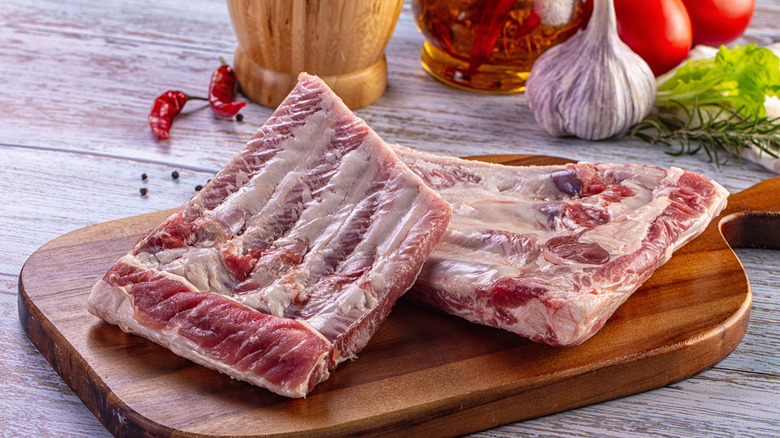
Take a good look at your rack of ribs. The first thing to notice is whether the meat is fully covering the bones, says Paul Lyons. There shouldn't be any exposed bones (called shiners) or places where the bones poke out from the meat, other than at the ends. Shiners happen when the butcher or processor has cut too close to the bone, which could be an indication of sloppy butchering. When it comes to buying ribs with shiners, the first problem is about the overall value. "You're paying for meat, so you want to see meat," Lyons explains. He advises customers to look for a meaty rack of ribs where there is plenty of meat between the bones, too.
Besides getting less meat with your purchase, shiners will prove to be a problem during cooking, too. Those ribs are likely to dry out more quickly and can threaten the structural integrity of the whole rack of ribs (and not in the desirable fall-off-the-bone way, either). Plus, in most cuts of meat, bones exposed directly to the heat source can burn, char, or snap off. You don't want any of that in a perfect rack of ribs.
Dark colored meat is more tender
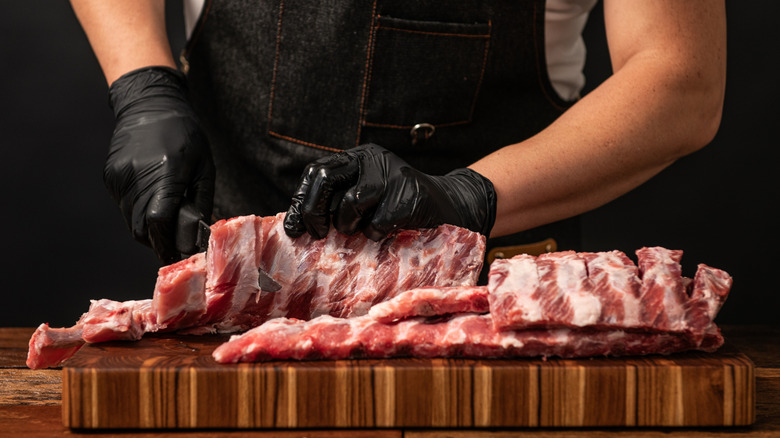
When it comes to appearance, you want to choose a good-looking rack of ribs. Butcher Paul Lyons tells the grocers he works with, "Eye appeal is buy appeal," but the same principle goes for customers choosing cuts of meat, too. One clear sign of a great rack of baby back ribs is the color. "Some will say pink color is better," Lyons says, but in his experience, "The darker the pork ... the more tender it is and juicy."
Color can also indicate how fresh the meat is, as pork will change color through oxidation as it's exposed to oxygen. "Fresh pork should have a pinkish-red color," Cristina Resendiz-Moctezuma, PhD, a food science research associate at Cornell College of Agriculture and Life Sciences, told Everyday Health. "Paler pink cuts are also common and do not indicate spoilage, though they may be perceived as less desirable than darker red cuts." If the rib meat is turning gray or has suspicious tints of blue or green, or if the fat has dark spots, it's likely spoiled or about to spoil, and better kept out of your kitchen.
Marbled without too much fat is ideal
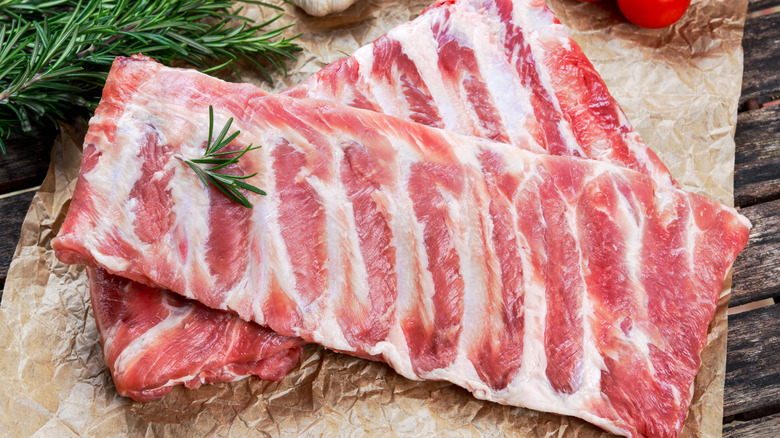
In general, baby back ribs aren't particularly fatty. In fact, they tend to have much less fat than spareribs. As such, look for baby back ribs without large pieces of fat attached, as that may need to be trimmed off before cooking or could be unpleasant to eat. Not everyone wants to dig into a pile of barbecue ribs that have more fat than meat on the bones.
Still, some fat is important and desired. Intramuscular fat should run throughout the cut, which is referred to as marbling. Because baby back ribs generally have less fat overall, they'll have less marbling, too. But if you can see small lines of fat running through the meat, you're likely to come out with better ribs because that fat will melt down during cooking, infusing the ribs with both flavor and moisture.
Looking for a premium product is a good shortcut
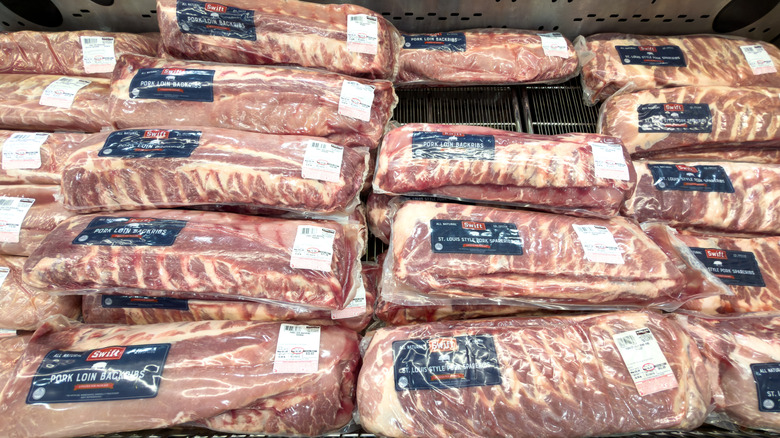
The old saying, "You get what you pay for," comes to mind when you're looking for good baby back ribs. Butcher Paul Lyons believes looking for a higher-quality, premium product is a good shortcut to find meat that's likely to be better in all the ways that matter. "You cannot concentrate on price 100%," he explains, "but when you want a good rack of ribs, you buy a good rack of ribs." He mentioned Chairman's Reserve, which is available from some supermarkets and specialty distributors, as an example of a higher-end brand worth considering.
So how much should you expect to pay? Prices vary based on location, but via Amazon Fresh, you can expect to pay anywhere from about $4 per pound for Amazon's brand, up to $12 per pound for a higher-end brand like Niman Ranch. At other grocers, prices are similar, with standard products around $3 to $4 per pound and premium ones several dollars higher. But a higher-priced rack of pork ribs won't necessarily be better, so take a close look at any options your store might have and decide for yourself whether the jump in price is worth it.
Ask your butcher to remove the membrane
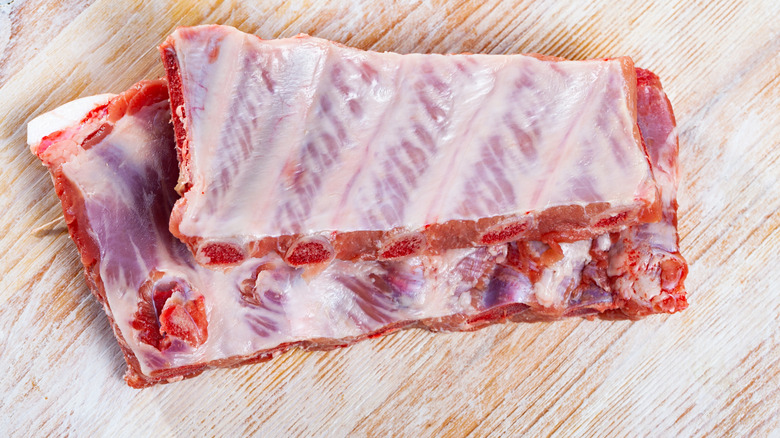
Before you cook the ribs (or smoke them with this easy 2-2-1 method for tender BBQ pork ribs), a membrane that runs along the bottom of the rack should be removed. It's not an essential step — and barbecue enthusiasts debate whether it's necessary at all — but it's often tough and chewy and removing it will allow the seasoning to more fully penetrate into the meat. Paul Lyons encourages shoppers to ask the butcher at your local supermarket to remove the membrane. "If you really want to get the seasoning under the ribs ... and get more in-depth flavor," Lyons says, "have the butcher remove it for you."
If you prefer to do it at home, that's possible, too. Turn the rack of ribs over and find where the thin silvery membrane meets the rib meat. Carefully slide a butter knife between the two (about three ribs in from the end of the rack). When you've pushed the knife all the way through along the bottom of the ribs, twist it until the membrane starts to separate further. Grab the end of the loosened membrane with a paper towel and pull it off the rack.