

Why Sambuca Is Served With 3 Coffee Beans In Italy
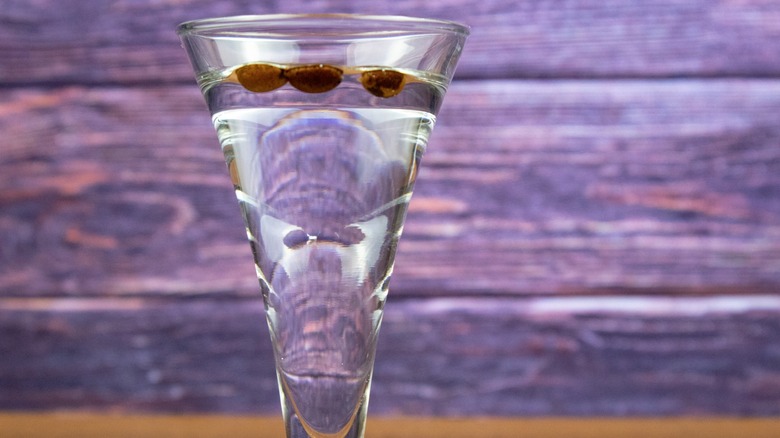
When you think of Italian drinks, odds are your mind goes to a classic Aperol spritz or limoncello. Sambuca, an anise-forward liqueur, is less sought out stateside. Those who have experienced its licorice-like flavor may have noticed that their libation came crowned with a coffee bean — or three — and the reason why may make you ditch your usual Negroni, just this once.
Shots of sambuca often come with one coffee bean, or "sambuca con la mosca," meaning "with the fly," or with three beans, similar to an espresso martini, to represent health, happiness, and prosperity. Some bartenders even top sambuca with seven beans to signify the seven hills of Rome, seemingly a nod to the drink's believed 1851 origins in Civitavecchia, a historic port northwest of the Italian capital.
The liqueur is a "digestivo" that's often served neat at the end of a meal with dessert and coffee, or more specifically espresso. Sambuca differs from ouzo, Greece's licorice-flavored aperitif; although their tasting notes are similar, sambuca is made from grain or molasses, while ouzo is grape-based. The debut of the coffee-bean tradition — which at times includes setting the sambuca on fire to toast the beans — is debatable, but most people trace it to 1960, after Federico Fellini's "La Dolce Vita." Legend has it that an actor sipping sambuca on a filming break dropped a coffee bean in it and exclaimed, "There's a fly!"
Sambuca is worth having at home
Sambuca gets its unique flavor from the essential oils of star anise or green anise. The coffee bean tradition likely endured because it's a sound, complementary pairing (after all, some Romans even sub sambuca for sugar in their espresso). The spirit's sweet licorice scent alongside the bitter coffee beans enhances the sensory experience. Drinkers can chew the beans as they drink to cut the sambuca's sweetness between sips, or fish them out from the bottom of the glass to enjoy after the last sip.
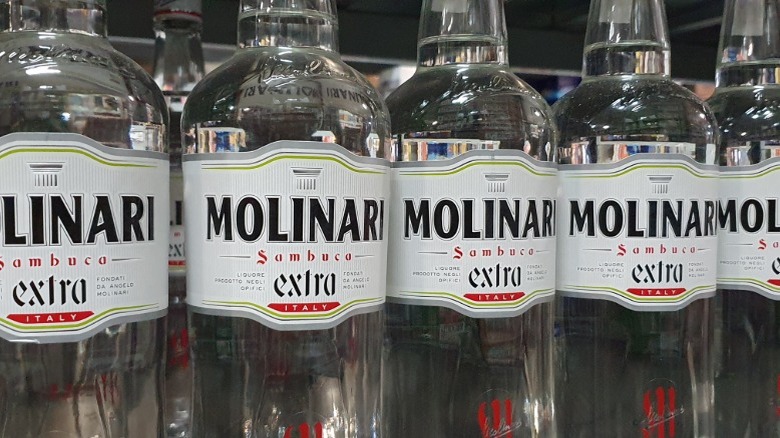
Along with coffee, Sambuca is a natural match for dairy and fruit. It may not be as popular in the U.S. as other liquors, but buyers have plenty of options: Brands include Molinari Sambuca Extra, around since 1945; Romana Sambuca, developed in the 1920s, and its Romana Black, made with elderberries; as well as Luxardo; Antica; and Borghetti; among others.
Because it's a novelty most Americans don't use often, sambuca made our list of worst liqueurs for a home bar. Still, it has a following. "I feel like everyone hates the stuff, but I'm in love with it. ... Served warm in a snifter, served as a flaming shot, served chilled with soda water; gimme it all," a fan shares on Reddit. Another Reddit user explains that "[Coffee beans] have been used traditionally as an aromatic and flavor-enhancing garnish. ... Sambuca neat is a perfect example." Yet another fan on Reddit writes, "I've only had Romana, but I love it to pieces. Just float some espresso beans in there, and you're all set. Anise is great."