

5 Disadvantages Of Using A Propane Grill
We may receive a commission on purchases made from links.
For people who love to grill, one eternal debate rages as high as the heat: propane or charcoal? Both have their dedicated partisans who'd never dream of switching to the other, but more flexible cooks might be wondering how each stacks up. When looking at drawbacks, the list faced by propane grills is relatively short but clear. Propane grills fall short on smoky flavor, can cost more upfront, and have more components that could potentially break. They also present difficulties with monitoring fuel levels and don't offer the same low-and-slow cooking benefits.
To be clear, it's not all bad news with propane grills. They're far easier to fire up than charcoal models, often lighting with the touch of a button or flick of a lighter, without any of the time or equipment needed to properly ignite charcoal. For some, this convenience means they grill more often and get more value from their equipment. The temperature dials on propane grills also allow you to control the heat with ease, resulting in a consistency that charcoal struggles to match. Still, those excited by the user-friendly nature of propane grilling should not ignore the disadvantages, which are worth giving some serious consideration.
The food it grills has a less natural smoky flavor
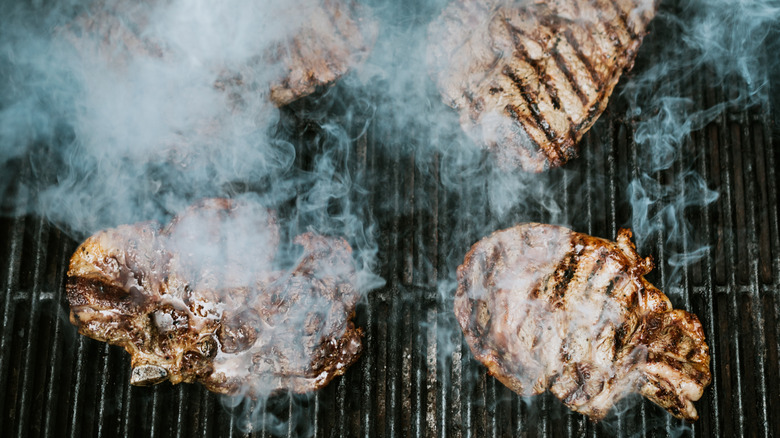
Perhaps the most obvious disadvantage to using a propane grill is that, unlike charcoal, the heat source doesn't impart any additional flavor. For many, the rich smokiness of charcoal id an inseparable part of grilling steaks, burgers, veggie kabobs, and other outdoor cooking classics by amping up their natural flavors and added seasonings.
On the other hand, propane is known as a clean-burning fuel, producing no odor and fewer negative environmental impacts than comparable pollutants and their byproducts. The roaring flames of propane fuel are simply providing heat to your grill without flavoring the food you're cooking beyond typical processes like the Maillard reaction, the technical term for the flavorful charring and browning that occurs on meat and other savory foods. Home cooks will need to be mindful of appropriately seasoning propane-grilled meals to avoid the risk of them tasting a bit flat.
Propane grills have a higher upfront cost
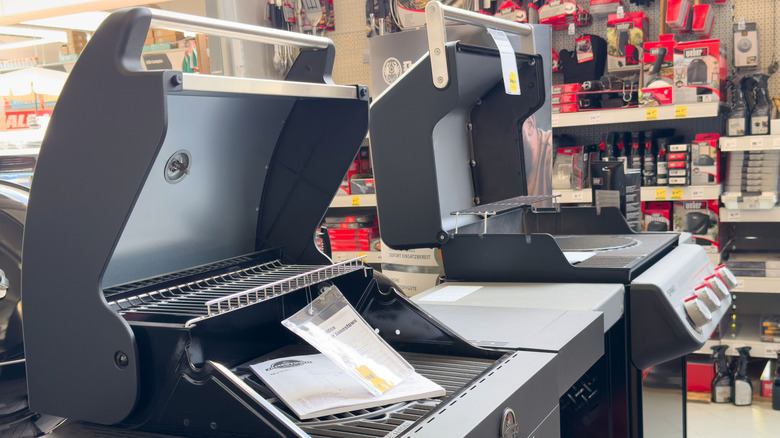
Grills of all types are available across a wide price spectrum, from budget-focused to ultra-high-end. Shoppers looking for an entry-level to mid-market propane grill will find they're generally pricier than their charcoal counterparts. Those looking to buy a new propane grill will need to spend at least $130 to $150 for the smallest models with the fewest features, while more popular, larger versions can sell from $200 to $600 and up.
The simplest charcoal options start in the $50 to $70 range for full-size grills, with smaller, more portable options available for even less. At the budget end, this makes buying a propane grill roughly twice the initial investment. That can be a significant stumbling block for novice or cost-sensitive grillers considering their first purchase.
When comparing mid-market grills in both styles, the price gap narrows. For instance, a four-burner propane grill with a 566-square-inch cooking space from the Nexgrill brand costs $249 at Home Depot. Nexgrill's charcoal grill with 574 square inches of cooking space is sold at Home Depot for $149.
It has more pieces to maintain and replace than a charcoal grill
Altogether, charcoal grills are pretty simple. Beyond basic components like the cooking and charcoal grates, dampers that let air flow from the bottom of the grill and the top of the lid are among the pieces of note. Propane grills are a different story.
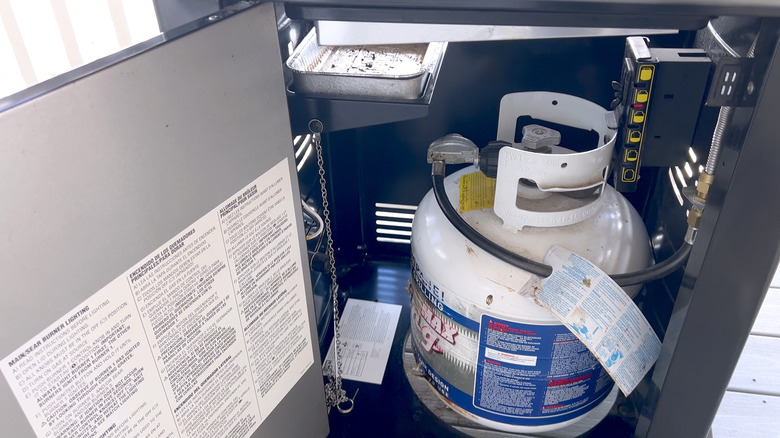
These grills have many more parts that need to be maintained (and at times, replaced) to continue working safely and efficiently. There's the regulator that controls the flow of gas from the propane tank, followed by the gas line that travels to the manifold and distributes fuel to the individual burners. There are also automatic starter components, which produce a spark using battery-powered ignition or piezoelectric igniters.
Problems with any of these, or with the knobs used to adjust the amount of gas flowing to the burners, can lead to poor performance, accidents, or a refusal to light at all. Propane grill owners are at a distinct disadvantage on this front, as they'll need to monitor, maintain, and replace any malfunctioning parts, making their already pricier upfront grill costlier over time. Replacement pieces typically start around $20 and can cost substantially more for certain models.
You can't tell how much propane is left in the tank by sight alone
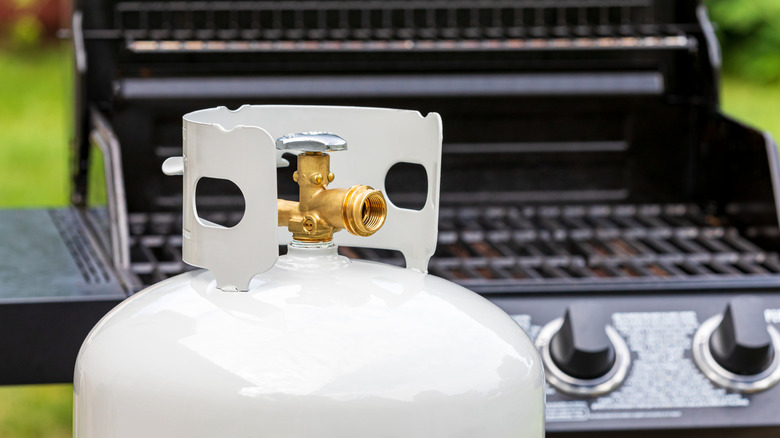
Nothing can ruin a grilling session faster than running out of fuel before the food is finished cooking. This is fairly easy to anticipate with clearly visible charcoal, but it's more uncertain with an opaque propane tank. While there are simple tricks to let you know how much propane is left in your grill, some home grillers might get caught up in prepping the meal and forget to check their fuel levels. They're then sent scrambling when the flames sputter out, leaving steak, burgers, or chicken halfway cooked.
The surest way to avoid this issue is to buy a backup tank, which in turn reinforces another propane problem. Not only does it add to the expense of grilling, but it also forces grill owners to find more room to safely store the substantially sized propane tank. Charcoal presents no such problem. Grillers can stash a small, low-cost "emergency" bag if the grill's heat source needs replenishing.
It's less suited to smoking and low-and-slow cooking
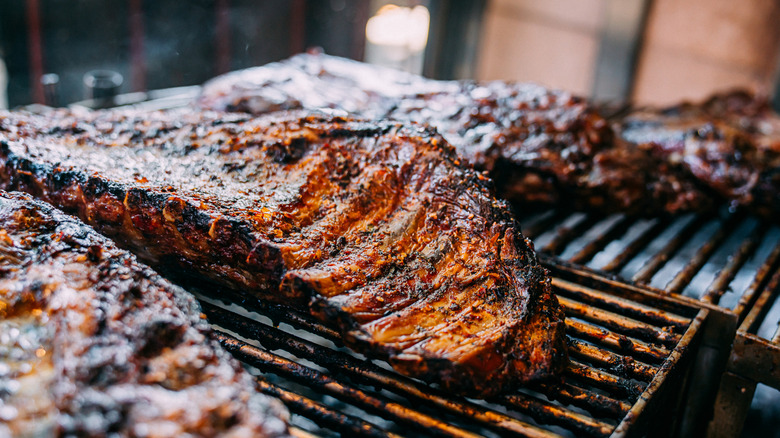
Another area where propane grills fall short is versatility. Charcoal grills, particularly kettle varieties, have a long, tried-and-true history of serving as suitable, if not perfect, smokers. This is a result of their ability to maintain low-and-slow cooking conditions with smoldering charcoal heating the food from below. With practice, home cooks can achieve a barbecue of impressive quality with this setup, giving the charcoal grill another use beyond straightforward grilling. Propane grills can't measure up.
The biggest issue is the propane grill's general difficulty of maintaining temperatures outside its typical 350 to 550 degrees Fahrenheit cooking range. Most smoking and slow-cooking happens in the 225 to 250-degree range, and is typically achieved using a more complicated combination of burners providing indirect heat. Propane models are not designed to cook this way.
At the end of the day, the choice between propane and charcoal grills is a personal one that often comes down to familiarity. It's pretty easy to whip up recipes that are perfect for the grill on either style, particularly with experience and practice. However, there are clear disadvantages to cooking with propane, and it's important to keep them in mind before your next grill purchase.