

What's The Difference Between Coffee Creamer And Heavy Cream?
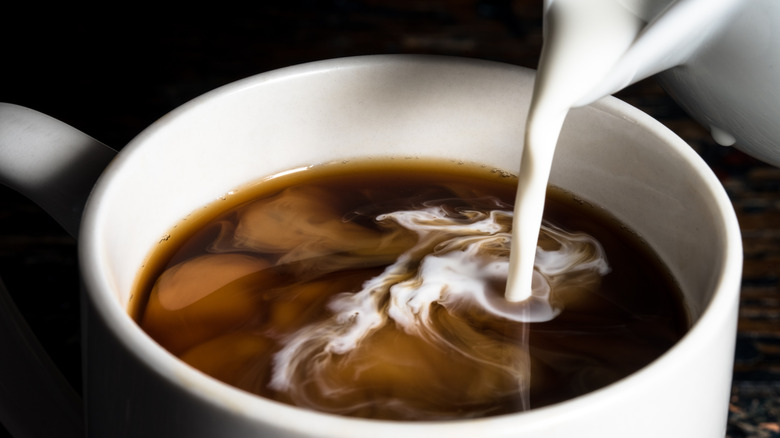
It may surprise some to know that although the word "cream" sounds simple, it's actually not a very specific term. There are several different types of cream, and each has its own use, from baking to mixing to freezing. Also called milk creams, these dairy products are mostly made of milkfat and are distinguishable by their varying fat contents. Heavy cream, as the name implies, is on the higher end with at least 36% milkfat. When added to coffee, iced or hot, heavy cream adds a silky texture and richness that tempers coffee's bitter edge.
But heavy cream is far from the only type that can go in coffee. And while lots of things can be substituted for heavy cream in cooking and baking, coffee creamer isn't generally one of them because it typically lacks sufficient fat content. Coffee creamer is, in fact, another broad category that covers more ground than the average coffee drinker might assume. For starters, there are both dairy and nondairy coffee creamers. Knowing whether you should get heavy cream or a nondairy creamer might make the difference between a sweet and delicious treat and a really bad day if you're allergic or lactose intolerant.
Coffee creamer

Coffee creamer falls into two basic categories: dairy and nondairy. The former includes cream, milk, and half-and-half, which blends cream and milk for a richer but less heavy flavor. Yogurt is an atypical dairy additive to make coffee creamy without the cream. Nondairy creamers can be made from soy, nuts, oats, coconut, and other plant-based materials. Both dairy and nondairy creamers come in a variety of flavors like hazelnut, sweet cream, and vanilla.
Dairy-based coffee creamers offer the natural sweetness of lactose, while plant-based creamers often have sugar added to make them taste sweet. Naturally, creamer made from nuts brings nutty flavors, just as coconut creamer tastes like coconut. The creaminess in these plant-based coffee additions often comes from the inclusion of vegetable oils rather than milkfat. Some creamers calling themselves nondairy may contain the milk protein casein, so be sure to read the ingredients list if this is a concern for you.
Heavy cream
If you like your coffee rich and velvety-smooth, then heavy cream may indeed be the add-in for you. However, heavy cream is often used for other culinary purposes. Its minimum 36% milkfat content makes it ideal for thickening soups and sauces, freezing into ice cream or other frozen dairy desserts, or mixed into caramel sauce, as well as whipping into sour cream or its polar flavor opposite, a sweet pastry icing. This is why heavy cream is sometimes called heavy whipping cream.
A quick word of warning, though: Heavy cream is different from whipping cream, as the former has a higher fat content. True whipping cream contains between 30% and 36% milkfat, making it less dense. So, if a light, fluffy dessert topping is what you're looking for, opt for whipping cream. Heavy cream will result in a whipped cream with stiff peaks. And if you want to top your favorite coffee with a dollop of whipped cream, we totally understand.