

What Are The Differences Between Instant And Ground Coffee?
We may receive a commission on purchases made from links.
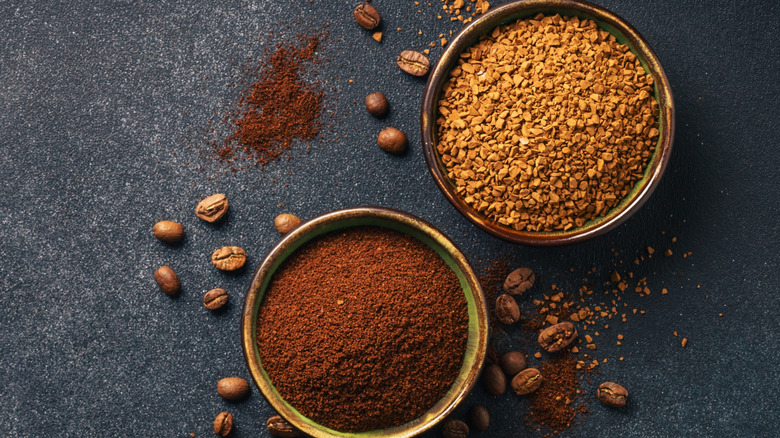
It's no secret die-hard coffee drinkers are steadfast in how they prefer their cup of joe in the morning. From brand and bean origin to roast level and processing method, there are a variety of nuances to consider when choosing your favorite cuppa. Although there's no reason to judge another's coffee order, in the U.S., instant coffee is often considered second-rate when compared to whole-bean or ground coffee. Yet, many people enjoy it for its convenience. The difference between ground coffee versus instant coffee has to do with preparation, flavor quality, price, shelf life, and caffeine content.
Contrary to what some people might think, instant coffee is made from actual coffee. Generally speaking, it is not synthetic or chemically engineered to look and taste like coffee. In fact, it is made from genuine coffee beans that have been roasted, brewed, and dehydrated, resulting in a dry coffee powder that is soluble in water.
Meanwhile, ground coffee consists of roasted coffee beans that have been ground to a fine to coarse granule with a coffee grinder. While it might look similar to instant coffee, you'll be greatly disappointed if you try to stir ground coffee into a mug of hot water. Ground coffee must be brewed in a machine to avoid drinking coffee that feels like sand in your mouth. (That is, unless you're like cowboy cook Kent Rollins and enjoy a nice mug of cowboy coffee).
How it's prepared: stirred vs brewed
Starting in the mid-to-late 18th century, various unsuccessful attempts were made at creating dissolvable coffee powder. It wasn't until 1889 that New Zealand spice merchant David Strang invented a dry coffee powder that is similar to the instant coffee we know today. Naturally, instant coffee boomed during World War I due to the convenience and comfort it offered the troops (even if it didn't taste nearly as good as brewed coffee).
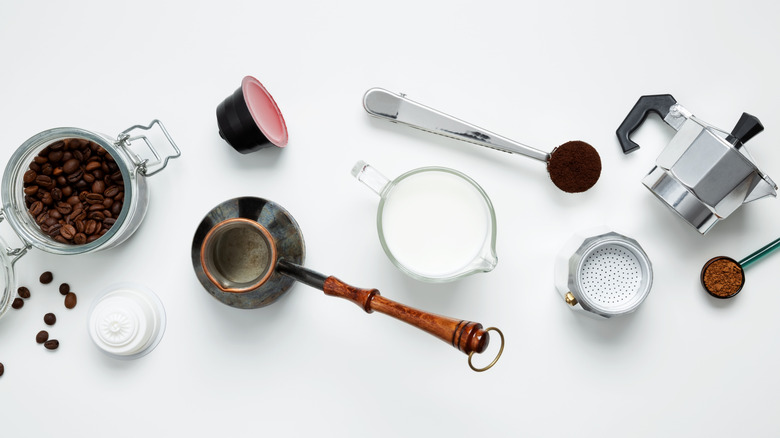
Convenience continues to be a major factor for the popularity of instant coffee since it can simply be stirred into a cup of hot water. Instructions for one of the most well-known brands of instant coffee, Folgers, say to add one rounded teaspoon (or more depending on your desired strength) to a mug or glass, and add six ounces of hot water or milk. You can also add cold water or milk for an iced drink, but bear in mind you'll need to stir it for a couple of minutes longer to get it to fully dissolve.
Meanwhile, ground coffee has the convenience of being pre-ground for you but requires brewing or steeping in a coffeemaker, like a French press or automatic drip machine, in order to deliver the full flavor of the beans and filter out the plant matter and oils that do not dissolve in water.
Flavor quality and type of beans
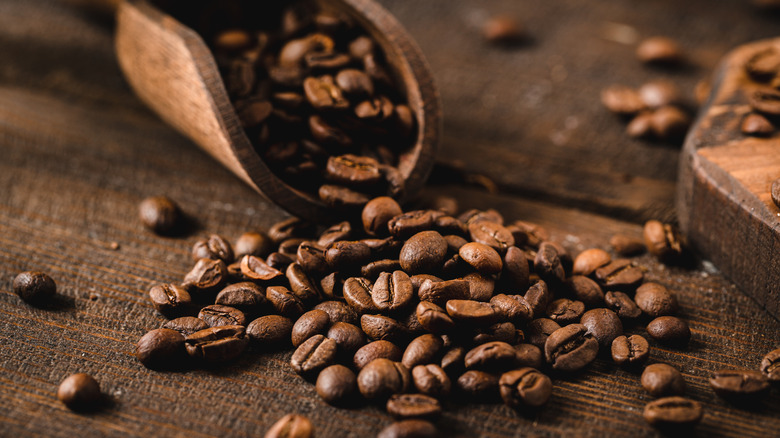
It's highly debatable, but most people prefer the flavor of ground coffee to instant coffee. Although instant coffee is really coffee, there are mixed opinions on its taste quality. One reason is because the drying process removes the oils and rich flavor that contribute to a full-bodied cup of java. Many people prefer the texture and aroma of ground coffee, while instant sometimes seems watered-down, lacking the pleasant pungency of freshly ground coffee. Brewing coffee also helps pull out the robust flavor and aroma of the ground coffee.
Coffee drinkers often point to the type of beans used to make instant vs. ground coffee as the main reason for the difference in flavor. Instant is typically made with robusta beans, which have a bold, bitter flavor profile. Meanwhile, ground coffee is usually made with arabica beans, which offer a smoother taste with more nuanced flavor notes, such as caramel, floral, nutty, fruity, and chocolate.
While there was a time when ground coffee would always win out over instant coffee in terms of flavor quality, niche brands are now delivering higher quality cups of instant java. By using better quality beans, different methods of dehydration (freeze drying vs. spray drying) and producing it in smaller batches, instant coffee producers are taking strides to improve this convenient option. For instance, Waka is widely considered one of the best-tasting brands of instant coffee, made with freeze-dried 100% arabica beans.
Caffeine content
If, like many coffee drinkers, you rely on a cup of joe for a much-needed boost of caffeine in the morning, as an afternoon pick-me-up, or for a late-night study session, you may want to opt for ground coffee instead of instant. On average, an eight-ounce cup of coffee brewed from ground beans has about 80 to 100 milligrams of caffeine. Meanwhile, an eight-ounce cup of instant coffee contains around 60 to 80 milligrams of caffeine on average.
There are a few reasons why instant coffee has less caffeine than ground. For one, instant generally contains less coffee per serving than brewed. Moreover, the extraction and dehydration process of making instant coffee removes some of the caffeine. Adding more instant coffee powder to your hot water is an easy way to increase the caffeine content.
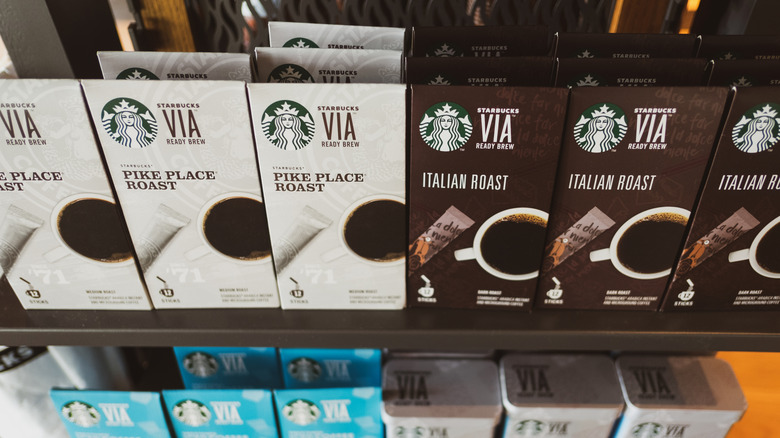
If you're looking for a high-caffeinated instant coffee, consider trying Starbucks VIA Instant Coffee, which contains around 135 milligrams of caffeine per eight ounces. Starbucks instant coffee combines standard dehydrated arabica ground coffee with micro-ground beans to enhance the flavor and provide a higher caffeinated product. For reference, a standard eight-ounce cup of Starbucks brewed coffee contains around 155 to 195 milligrams of caffeine.
Difference in price
Instant coffee has traditionally been less expensive than ground coffee, due to using cheaper robusta beans and yielding more cups of coffee. However, the cost of instant coffee is on the rise, due to brands using higher quality arabica beans to deliver a smooth flavor more on par with ground coffee.
Still, while price comparison can be tricky due to variables like type of bean used, production method, brand quality, and how strong you make your coffee, instant coffee tends to be the more economical choice. For instance, a 10.5-ounce jar of Nescafé Clasico Dark Roast Instant Coffee costs about $14 and yields 150 six-ounce cups of coffee.
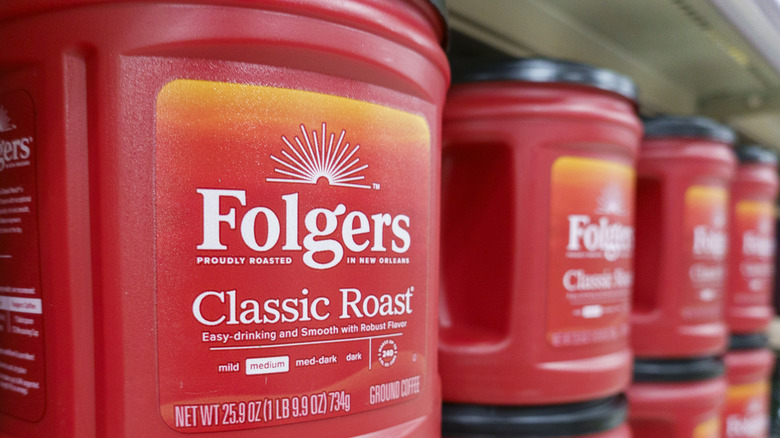
Meanwhile, ground coffee like Folgers Classic Roast Ground Coffee runs $7 for a 9.6-ounce canister, yielding about 27 to 54 cups of coffee (using the standard one to two tablespoons of coffee per six-ounce cup). Thus, if you stick with the recommended serving sizes, instant coffee comes out on top as the cheaper coffee for these mid-tier brands (13 to 26 cents per cup for ground coffee vs. 9 cents per cup for instant).
Shelf life comparison
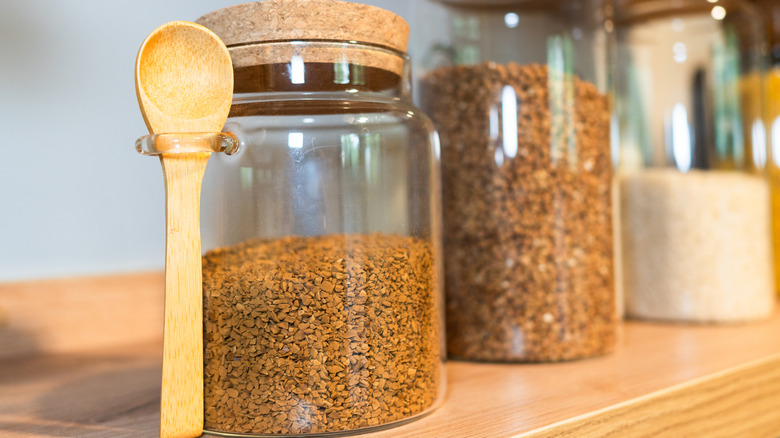
Instant coffee is very shelf-stable, lasting significantly longer in your pantry than ground coffee. This is because the water content is removed from the coffee grounds during the dehydration process, essentially preventing bacteria from growing, thus increasing preservation. How long it lasts largely depends on whether it is opened or unopened. Unopened instant coffee can last for up to two years or more, while unopened coffee grounds may only last up to five months. Once opened, the shelf-life of instant coffee decreases to around a year, and one to two weeks for ground coffee.
Instant coffee can potentially last for decades without spoiling, but it's flavor will change over time. Therefore, it's ideal to use it by the "best by" date listed on the packaging. The same advice applies to ground coffee — it won't necessarily spoil or become unsafe to drink, but it loses flavor and aroma fast, tasting stale after a couple of weeks once opened, due to exposure to oxygen. To extend the shelf life of your ground coffee, store it in an airtight container in a dark place like the pantry or cupboard, away from heat or humidity sources. You can also store ground coffee in the freezer to extend its shelf life. To avoid moisture buildup, consider storing it in portions in multiple Ziploc bags, so once a bag is removed for use, it does not go back in the freezer.