

What Are The Main Differences Between Amber And Pale Ale Beer?
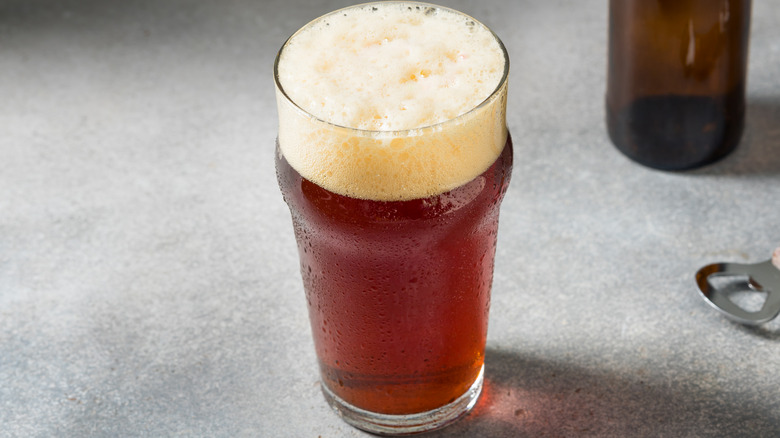
Choosing a beer can be as easy as ordering whatever is on tap. Yet it becomes more difficult to decide what type of beer to order when a restaurant or bar has an entire list to choose from. A stout is a dark beer, and an IPA is hoppy, but what are the standout features of amber ales and pale ales? These beers share similarities, but their color, level of malt and hops, and flavor make them distinguishable.
Ales are one of the two main categories of beers. All ales are defined by the fact that they are brewed with a yeast called Saccharomyces cerevisiae that floats to the top of the tank during fermentation. Lagers, the other main category, use Saccharomyces pastorianus, a yeast that sinks to the bottom. Amber and pale ales slightly differ in alcohol content (ABV), with pale ales sitting around 4% to 6% and amber ales containing around 4.5% to 6.2%.
Both ale styles have British origins. Pale ale's origins trace back to 18th-century England. The term was used to describe beers that were lighter than the popular dark beers of the time, like porters and stouts. Amber ales are related to beers from the British Isles, like Irish red ales and Scottish ales. Any lighter beer with an amber or coppery hue fell under this classification. "American" amber ale was solidified as its own beer style during the 1980s craft beer movement. Although amber and pale ales have both evolved with time, there are key differences that remain between them.
Differences in color
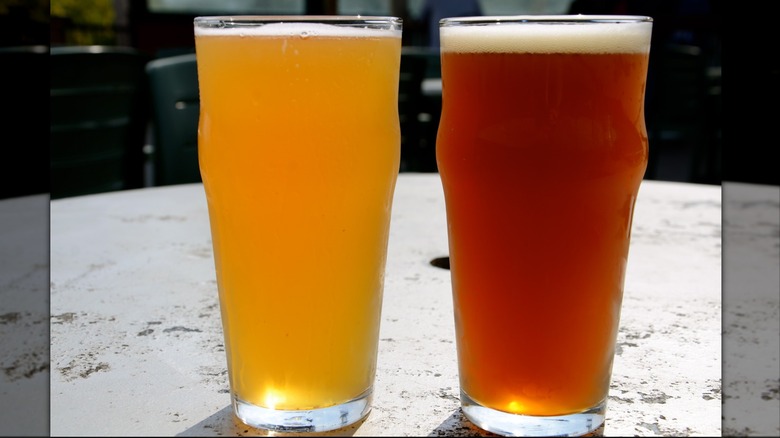
The names "pale" and "amber" accurately describe the color of each beer style. Amber ales can be a reddish-brown or deep copper color, while pale ales are typically a lighter shade of gold or amber. To get technical, the color of the ales can be compared using the SRM, or Standard Reference Method, which gives beer a color ranking from 1 (very pale yellow) to 40+ (basically a black beer).
Pale ales fall into the 4 to 16 range, while Amber ales place between 11 and 18 SRM, so there can certainly be some overlap. Interestingly, pale ales of the past were often darker, and based on today's standards, they would likely be categorized as an amber ale. The distinction between amber and pale ales became more defined in modern times when American amber ale was developed, and these varieties almost always tend to be darker than pale ales.
Malt and hops define the flavor of these beers
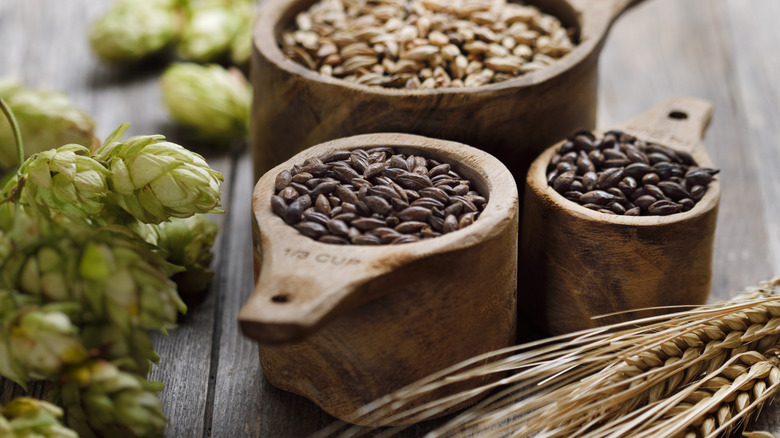
The reason amber ales are darker in color than pale ales is that they have a higher toasted malt content. Malts that have been toasted are called caramel or crystal malts. This increases the natural sweetness of amber beers and gives them a slightly nutty and sometimes caramel-like flavor. The malt is not fully roasted, as it is for stouts and porters, so amber ale is not considered a dark beer; however, it has a rich flavor, making it a nice beer for the fall and wintertime. The malt is balanced by hops, which give a slightly bitter edge and notes of citrus, though amber beers generally aren't considered "hoppy" beers. American amber ales do use more hops, so some ambers from certain breweries may taste more bitter as a result.
Pale ales, on the other hand, tend to have the opposite ratio, with more hops and less malt. While there are many variations of pale ale, the American variety tends to be quite hoppy, and this is the prominent flavor that shines through. As you sip a pale ale, you might pick up citrus and pine notes, backed by a subtle sweetness from the malt. In general, expect amber ales to be richer, sweeter, and more full-bodied than pale ales, which typically have a more refreshing, lighter flavor profile.
Each beer has its own subcategories and country of origin
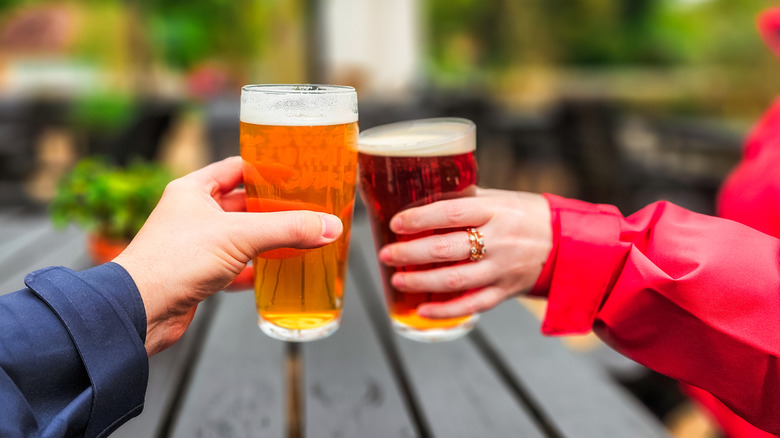
The differences between pale ale and amber ale can become more noticeable depending on the beer's subcategory and where it's made. Pale ales come in many varieties, with IPAs (India Pale Ale) being one of the most famous examples. IPAs are different from pale ales because they have a higher hop content, an overall stronger flavor profile, and higher ABV. Belgian Pale Ales use more malt, while English Pale Ales (often called extra special bitter) are brewed with a more equal balance of malt and hops.
Amber ales are very similar to red ales, and are sometimes lumped into the same category depending on the region and brewery. In the United States, a brewery might choose to label its beer as an amber or red ale due to how closely related they are. That said, Irish red ale and American amber ale have clear distinctions in taste. Irish red ale has a high toasted malt content and a low amount of hops, while American amber ales typically contain more hops.
Serving and pairing suggestions differ between ales
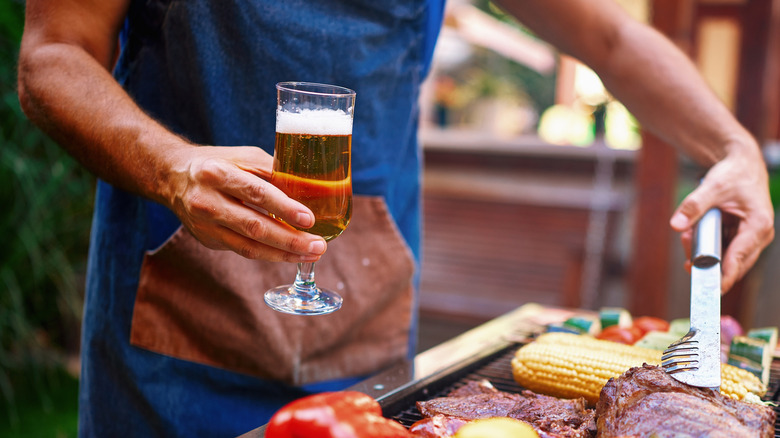
Amber ales are best served at 45 to 55 degrees Fahrenheit, while pale ales can be poured a bit warmer, between 50 and 60 degrees. For glassware, tulips are the go-to choice for amber ales, and a classic pint works well for pale ale. If serving an IPA, tulips are also a good option, as the smaller opening helps concentrate the stronger aroma.
As for food pairings, pale ales go with a lot of different dishes and cuisines because of their clean, refreshing taste. Pale ales are nice to sip alongside spicy foods, Asian cuisine, as well as anything rich, like a cheesy pizza.
Since amber ales have a balance of sweet and bitter, they pair well with foods that have a sweet and savory combo, such as candied nuts. They're also a great companion to cheeses like cheddar and parmesan, cheesy pasta dishes, and even chocolate desserts like brownies. Both amber ales and pale ales are good beverages to serve with BBQ and grilled meats.