

What Are The Main Differences Between IPA And Pale Ale Beer?
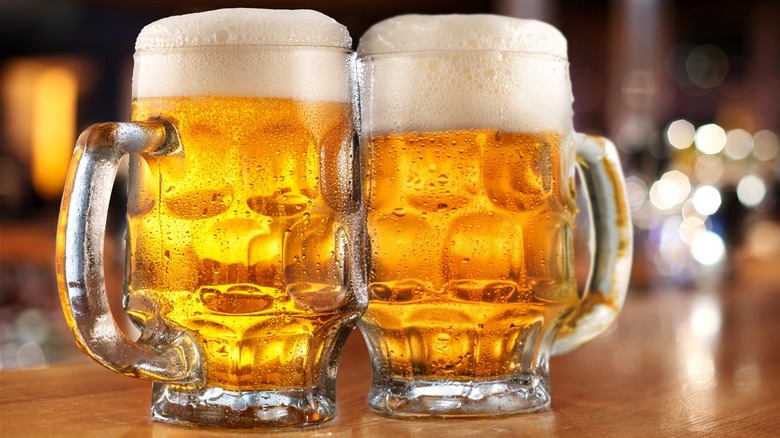
Even if you take some time to learn more about different types of beer, there are so many that it can get confusing. Some distinctions are process-based and, as a result, invisible to the naked eye, like the differences between ales and lagers. With others, the distinctions can be as obvious as their names imply: If someone puts a red ale, a brown ale, and a blonde ale in front of you, you probably won't have trouble telling which is which. When it comes to two distinct styles that just so happen to share most of their names, however, it can get pretty tricky.
This happens to be the case with India pale ale (IPA) and pale ale beers. Don't try to order them at a bar thinking one is interchangeable with the other — they each offer wildly different experiences. IPAs, in general, may not be for everyone because the way they're brewed packs them with more of a wallop than other styles of beer, while a pale ale tends to be their more approachable cousin.
However, the scope of what constitutes IPAs and pale ales can be very broad, since there are multiple types of each style. You can, for example, have hazy IPAs and session IPAs, as well as English pale ales and Belgian pale ales. For the purposes of a more general comparison, we're limiting things to the types most likely to be on your supermarket shelf: an American-style IPA and an American pale ale.
Pale ales and IPAs differ in hop content
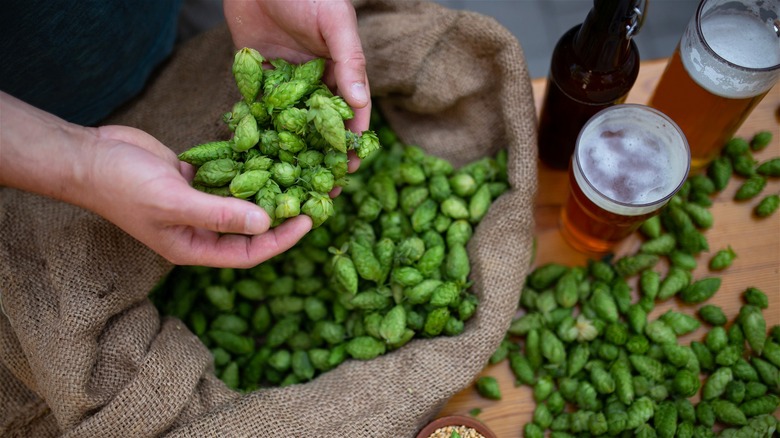
The biggest difference between the two styles lies in their respective hop profiles, which, in turn, have a profound impact on their flavors. Hops are responsible for the bitterness in beer, as well as many of the fruity, floral, or herbal notes in its aroma and flavor profile. In general, India pale ales tend to be more heavily hopped than pale ales, making them much more intense on the nose and palate. American IPAs, in particular, also tend to have more assertive hop profiles than their British counterparts.
An average pale ale will measure about 30 to 50 International Bitterness Units (IBUs), which is enough to temper the sweetness of the beer's malt content. An average American IPA, because of its hoppiness, generally measures about 40 to 70 IBUs, although some versions may be rated considerably higher. For comparison, American lagers like Budweiser tend to fall in the range of 5 to 10 IBUs, which is why they may feel easier to drink than sharper-tasting ales.
All that bitterness is often balanced, however, by other things hops bring to the table; what those are specifically depends on the types of hops used. Different hops can have different flavors, with some presenting a more floral character and others more of a spicy one. One of the most popular varieties in the U.S., Cascade, is known for its citrusy, floral, and spicy character. While you'll taste these notes in pale ales, IPAs tend to punch you in the face with them — which is exactly what hopheads want.
Their histories reflect two very different brewing eras
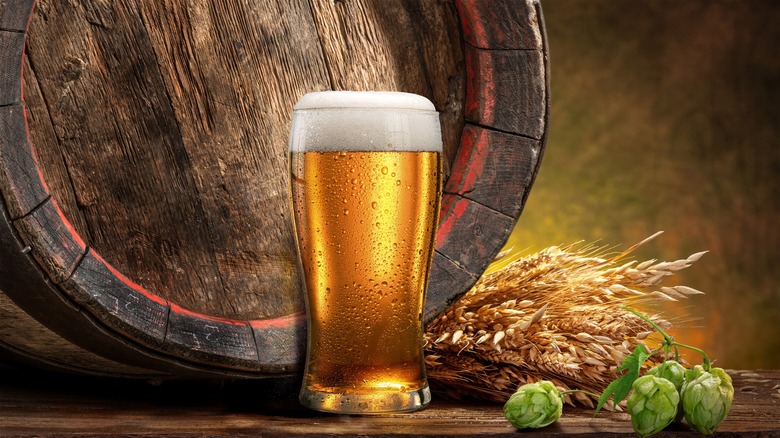
While its name says "pale ale," the IPA as we know it today traces its origins to an earlier beer style, as well as its historic connection to the British Empire's East India Company. In the late 1700s, George Hodgson's Bow Brewery began shipping October beer — a strong, aged, hop-forward style of ale — to East India Company employees in India. While Hodgson did not invent the style specifically for transport, this well-hopped ale proved exceptionally suited to the long voyage and became immensely popular with British residents abroad.
The beer became so popular that other brewers back in England attempted their own versions, giving rise to the earliest precursors of India pale ales. In the 1820s, Burton upon Trent brewers such as Samuel Allsopp began producing pale, highly hopped ales for the Indian market, helping shape the style that eventually became known as India pale ale.
On the flip side, the American pale ale is a relatively new creation. While pale ales have been around since at least the early 1700s, it wasn't until the 1970s that we would get the American version. During the American craft beer revolution, brewers experimented with variations on British pale ales using local ingredients and the local palate in mind, resulting in a brighter, more hop-forward new style. Pioneering breweries like Sierra Nevada would later help it explode in popularity during the 1980s. Sierra Nevada Pale Ale continues to be so good, in fact, that it placed near the top of the class in Mashed's ranking of classic American beers more than 40 years after its debut.
IPAs usually have more alcohol than pale ales
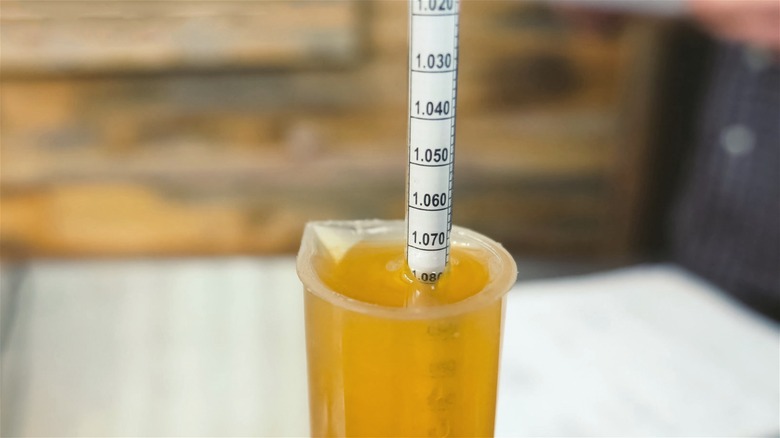
Traditional India pale ales were relatively strong beers, and modern American IPAs tend to have an above-average alcohol by volume (ABV). Aside from its intoxicating effects, alcohol can also help preserve beer by inhibiting the growth of microorganisms that can cause it to spoil. India pale ales typically hover around the 6% to 7.5% ABV range, although some can reach 10% or higher if the brewer really wants more of that alcoholic bite. Back in 2010, for instance, Scottish brewery BrewDog launched Sink the Bismarck!, a freeze-distilled quadruple IPA that clocked in at an astonishing 41% ABV.
American pale ales, on the other hand, tend to fall in the range of 4.5% to just over 6% ABV. This is close to a typical beer under U.S. standard drink measurements, which count 12 ounces of beer at 5% ABV as one standard drink. It isn't out of the question, however, for brewers to go beyond these numbers — in 2025, for example, Kansas City-based Boulevard Brewing Co. released its Pandan Coconut Doughnut Ale, an American pale ale that hit 9% ABV.
IPAs are harder to pair with food than American pale ales
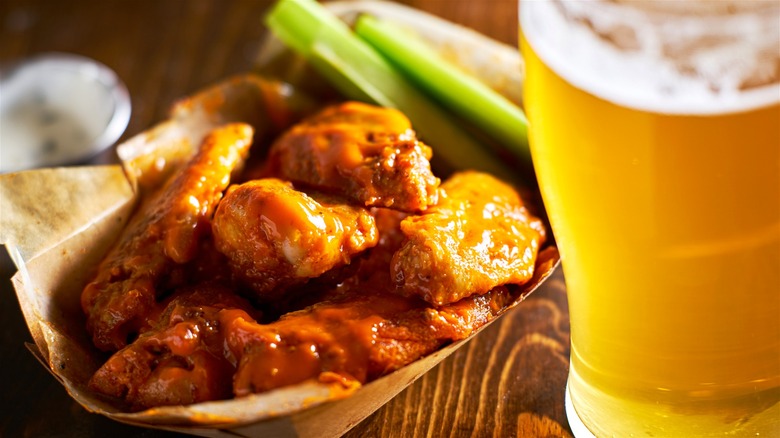
While India pale ales may be praised for their intense flavors, this is also precisely why it can be harder to find a dish that goes well with them. The whole idea of a beer-food pairing is to let the flavors complement each other, and the intensity of some IPAs means there's a higher chance of the food being overpowered by all those hops. Spicy foods like hot wings tend to pair well with IPAs for that very reason. You can experiment with recipes for spicy Asian dishes, since many pair nicely with the citrusy notes of an IPA. You can also try deep-fried, fatty dishes if you're looking for a pairing that tempers some of the beer's bitterness.
American pale ales, on the other hand, pair well with a wider variety of foods because of their more balanced flavor profiles. You'll still get some of the hops, but the breadiness and sweetness of the malt will also be more apparent than in an IPA. Pale ales go especially well with the type of food you'd normally enjoy in the summer — think grilled meats, burgers, and tacos. The sweetness of the beer provides a nice contrast to the char you'll get from these grilled food recipes, while the hops add a touch of freshness that helps cut through the fattier aspects of the dishes. You might also enjoy hop-forward craft beers like Dogfish Head's The Perfect Pairing with certain cheeses, such as sharp cheddar, with the saltiness elevating the fruitier notes of the beer.