

The Disadvantages Of Cooking Steak On Cast Iron
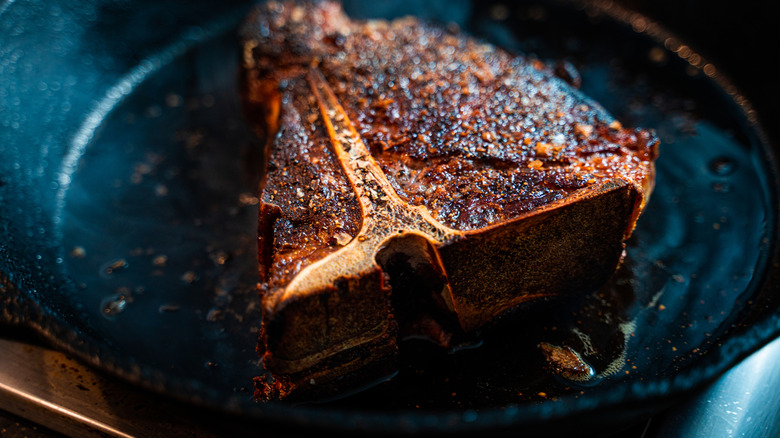
They're among the most iconic parts of American cuisine: cast iron cookware and steak. For generations, families have sat down to steak dinners pan-seared in cast-iron skillets, making it an almost automatic choice for many home cooks. However, like any cooking method, cooking steaks in cast iron isn't perfect; it has several noteworthy disadvantages, including poor temperature control, potential for uneven heating, amount of smoke it typically generates, limited capacity, and maintenance requirements.
There's no doubt there are real reasons cast-iron cooking has become one of the more common ways to prepare steak. The heavy material is ideal for holding heat, making it a great choice for achieving a sufficient sear on the outside of the steak, while a well-cared-for pan also develops a natural non-stick coating. Cast iron is also oven-safe, making it possible to start your steaks on the stovetop and finish them more gradually in the oven. However, these advantages come with corresponding drawbacks that may give home cooks some pause.
Poor temperature responsiveness and uneven heating
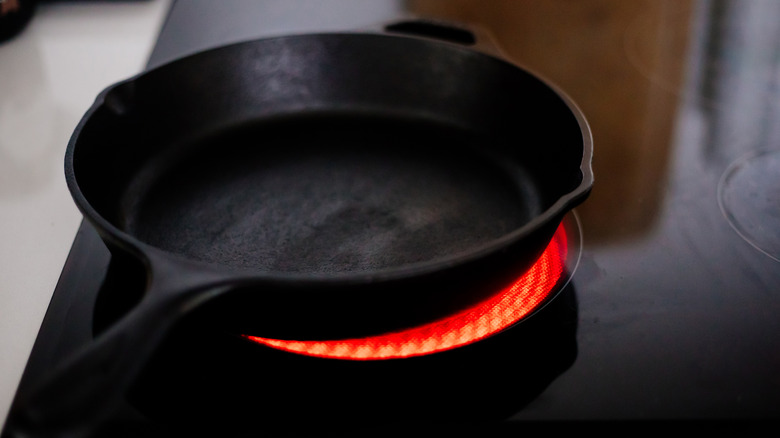
We've already mentioned cast iron's ability to hold heat. That same characteristic also comes with a downside, which is that cast-iron cookware responds relatively slow to temperature changes. This is a result of the high thermal mass of the skillet, a term that reflects how long the material takes to heat up and discharge that heat.
On a practical level, this means if you overheat your skillet and notice your steak beginning to burn, it's more difficult for the pan to quickly reduce its heat and prevent further charring than it would be with another type of pan like stainless steel. For novice steak cooks, this can be the difference between a deliciously browned sear and an overcooked, ruined mess. The flip side is also true; if your pan is too cool, it's difficult to quickly raise the temperature, leaving the outside an unappealing gray.
A related issue to cast iron's high thermal mass is the potential for the pan to heat unevenly, with hot spots leading to burns and cooler areas leaving portions of your steak undercooked. That's because its thermal conductivity (a measure of how easily heat diffuses within a material) is far lower than competing pan materials like aluminum. This can be especially problematic if the pan isn't carefully centered over the heat source.
Lots of smoke for a proper steak sear
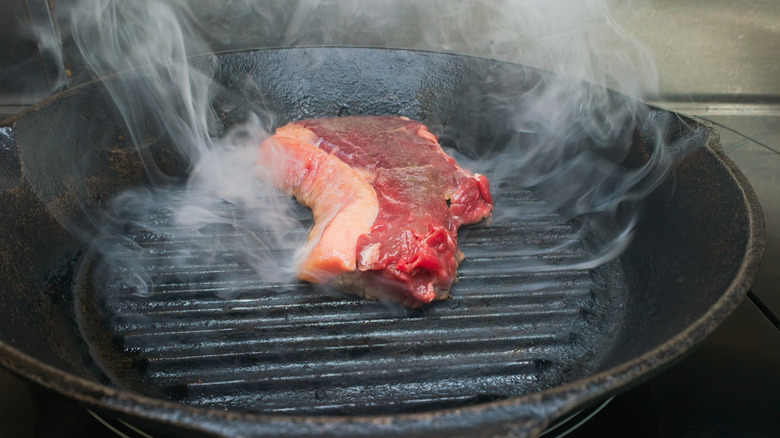
In many cases, those cooking steaks in cast iron are doing so indoors. Unfortunately, even those with large kitchens and good ventilation will quickly find that using cast-iron cookware to get a proper sear involves plenty of smoke. Steaks achieve the best sear at 450 to 500 degrees Fahrenheit, close to or above the temperature at which essentially all common cooking oils begin to smoke, which refers to their smoke point.
There's no doubt grilling produces its fair share of smoke. However, it's typically more quickly and easily dispersed in fully exposed or semi-sheltered outdoor settings, while smoke from cast-iron steak searing can build up to uncomfortable levels inside, stinging your eyes and starting an ongoing battle with the smoke detector. Along with the unpleasant smell and smoke residue, cooking in this way also raises the level of air pollutants in your home, a long-term health risk that few consider.
Cast-iron cooking means limited capacity (or unwieldy cookware)
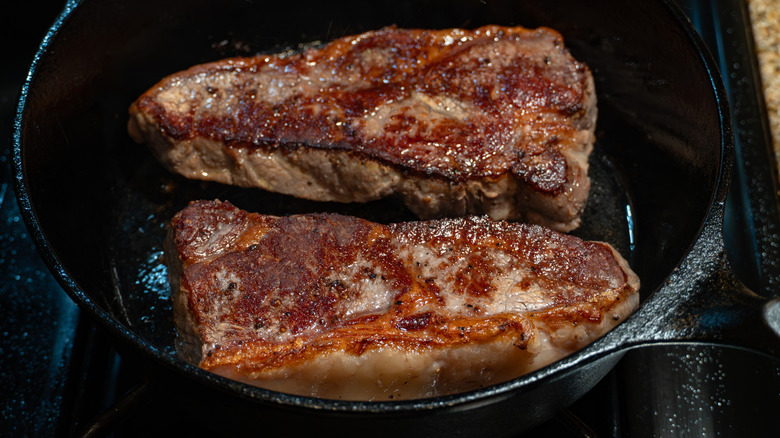
There's another important disadvantage of cast iron that has little to do with the material itself, but instead, the typical size of the pan. Cast-iron skillets usually top out in the 17-inch range. Even these oversized skillets will struggle to cook the same number of steaks as most standard-sized grills, while more common eight- and 10-inch skillets can only handle one or two steaks at a time. Although this might not be a problem for a quick weeknight solo dinner, it presents more complications for larger gatherings or families looking to dine together. This isn't a matter of taste; simple logistics can sometimes make cooking steak on cast iron a nonstarter.
Even those who invest in larger cast-iron skillets will find the huge cooking vessels present different problems, including their weight, which can top 14 pounds without including the steaks. Hefty cast-iron griddles can cook more or larger steaks when used on grills or spanning multiple indoor burners, but face similar issues, both in terms of weight and cooking consistency, resulting from the uneven heating issues previously discussed.
Cleaning and maintenance of cast iron
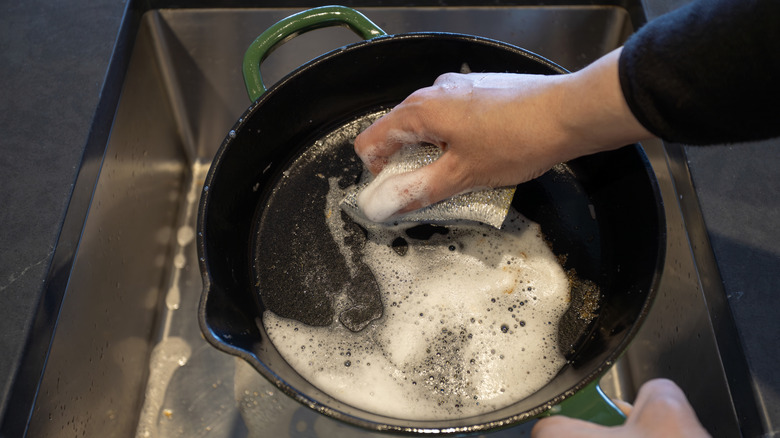
You've likely heard or taken part in discussions over the proper way to clean and maintain cast iron. Although it's undeniably a cast-iron myth you need to stop believing, many still insist cleaning the cookware with soap ruins the pan's seasoning. There are far gentler soaps nowadays than generations ago when that may have been true. And some insist on alternatives like scrubbing with salt or using chain-mail-type devices. In any case, a clean cast-iron pan just needs to be properly seasoned to preserve the coating. Although this oiling and heating process is relatively quick and hands-off, it's still another step for home cooks to worry about when they'd rather be enjoying their meal or relaxing afterward.
No other common steak cooking method requires the same combination of care and work. Grill grates are relatively low maintenance, requiring just a scraping and, if desired, a light oiling. Meanwhile, aluminum pans can be easily handwashed and dried without special steps and nonstick pans can often be tossed in the dishwasher for totally hands-off cleaning. In comparison, this can make cast-iron cleaning and maintenance seem involved and lengthy.
Cast iron obviously has significant appeal that's kept it a part of American kitchens for generations, often thanks to the material's famous decades-long longevity. Still, before you fire up the stove and pull out the skillet for your next steak dinner, consider these disadvantages. Afterward, you may find yourself heading for the grill (or grabbing an alternative pan) instead.