

4 Disadvantages Of French Press Coffeemakers
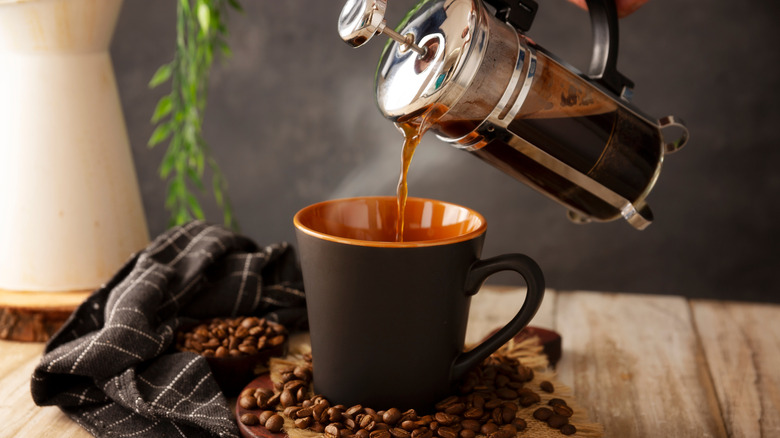
Among those looking to broaden their coffee horizon beyond everyday drip coffee or expensive espresso drinks from their favorite cafe, the French press is a common first step. They're used by combining hot water and coffee grounds in the carafe and then using the plunger-style filter to press the grounds to the bottom of the container, allowing drinkers to pour fresh coffee from the top. While they can be a valuable addition for some coffee lovers, it's equally vital to point out their potential downsides, including using a secondary source to heat the water, the learning curve and hands-on nature required to use them, heat retention, and the cleaning process.
First, it's important to recognize there are some coffee drinkers who say you should be brewing coffee with a French press due to the upsides. The purely mechanical operation is among them, enabling drinkers to make their coffee even without electricity, as long as they have another heat source for their water (such as a campfire). Along the same lines, heating the water themselves allows discriminating coffee lovers to dial in their preferred temperature for extracting their desired flavors, rather than deferring to a drip machine's internal programming. Still, let's consider the numerous and wide-ranging potential disadvantages this coffee method suffers from.
French press needs another heating source
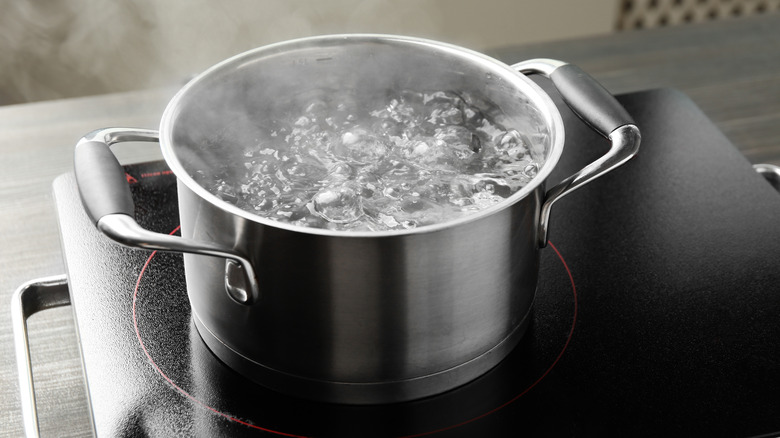
Those who use a traditional drip coffeemaker or an espresso machine have likely never considered the fact the machine is taking care of one of the most important, yet rarely discussed, parts of the brewing process: heating the water.
French presses require an additional source of heat, typically a stove where water can be boiled and briefly cooled before adding to the carafe with the grounds. Without using a thermometer, this can present a bit of a challenge, as boiling or overly hot water can produce a bitter, unpleasant cup and water that's cooled too much won't fully extract desirable flavors.
Some of this disadvantage can be lessened or avoided with the use of an electric kettle, automatic water heating devices that can sometimes be programmed to the exact degree, giving coffee lovers extensive temperature control. However, this naturally requires buying, storing, and maintaining a second piece of kitchen equipment, an expense and hassle not required from many other methods.
French press requires a learning curve
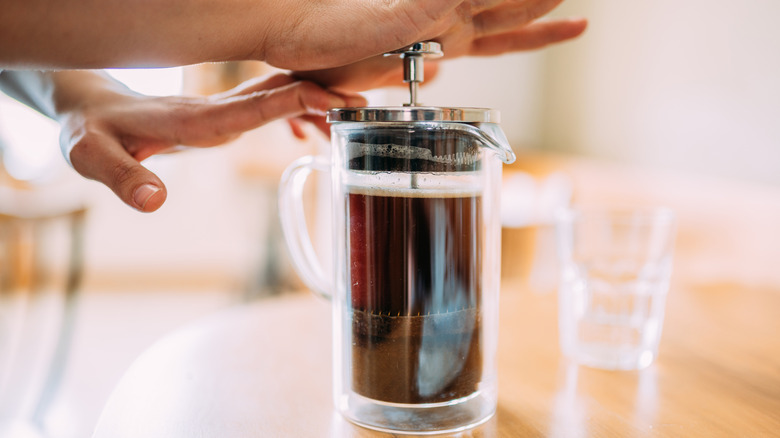
Making French press coffee isn't a hands-off process; it requires some care and attention, which aren't always in ample supply for bleary-eyed folks in need of their first cup. Unlike drip machines, which require no skill at all, learning the ins and outs of making quality French press coffee can require some practice. It starts before you even break out the press itself, with the size of coffee grounds used. French presses work best with coarse-ground coffee that looks like small breadcrumbs with the texture of sea salt. This optimizes the extraction process and prevents grounds from ending up swimming in your cup, as can happen with finely ground coffee that slips through the metal filter.
Dialing in the correct coffee-to-water ratio is also a learning process. A general French press rule is one gram of coffee to 10 to 16 grams of water, resulting in strong to mild. This requires breaking out the kitchen scale just for your morning brew and experimenting to determine your personal preference on strength.
All of this must be learned before the brewing process itself, which can be subtly affected by how long and aggressively the coffee grounds are stirred, the length of time the coffee is allowed to steep, and the speed and pressure used to press the coffee grounds to the bottom. This is a stark contrast to "set it and forget it" drip machines, where coffee emerges at the touch of a button. While it's not rocket science, it's nevertheless another step separating a novice drink from a quality brew.
French press doesn't maintain temperature
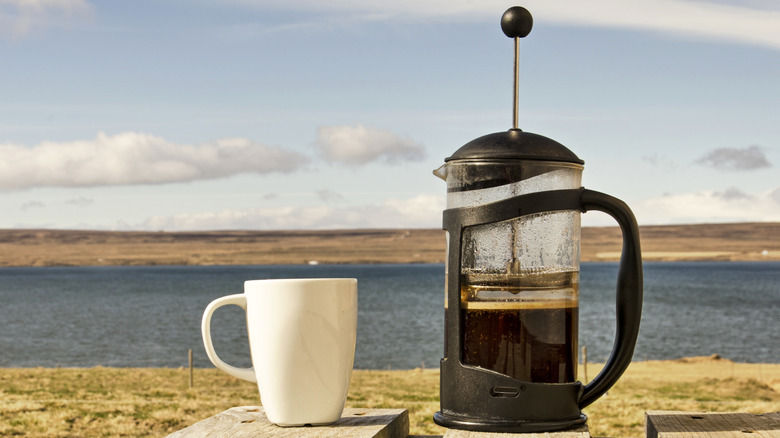
A notable disadvantage of a French press is that it doesn't maintain temperature. From the moment the hot water enters the glass brewing carafe, it begins to quickly lose heat. That's due to the thin walls and high conductivity of glass, which radiates the heat rather than holding it in.
Therefore, in addition to continuing to get stronger over time, your French press coffee also gets colder. Within a relatively short period, anything that hasn't been transferred to ceramic or metal cups or carafes will have cooled to room temperature. This reality makes a French press far less desirable for those who prefer to make a batch or pot of coffee and drink it over the course of a morning or extended period — unless you want to get intimately familiar with the secrets of properly reheating coffee.
Cleanup is more involved than most alternatives
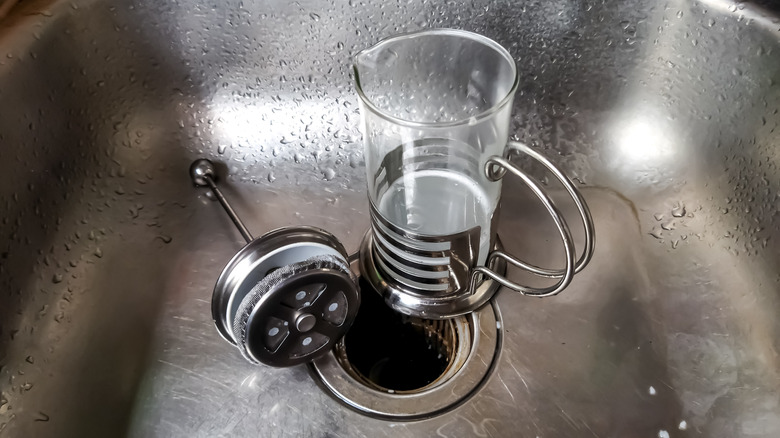
The downsides of using a French press aren't just limited to the brewing experience. They're also substantially harder to clean than most other methods, such as pour-over or drip machines, which have parts that can be quickly rinsed or washed after disposing of the grounds. The free-floating coffee grounds at the bottom of your French press need to be carefully poured or scooped out before the carafe and plunging mechanism can be carefully cleaned. Due to their close contact with the grounds, the carafe needs to be painstakingly scrubbed to ensure any lingering residue is eliminated. Without spending the time required, French presses can quickly develop hygiene or flavor concerns.
To be sure, other coffee-making methods aren't perfect, and many people may have been making coffee wrong their whole lives, particularly in how the beans are ground. Still, there's no denying that, despite the aesthetic appeal and extra element of control, French presses have some serious disadvantages that may make you reconsider adding one to your coffee equipment arsenal.