

What Are The Main Differences Between Lager And Stout Beer?
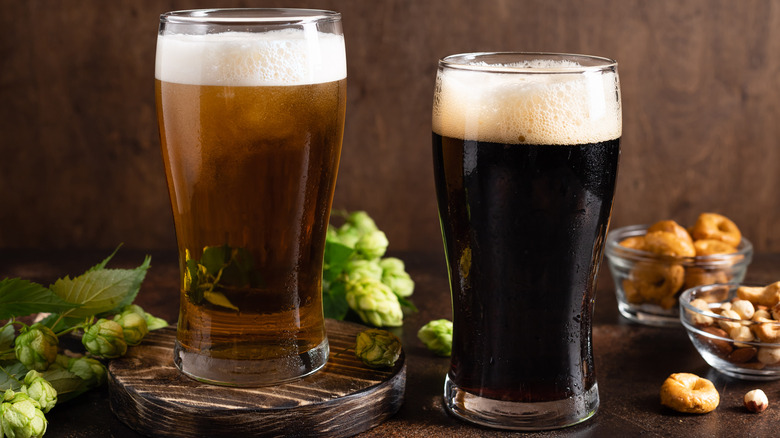
There is a lot of variety in beer. Different brewing methods, additives, flavor profiles, and ABV (alcohol by volume) are used to make one of the world's most popular beverages, but no matter how unique certain types can be, all beer falls into two basic categories: ale and lager. The real difference between ale and lager is how they ferment. The yeast in ale ferments on the surface of the liquid. Lager's yeast sinks and bottom-ferments. While lager is one of the pillars of beer-making, a major subcategory of ale is stout, an umbrella term that also covers a range of styles. To say that lagers and stouts are different from each other would be an understatement.
Not only does the fermentation process differ for lager and stout, but the malt and hop ratios, ABV, and recommended serving temperatures also vary. One of the most recognizable examples of stout is Guinness. Today, the dark, full-bodied Irish beer is a top 10 bestseller in the U.S. In fact, stout beers are so popular with Americans that locally brewed stout has been named the signature beer of the state in Oklahoma, South Carolina, Utah, and Virginia. Light, classic lagers, however, make up a majority of the North American beer market. Lager and stout have been culturally relevant for centuries, and the biggest differences between them have existed just as long.
The fermentation process is different
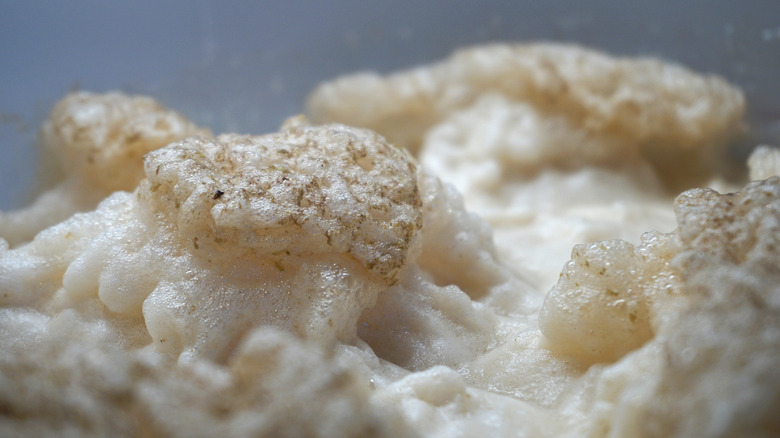
The two distinct fermentation styles used in brewing beer differentiate lager from stout, a deep-hued style of ale with English origins. To brew stout beer, brewers use top-fermenting yeast (Saccharomyces cerevisiae). Top fermentation involves fermenting the yeast at higher temperatures, usually between 64 and 68 degrees Fahrenheit (18 and 20 degrees Celsius). Lagers undergo a different type of fermentation using bottom-fermenting yeast (Saccharomyces pastorianus). This involves fermenting at temperatures so low they are near freezing, usually between 32 and 36 degrees Fahrenheit (0 and 2 degrees Celsius).
The warmer temperatures that come with top fermentation result in ale's fruitier, spicier, and more robust flavors and fragrances. Lagers, on the other hand, end up with a lighter, cleaner, crisper flavor due to the longer-lasting bottom fermentation process. People often find lagers to be more refreshing than heavier, more complex stouts for this reason. That said, top fermentation isn't the only contributor to stouts' deeper color and flavor.
Stouts use roasted grains
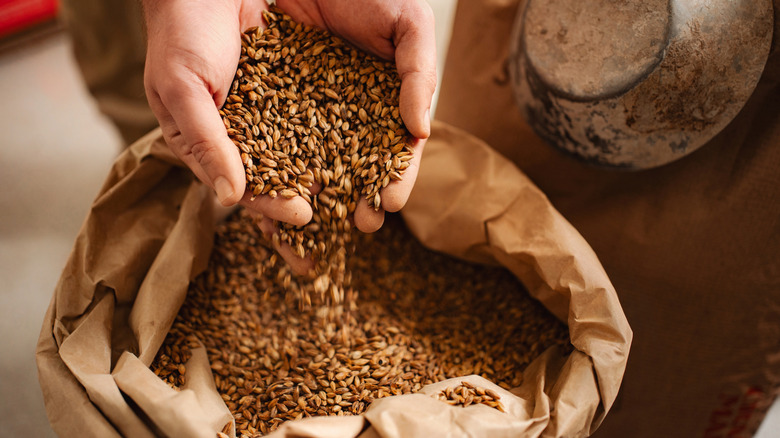
Malts are sprouted and dried grains that are integral to traditional brewing methods. The malts used for beer are typically kiln-dried, but roast malts are roasted at a high temperature after drying is complete. A higher roasted malt content gives some stouts their distinctive dark brown, almost black, color, but roasted, unmalted grains have a similar effect. Roasted grains are what set stouts apart and create robust flavors reminiscent of dark chocolate, coffee, and caramel. The roasted grain comes through in the aroma as well, offering a well-rounded tasting experience.
The type of grain used can vary. Many stouts, like poster child Guinness, get their dark sensory notes from unmalted roasted barley. As the name implies, oatmeal stouts incorporate oats into the mix for a nuttier, earthier flavor.
Dark lagers, such as bock from Germany, make use of malt more than other lagers, which tend to be lighter in color. This malt-forward approach gives them their dark colors and richer flavors, but being lagers, they still maintain the style's crisp characteristics.
Stouts are best served at a warmer temperature
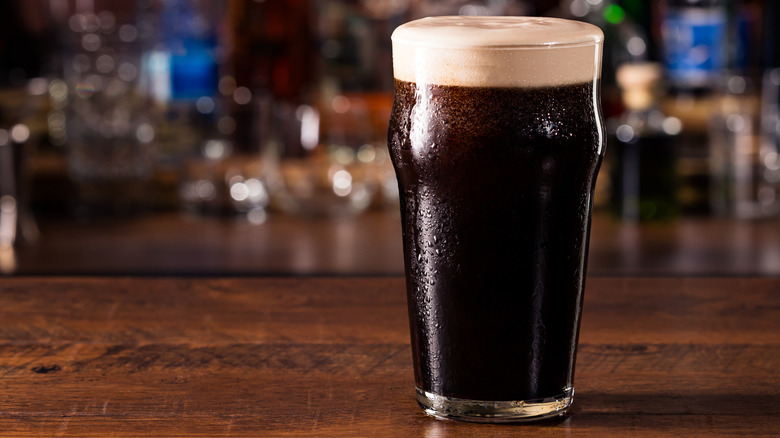
Stouts are fermented at higher temperatures than lagers, and the difference in preferred temperature doesn't end there. When serving beer, you want to show off its best qualities, and serving it at the wrong temperature is one of the ways you're ruining your beer.
Rich, robust stouts are best enjoyed slightly below room temperature, around 50 to 60 degrees Fahrenheit (10 to 16 degrees Celsius). This is when their velvety texture and various complex flavors, like espresso and dark chocolate, really shine. If you take a can or bottle of stout beer out of a refrigerator, let it sit out for 15 to 20 minutes before drinking. A standard refrigerator sits just below 40 degrees Fahrenheit, cold enough to suppress a stout's full flavors.
The clean, crisp flavors of a lager are best on display when chilled. These beers are ready to drink right out of the fridge, generally between 39 and 45 degrees Fahrenheit (around 4 to 7 degrees Celsius). Even though dark lagers are dark in color like stouts, they should still be drunk at lower temperatures.
Lagers tend to have lower ABV
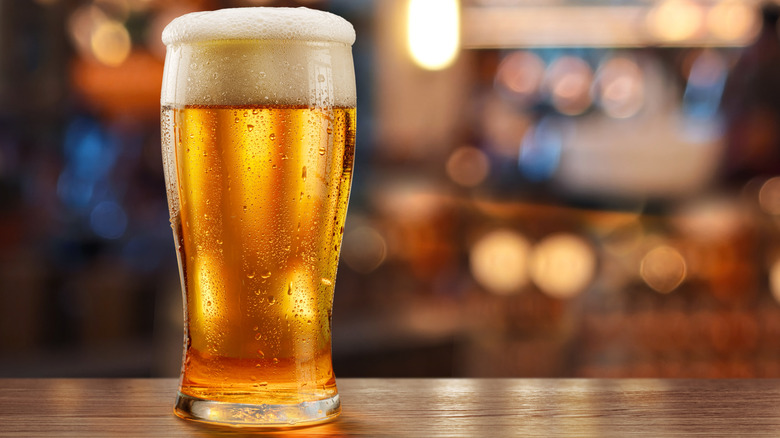
Generally speaking, a good rule of thumb is the darker the beer, the higher its ABV (alcohol by volume). The notable exception is a dark lager, like Munich Dunkel has a midrange ABV between 4.5% and 5.6%. Most lagers fall into the moderate 4.5% to 6% range, which offers enough alcohol to detect, but is not so heavy that you can't knock back more than one. The lighter, more refreshing quality also means lagers pair well with just about any food.
Higher ABV beers like stout, however, are richer in flavor with a thicker consistency. They invite the drinker to slow down and savor each sip. An Imperial stout tends to be on the high end with a 10% or higher ABV. When you start to get into high ABV territories, you will find beers with flavors complex enough that they can be imbibed leisurely, like bourbon.