

Consumer Reports' Lowest-Rated Coffee Blend Comes From A Classic Name Brand
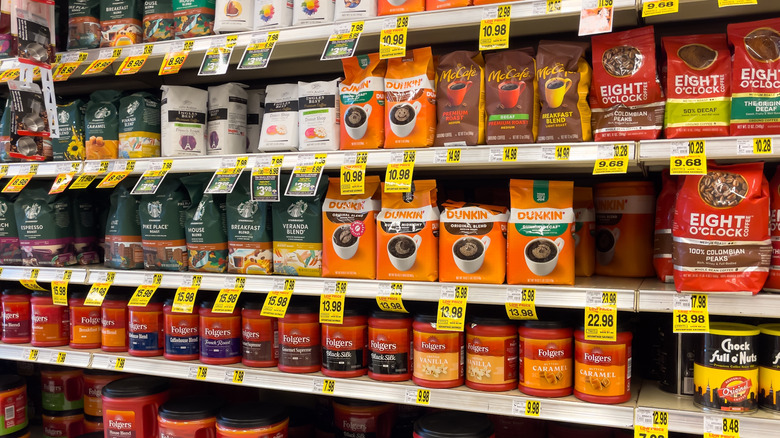
"Bitter," "burnt," and "grainy" aren't exactly words you'd want to hear associated with a cup of joe. However, Consumer Reports used those adjectives to describe the worst-performing coffee blend in a brand comparison. The outlet's product-testing lab ranked more than two dozen items based on factors like price and taste, and Maxwell House's House Blend came in dead last among 27 options.
Consumer Reports said that the House Blend was over-roasted, giving it a bitter taste up front and an unpleasant aftertaste. Unfortunately for the famous coffee brand, Mashed has also ranked it unfavorably in the past. In our own comparison of instant coffees, Maxwell House was the second-worst out of 18 items on the list. While it's possible that the quality varies across different products that the brand offers, the overall impression is not good.
Another brand that fell short in Consumer Reports' tests was the Kirkland Signature House Blend from Costco, which ranked almost as badly as Maxwell House's. Café Bustelo, Vermont Coffee Company, and Starbucks' Pike Place Blend also fared poorly, while the magazine recommended 17 coffee brands. These included big brands like Dunkin' and Tim Hortons as well as less common ones such as Irving Farm, Blue Bottle, and the favorite, the Intelligentsia House Blend.
Here's why Maxwell House ranked low — and how to avoid buying bad coffee
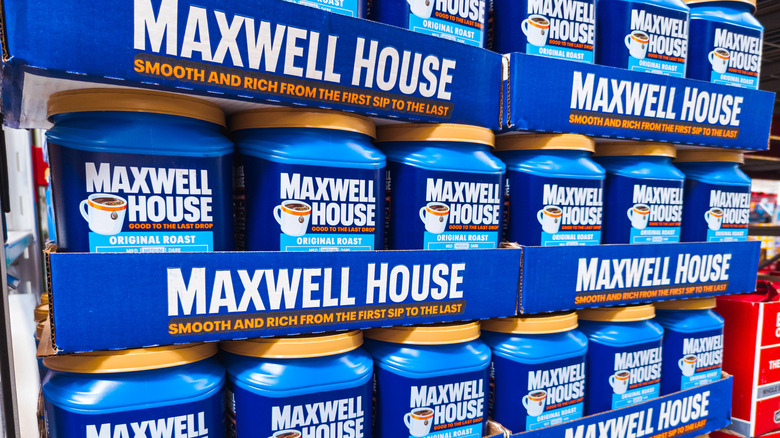
Why did Maxwell House perform so poorly when other brands tasted so much better? The price might provide a clue. Maxwell House's House Blend sold for just $9.80 per pound in Consumer Reports' test, one of the least expensive options. One of the notable differences between cheap and pricey coffees is that the lower-cost options are likely to have more bitter components due to the quality of the beans and how they're processed.
Consumer Reports' testing showed, though, that price alone is not the deciding factor in what makes good java. (For instance, Tim Hortons and Dunkin's were low-priced options that received high marks.) Ultimately, when making your selection, you should look for fresh coffee, with a best-by date far in the future. Choose a roast based on your preferred flavor profile (light ones will have a milder natural flavor, while dark options will taste stronger).
You can also look for information on the package to help you find high-quality beans. Useful details can include the specific region of origin, the altitude the beans were grown at, or the tasting notes. And while those don't necessarily guarantee good quality, they can help you anticipate that coffee's flavor and make a more informed decision.