

5 Advantages Of Using An Induction Stovetop
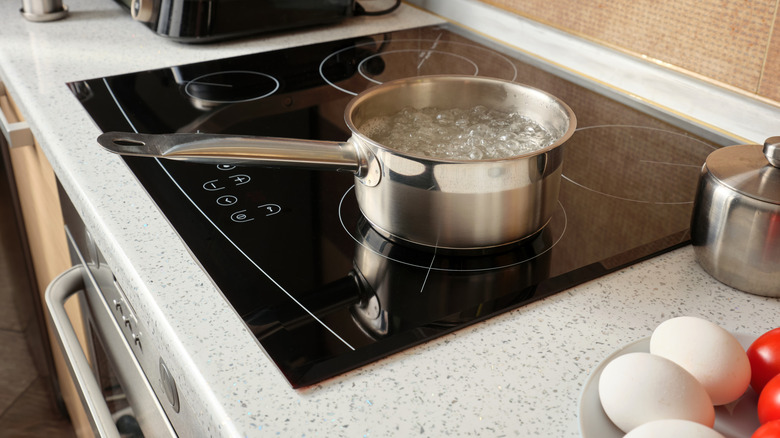
A stovetop that creates electromagnetic currents to heat compatible pots and pans might sound like science fiction, but it's not actually far-fetched at all. Instead, that's what happens when you use an induction stovetop, a popular home appliance today. Introduced in the 1970s. , an induction stove causes a current to flow through a copper coil under the glass surface, and a magnetic field helps transfer that energy to the cookware itself, causing it to become hot. In other words, unlike other stovetops, you won't see the telltale signs of an open flame or a red-hot electric coil.
The debate between gas and electric stovetops seems never-ending, but induction offers a third option with notable and significant benefits. For one, an induction stove has a built-in safety feature because its surface doesn't get as hot to the touch. For similar reasons, they use less energy and respond more quickly to control changes. They're also good at temperature consistency and are easier to clean.
On the other hand, induction cooking can come with some downsides, including a high upfront installation cost and a lack of compatibility with some pots and pans. There's also a different feeling to cooking, too, to understand the nuances of how the stove will behave. That's why some chefs can't work without their gas stoves. Still, there's a lot to like about induction cooking — here's what you need to know.
Induction stovetops have a built-in safeguard against burns
When you were little, you probably learned that touching a hot stove will burn you. Well, induction cooktops only get hot when a pot or pan is on top of the burner. That's because of how they're made. The magnetic field — that is, what transfers the energy from the burner to the pan in the form of heat — only works if a metal item is on the other end. (It's not unlike a magnet, which won't do much without something else magnetic to attract it.) Therefore, the cooktop itself doesn't get hot when it's empty, reducing the risk of burns.
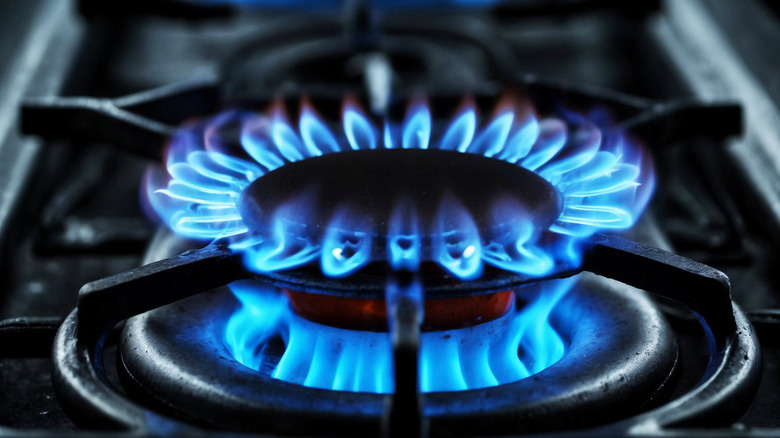
Compare that to an empty gas burner that's left on. The flames in those burners could reach temperatures as high as 3,560 degrees Fahrenheit, so it's no surprise that there's a burn risk. Plus, gas stoves don't have the same responsive heating method.
Though electric stoves look more like induction cooktops — especially those with a glass top — they function similarly to gas stoves. They get hot when they're on, regardless of whether there's a pan, plus stay hot for some time after they're turned off. And while the exact maximum temperature varies based on the model, Reddit users report electric stoves' heating elements reach around 700 degrees Fahrenheit. That's far less hot than the flame itself, but easily hot enough to be a burn risk.
Induction is more energy-efficient
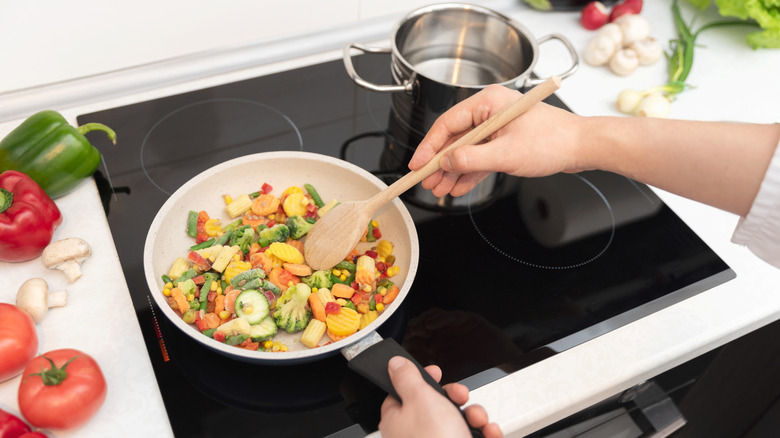
Both electric and gas ranges lose a lot of energy in the cooking process. It's easy to test this at home: Place a pan on a gas range with a flame under it, and you'll feel warmth around the pan, not just in the pan itself. That's because the heat dissipates into the air as it heats another element (the burner or electric coil) that in turn heats the pot or pan. By cutting out that middle step, induction saves energy.
A 2019 study by Frontier Energy found major differences in energy transfer: "Close to 90% of the energy consumed by the induction hob is transferred into the cooking vessel." Energy-industry jargon aside, that means that nearly all of the energy an induction stove uses to heat goes directly to the pot or pan, rather than out into the air or other surfaces.
That same study found that induction cooktops are around 85% energy efficient in a water-heating test, while electric ranges saw efficiency rates of 75% to 80%, and a gas stove transferred just 32% of its energy to the pot. Electric and gas stoves use more energy and take longer to do the same work as an induction burner.
Induction burners respond quickly
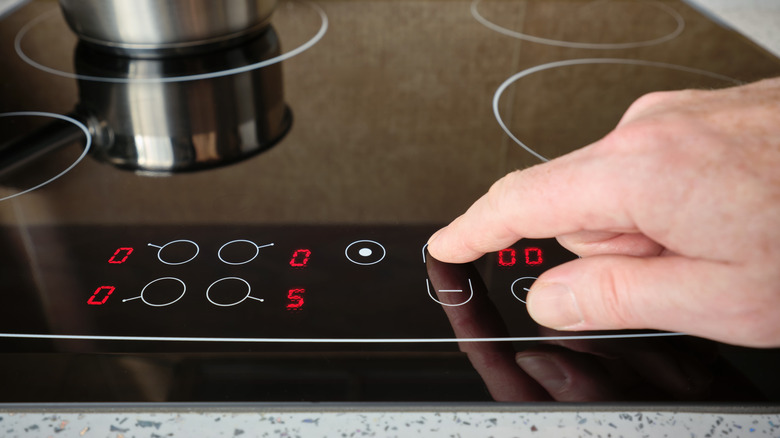
Good energy efficiency means that induction burners heat up quickly. The reverse is true, too, though. Because the heating element itself is not particularly hot to begin with (as the heating actually happens in the pot or pan), it doesn't retain heat the way an electric burner does. When you turn down the heat on a gas or electric burner, it stays hot for a while before adjusting to the new temperature. The same is true for turning it off — the heating element itself stays hot long after it's shut off. Induction works more precisely. Dropping the temperature from high to low happens nearly instantaneously, reducing the risk of overcooking food.
The 2019 Frontier Energy report tested response time, too. Induction burners heated more quickly — in the water test, pots of water rose from 70 degrees Fahrenheit to 200 degrees Fahrenheit in about 10 minutes, compared to 15 to 20 for gas and electric ranges. The same pot (used as a proxy for heat retention in the burner itself) cooled down again in around 20 minutes on an induction stovetop, while the spread was roughly 25 to 40 minutes for gas and electric cooktops.
Burners hold consistent temperatures well
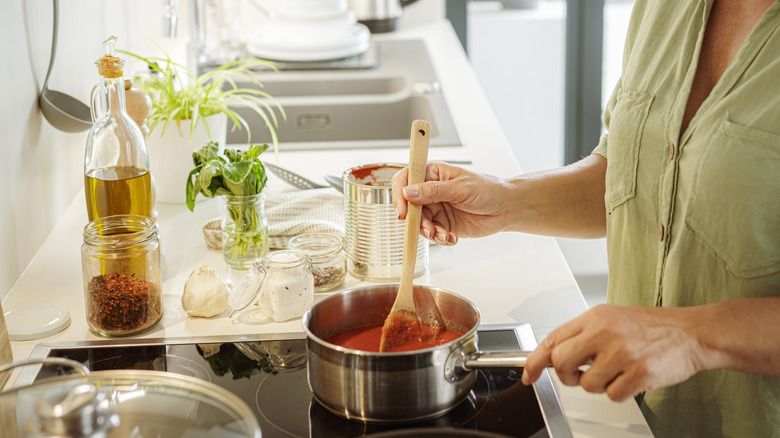
Because of its precision, an induction burner is better at cooking at a consistent temperature for an extended period of time. Some models even have specific temperature controls (similar to an oven or air fryer) that allow you to set a temperature from 120 degrees Fahrenheit up to 400 degrees Fahrenheit.
Here, too, induction cooktops tend to outperform their gas and electric counterparts. Testing shows that they work better for cooking at low temperatures to prevent long-simmering dishes, such as sauces and stews, from burning. Anyone who's experienced part of a pan burning when it's right over a gas flame while the outside stays cool knows how important consistent, even heating is when cooking something slowly.
Cleanup is easy
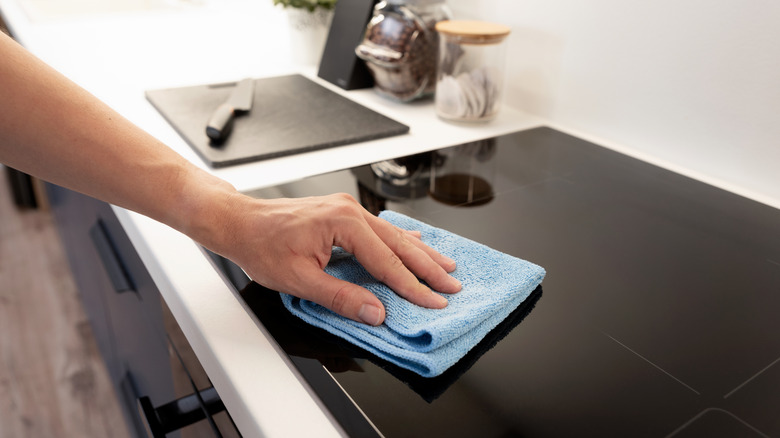
If you've cleaned a gas or electric stove with exposed coils, you know just how difficult it can be to reach down into the crevices and around the burners to get stubborn food debris out or to scrub off burned-on spills. Like a smooth-surface electric range, an induction stovetop has a flat glass surface covering the entire top, so no tight spaces to hide oil splashes or grains of rice. Plus, because the pan (not the stovetop) heats up, spills that do happen won't burn on in the same way.
That said, you can still damage the surface without proper care. It's a good idea to clean an induction stovetop after every use, using a damp cloth with warm water and dish soap (if necessary) while avoiding anything abrasive. Despite the fact that the surface is made of glass, don't use glass cleaner, which can leave streaks on the cooktop. That simple step will keep your induction cooktop looking like new, and likely working just as well, for years to come.