

Nancy Silverton's Tip For Getting A More Flavorful Sourdough Crust
We may receive a commission on purchases made from links.
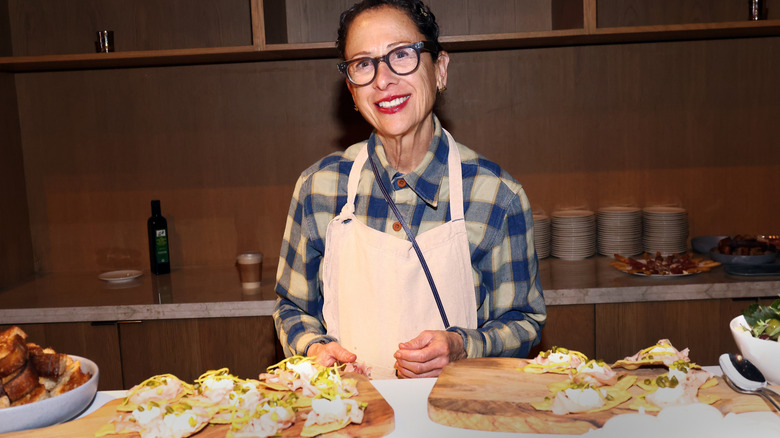
For connoisseurs of carbohydrates, there could be nothing more coveted than the perfect loaf of sourdough. But as anyone who has ever dabbled in the art of bread baking knows, achieving it is easier said than done. From feeding your starter too much or not feeding it enough to missing the mark on temperature or forgetting to add enough water to your dough, there are multiple little mistakes that can ruin your sourdough loaf. According to Nancy Silverton – chef, baker, and certified "cele-bread-y" — that includes removing your sourdough from the oven while the crust is too light.
The Los Angeles-based co-founder of La Brea Bakery recently told Mashed she always waits for a darker crust. As it turns out, those crispy dark spots on a crust aren't a sign that you've burnt your loaf, but rather that it has developed plenty of flavor. "What you're tasting is the caramelization of the natural sugars in the flour," she explains. "Do you prefer meat that is well-seared? It's the same thing — you're caramelizing that crust. To me, it's all about that flavor and that caramelization."
In her book, "Breads from the La Brea Bakery," a true bread-baking bible, Silverton reiterates color is flavor, "I got a lot of unsolicited advice at first from people who wanted me to know that I should take my bread out of the oven a little sooner. Once they tasted the bread, though, they changed their minds."
How to achieve a dark, flavorful crust on your sourdough loaf
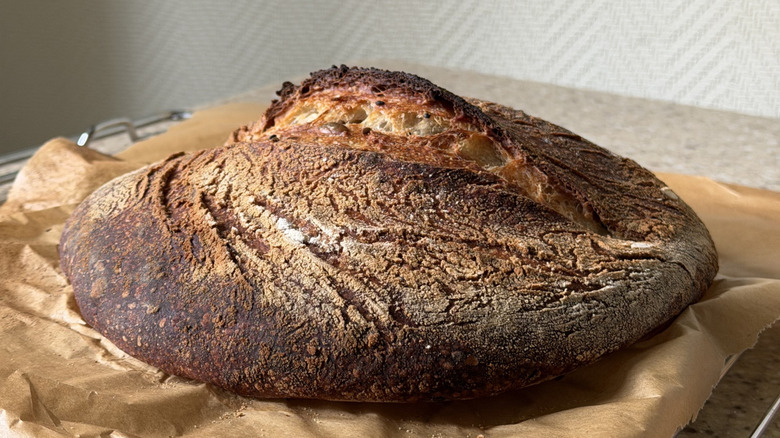
While similar to the Maillard reaction – the chemical process of browning that involves amino acids and reducing sugars – caramelization happens a bit later in the game at higher temperatures and only involves sugar. As the sugar molecules break down and transform, they impart a sweet, nutty, and butterier flavor to food — sourdough crust included. Indeed, as Nancy Silverton continued in her book, "There's a wonderful sweetness to a properly baked dark crust." Consider that one of the untold truths of sourdough.
In addition to the obvious approach of leaving your bread baking long enough for it to darken, there are other ways you can ensure a loaf achieves that crackly, blistered goodness. First, you can start with a flour that has higher caramelization potential. Options like rye or whole grain are more enzymatic, which leads to more active fermentation and therefore, the formation of more sugar. On that note, be sure your dough has experienced enough fermentation — if it's under-fermented, you're in for a pale, bland crust.
If you want to take a page from Silverton herself, you can also keep barley malt on hand. The baker is known to add the ingredient to everything from whole wheat sourdough to pizza dough in order to get a better crust color. The syrup provides more sugar to the dough for browning along with a bit of sweetness, pretty much acting as a caramelization insurance policy for that dark and flavorful finish.