

What Is The Typical Lifespan Of An Induction Stovetop?
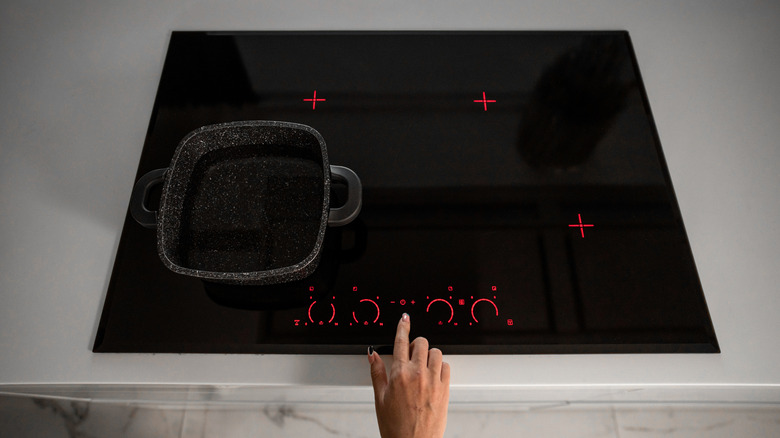
If you're in the market for a new stove, you have a lot to choose from these days — gas, electric coil, induction, dual-fuel — not to mention a handful of other factors to consider, like price, capacity, and longevity. More and more shoppers are considering induction stovetops, but at $70 for a single burner to $5,600 for a premium stove, the investment also raises the question: How long does an induction stovetop typically last?
The lifespan of an induction stovetop is based on cooking hours instead of years owned because of the wear and tear from the electromagnetic energy and power components used to generate heat. On average, an induction stovetop should last about 10,000 cooking hours, which likely equates to around 10 years. That's five fewer years than the typical 15-year lifespan of a gas stovetop. Still, a few key incentives might sway you to choose induction.
The benefits of using an induction stovetop
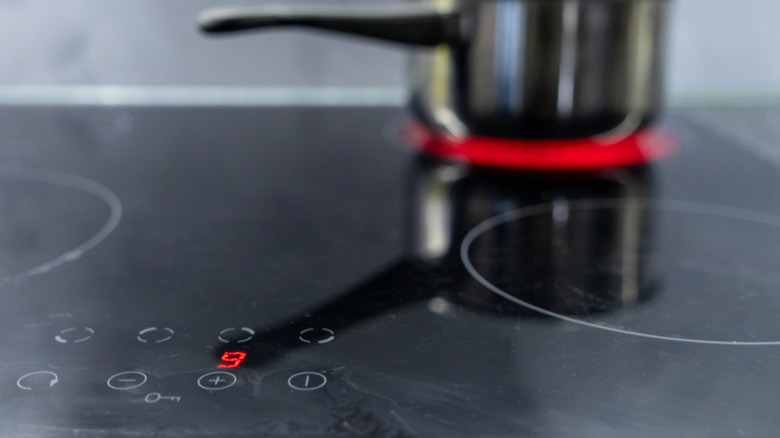
One benefit of using an induction stovetop is its environmental friendliness. The stove uses 10% less energy than other, more traditional smooth-top electric models while offering three times the efficiency of a gas stove. And because they rely on burning gas to heat a pan, they don't release pollutants into the air. Another key factor is that they make cooking both easier and faster. According to Consumer Reports, induction stovetops boil water 20-40% faster than other electric and gas stovetops. When it comes to making cooking easier, the induction heat relies on the cookware itself, not an open flame. Therefore, you're able to control a consistent temperature and don't have to worry about sauces boiling over or hot oil burning you as you try to place food in the pan.
When it's time to clean up, you don't have to worry about removing burners or food getting stuck in tight crevices. You can simply scrape off any burnt-on grease or other residue that might've spilled over, apply a cleaning solution to the glass, and wipe the surface clean.
The setbacks of using an induction stovetop
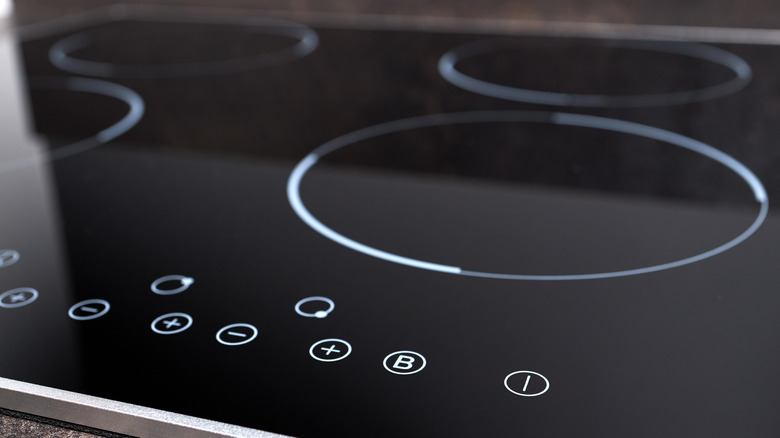
Like many other kitchen appliances, induction stovetops do come with some setbacks. For one, not all cookware works on it. So, if you've been sentimentally using your grandma's old pans — CorningWare or copper-bottomed Revere Ware, for instance — fixing the issue won't be as simple as other common mistakes people make regarding their stoves. You'll probably need to invest in more cookware. For an induction stove to work right, you need flat, magnetic pans that make full contact with the stove. (If you aren't sure if your current pots will work, you can test them by seeing if a magnet will attach to the bottoms.)
Another disadvantage to cooking on an induction stovetop is the likelihood of a hefty installation price. If you're switching from electric to induction, the cost may not be so steep, as both rely on a 240-volt outlet. However, gas stoves run on a 120-volt, meaning you'll have to have a new outlet installed, which could cost around $300. So, while you may save $75-$150 a year when switching from a gas to an induction stovetop, you may have to fork over an installation fee before you start actually saving money.