

3 Disadvantages Of Using A Crock-Pot
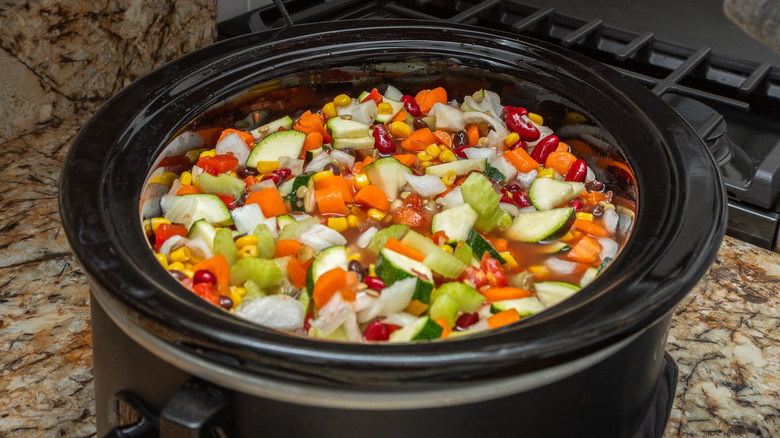
Despite the rise in popularity of multicookers like the Instant Pot, traditional slow cookers like the Crock-Pot still command a pretty substantial share of the food gadget market (per MarketResearch.com) and don't appear to be going anywhere just yet. Fortunately, this old-school appliance has a less steep learning curve than a technologically fancy multicooker, but it has a number of disadvantages you might want to consider before buying one.
Most of the disadvantages stem from the Crock-Pot as a unitasker: Its purpose is to cook food slowly, and that is it. Because of its limited heat capacity, it doesn't brown food well, let alone crisp or char, narrowing the cooking tasks you can do in it. This lack of versatility relegates it to specific food categories, like stews, soups, and braises. It can also take way too long to cook one dish, when other similarly-touted-as-convenient appliances can get the job done in a fraction of the time.
Food does not brown well, let alone crisp or char
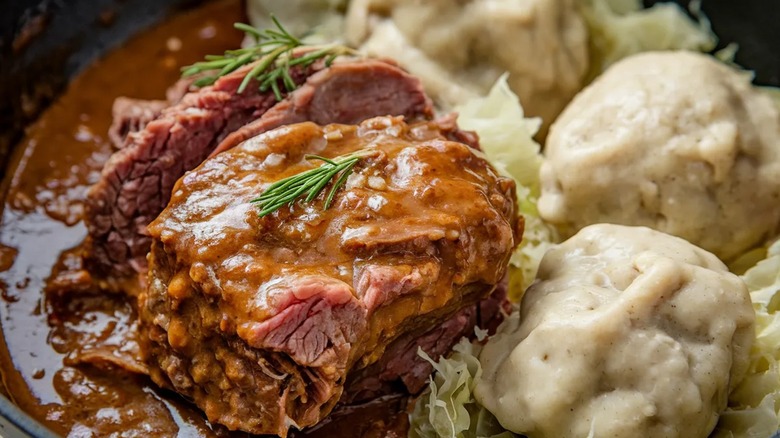
The Maillard reaction gives food a rich umami flavor. Imagine a seared steak and some grilled asparagus. They taste vastly different compared to boiled beef and steamed asparagus, and that's because a higher level of heat was applied directly to the surface of the seared foods. Crock-Pots just do not get that hot, maxing out around 205 degrees Fahrenheit. Some Maillard reaction can occur in a Crock-Pot, but not the deep browning and roasted flavors of searing. That's why slow cooker recipes like beef stew tend to require you to sear some ingredients on the stovetop before transferring them to the slow cooker crock. Higher heat equals more browning, and that equals more flavor.
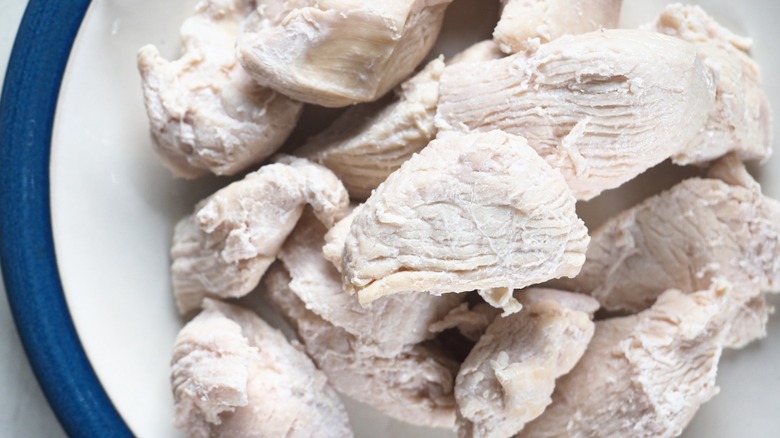
Different ingredients are also "done" cooking at different ideal temperatures. Chicken needs to reach an internal temperature of 165 degrees Fahrenheit to be safe to eat. Vegetables don't necessarily have the same safety requirements for doneness, so they can disintegrate while you're waiting for the chicken to cook. For example, one of the mistakes everyone makes when cooking carrots is that they cook them for too long, making them mushy. And with many Crock-Pot recipes calling for around six to eight hours of cooking on low? Chances are high you will get a dish that does not have an ideal combination of textures throughout. You could add the carrots later, but that destroys the dump-and-go convenience slow cookers are known for.
You can only cook wet dishes
Different temperatures coax different textures from food. Think of stovetop cooking, where recipes often call for a variety of temperatures to make a single dish. For example, you may need to put your pan on screaming-high heat at first to sear, then lower it later to gently cook food through. With Crock-Pots, the only temperatures you get are somewhere between 164 and 182 degrees Fahrenheit on the low setting and up to around 205 degrees Fahrenheit on high.
And this narrow range of temperatures isn't the only heat-related drawback. Heat only comes from the bottom, and the lid, which you should usually use, keeps most of the moisture in. That doesn't necessarily mean Crock-Pots can't cook a variety of dishes. However, what it does mean is that pretty much anything you cook in it requires a significant amount of liquid to help hold the heat in and cook your food. Stews, braises, and casseroles are delicious, for sure, but if you're looking for variety in your meals, having one "wet" meal after another can get boring pretty quickly.
It can take a long time to cook a meal
Yes, slow is in the name. But sometimes, it can be much too slow. Leaving an appliance on for all those hours when the pressure-cooking function on a multicooker can get the job done in a mere fraction of the time? Even on the high setting, a Crock-Pot takes at least three hours to reach the simmering point. Needless to say, slow cookers are not ideal for spontaneous cooking episodes.
In fact, Crock-Pots require a significant amount of forethought. Some people leave it on overnight, while others turn it on for the day before turning their attention to their jobs. But if you forgot to schedule enough time for prep, you have immediately lost valuable cooking time. Imagine waking up late one morning and realizing just before you start work that you had intended to make a stew in the Crock-Pot for dinner. All of the ingredients are still in the freezer or fridge, unthawed and unchopped. You will now either be late for work because you need to prep everything or need to pivot your dinner plans. With the pressure cooker mode on a multicooker, you can still cook a batch of beef stew in 45 minutes — that's compared to at least five hours with a Crock-Pot.