

The Disadvantages To Cooking Bacon In The Oven
We may receive a commission on purchases made from links.
Cooking bacon in the oven is a popular, hands-off method for home cooks and professional chefs alike, particularly when you have a large batch to make. However, despite the ease of letting the oven do the work, there are some drawbacks to preparing bacon this way. Before loading up a sheet pan with bacon strips, consider these caveats that may or may not change your mind about cooking bacon in the oven.
The traditional method of cooking bacon is frying it in a pan or iron skillet on the stove, turning the strips occasionally to crisp up both sides, which takes roughly 10 to 15 minutes. Whether this is the best way to cook bacon is a matter of opinion, since there are other ways to prepare it, including air-frying, grilling, smoking, microwaving, deep-frying, broiling, and baking.
While pan-frying a few strips of bacon in a bit of water is often touted as the perfect cooking method by professional chefs, cooking it in the oven is also preferred by many for creating less mess. Oven baking bacon also frees up precious stovetop space and allows for a large volume of bacon to be cooked at once. While useful in some scenarios, there are a few less-mentioned disadvantages to cooking bacon in the oven, specifically related to grease splatter, control over texture and temperature, and cooking time.
Oven grease splatter can be a hazard
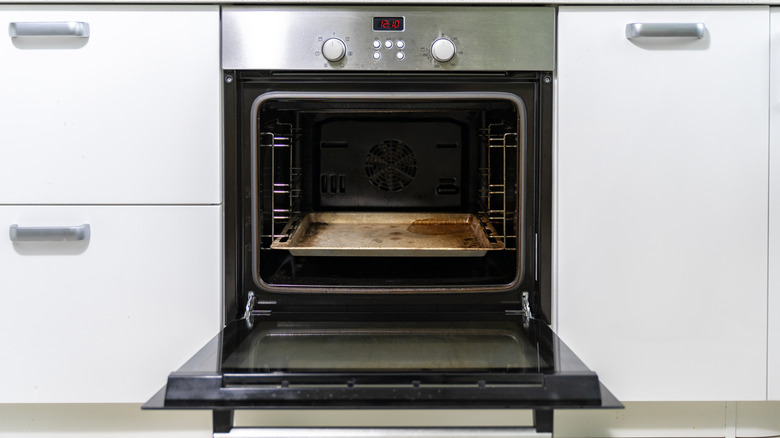
Cleaning your oven isn't just about making it look nice. In fact, you should probably be cleaning your oven more than you think. Continuous cooking in an oven with accumulated grease from sizzling oil and fat can fill your kitchen with smoke, as well as pose a fire hazard during high temperature cooking. One of the main reasons people prefer oven-baking bacon over using the stove is to eliminate the messy grease splatter from the crackling fat of pan-fried pork. But bear in mind when putting bacon in the oven, particularly at higher temperatures, the greasy fat still sizzles and pops, splattering onto oven walls.
Unlike in commercial kitchens that have the resources to properly and regularly clean its ovens, sometimes these grease specks go unnoticed in a home oven, which can create a problem in the long run. Over time, grease can slowly buildup, creating a smoke-filled oven and kitchen (leading to a fire risk) when you are baking. Thus, the idea that cooking bacon in the oven is less messy isn't necessarily true; it just diverts the mess to a less visible area. Some people have skirted this disadvantage of cooking bacon in the oven by covering the sheet pan with foil for the majority of the baking and then removing it for the last couple of minutes to crisp it up.
Less control over heat and fat rendering
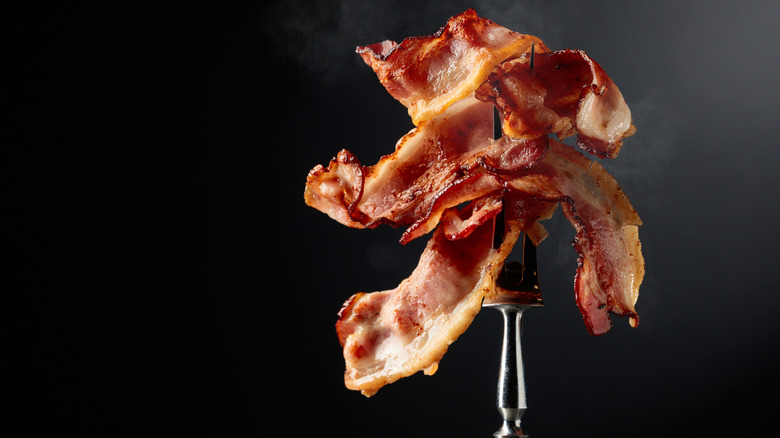
The ideal texture of bacon is a matter of personal preference — from crispy and crackly to chewy and gummy, there's no wrong way to eat bacon (as long as it's cooked thoroughly). Yet, for many bacon eaters, there's nothing quite as satisfying as a crunchy, deeply caramelized, super savory strip of pork that falls apart easily in your mouth. This coveted crunchy texture is why some people use a common pantry ingredient hack for crispier bacon – coating the bacon in flour, which has the added bonus of limiting grease splatter.
While pan-fried bacon is not always inherently crispier than oven-baked bacon, it may be easier to control the crispiness of each strip when pan-frying since you can easily flip it while monitoring the temperature of the pan (without having to open a hot oven to do so), helping to avoid burning the bacon. That being said, if you decide to oven-bake your bacon, you may want to use the cold start method– putting it in a cold oven to begin cooking during the preheat. This will slowly cook your bacon as the oven comes up to temp, allowing the fat to render more steadily, so it crisps evenly without burning.
Longer cooking time
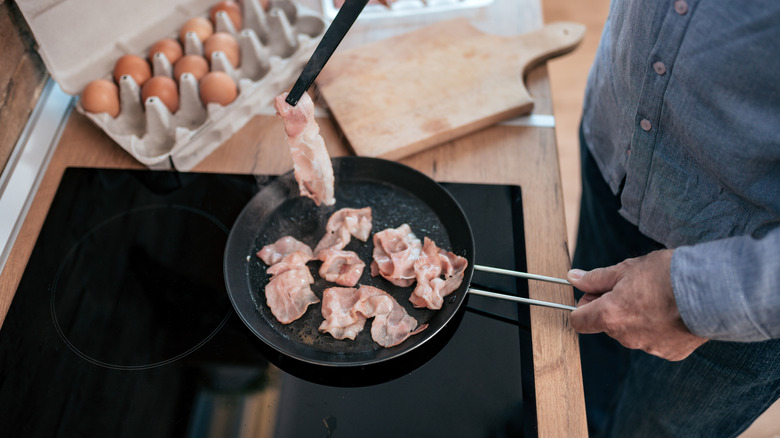
Another drawback to cooking bacon in the oven is the cooking time is typically longer. It takes about 18 to 22 minutes (and sometimes longer) to cook bacon in the oven at 400 degrees Fahrenheit, and that's not including the time you have to wait for the oven to preheat. Meanwhile, pan-frying takes about 10 minutes for crispy bacon.
Cooking bacon in the microwave is also relatively quick (about one minute per slice) although the texture might not be as desirable. Yet, if you're in a big rush and only need a couple of slices, microwaving bacon is perhaps the easiest method. (Using paper towels is a mistake when microwaving bacon. Hint: It sticks to the bacon.) You can also try microwave gadgets for crispy bacon, like the highly rated Original Makin Bacon Microwave Bacon Dish or the PrepSolutions Microwavable Bacon Grill.
All in all, oven-baking bacon is a useful, viable cooking method, particularly for feeding a crowd. But if you're cooking a regular serving size, it will take longer in the oven than frying it in a pan (or microwaving). It also gives you less control over managing the temperature and texture of the bacon and can be a smoke and fire hazard if you aren't cleaning the inevitable grease splatter in the oven.