

The Pancake Choices That Get You Closer To Diner-Style Results
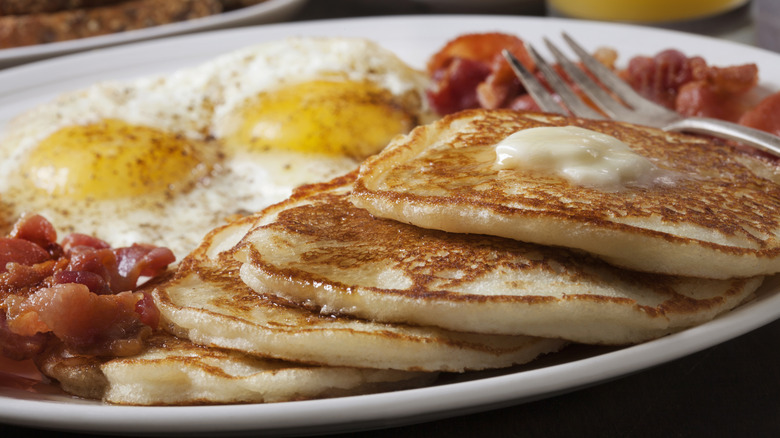
The perfect pancake has a just-right combination of fluffy interior, barely crispy edges, and sweet-yet-buttery flavor. There are plenty of first-rate restaurants across the country that serve up the platonic ideal of flapjacks, but if you can't make it to your local diner — or want to do a little better yourself — it's easy to replicate that diner taste at home with a couple of tricks.
First, make sure you're using the right ingredients, some of which might be a surprise. Reach for malted milk powder and brown sugar instead of regular sugar for a deeper flavor, and perfect the texture with two distinctive liquids: buttermilk and seltzer. Bring the ingredients together, but don't overmix them — in some cases, you might want to let the batter rest before cooking. Finally, if you're adding any mix-ins like chocolate chips or blueberries, pour the batter onto your griddle first before dropping in the additional ingredients.
And before you fire up the griddle or stove, should you be opening up a box of pancake mix or doing it from scratch? Not all boxed mixes are created equal, and some taste much better than others, but pancakes are quite easy to make from scratch. (This method is also more cost-effective.) In fact, a test by news radio station KQED found that from-scratch pancakes take only about a minute longer than boxed mixes to assemble. Plus, when making your own, you have more control over the ingredients, bringing you closer to that classic diner taste.
Skip the regular sugar and add these ingredients instead
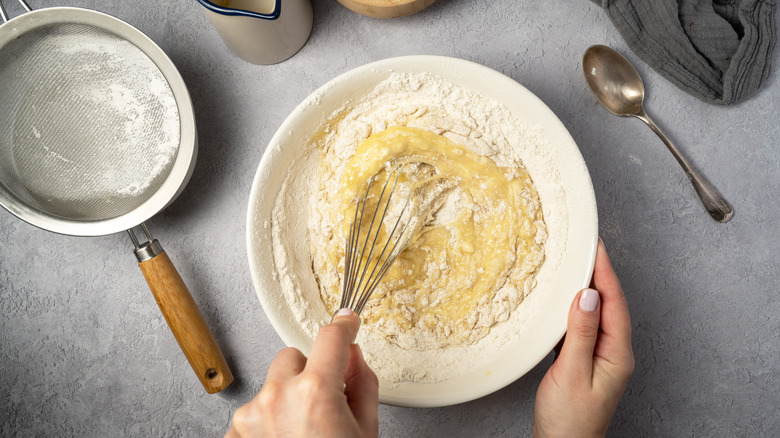
Making pancakes without sugar may sound like blasphemy, but the wisdom behind this method will reveal itself in time. You can start with a basic homemade pancake recipe, but swap out the white sugar for malted milk powder (2 to 3 tablespoons per cup of flour, to be exact). This mysterious but powerful powder is made from wheat flour and malted barley extracts mixed with dry milk, and it imparts a distinct, almost butterscotch-like taste that combines sweet and savory. You might be familiar with it from treats like malted milkshakes.
If malted milk powder isn't within reach (since not every grocery store sells it), try a tablespoon of dark brown sugar per cup of flour. The molasses-forward flavor will provide a similar depth to the pancakes that refined white sugar won't offer. Just know that this substitution isn't possible with a boxed mix, as they generally come pre-sweetened.
The goal with both of these substitutions is complexity. Simple at-home pancake mixes are just that: simple. Whether from a box or straightforward recipe, they tend to lack the exciting yet subtle flavors of a restaurant pancake. Malted milk powder and brown sugar will both keep the batter sweet without making it overly saccharine, all while bringing a little extra to the table.
Seltzer and buttermilk might deserve a spot in your batter
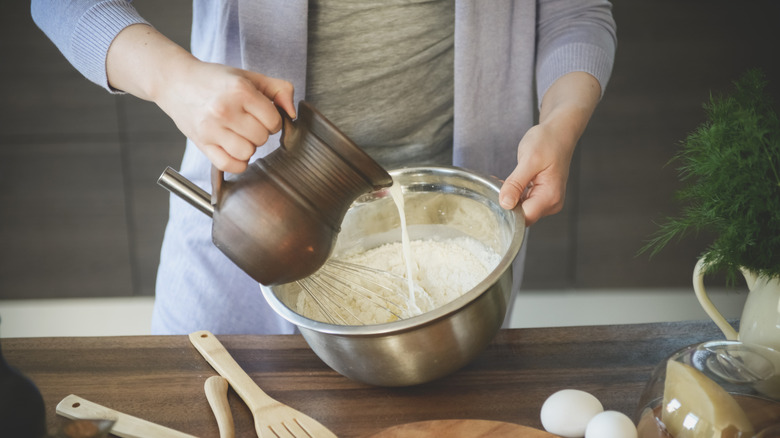
A combination of seltzer and buttermilk might sound like the first steps to the world's worst cocktail, but in pancakes, each brings something vital. When using a standard pancake recipe, try swapping out the regular milk for buttermilk, plus 1¼ teaspoons of baking soda, then add about a ½ cup of unflavored seltzer or sparkling water per 2 cups of flour. That might sound like too much liquid, but buttermilk is thicker than regular milk, and the seltzer can help compensate for that.
Buttermilk serves two distinct purposes in a pancake recipe. For one, the cultured milk product has a tangy, mildly acidic taste that serves as a nice foil to the otherwise buttery, neutral pancake flavor. But it'll also react with the baking soda, and when it does, it'll create carbon dioxide that filters throughout the batter in the form of bubbles that keep the finished pancake airy and light.
That second part is also why seltzer works. Seltzer is simply water infused with air bubbles, and those air bubbles will work their way into your pancake batter. It helps keep the finished pancake lofty and fluffy without making it too puffy. If you're going to use this trick, though, keep your seltzer cold because the bubbles don't last at room temperature.
Don't overmix your batter
Chewiness defines certain foods like soft chocolate chip cookies, tapioca pearls, and bubble gum. Pancakes shouldn't be on that list. No respectable diner pancake comes out chewy — in fact, they should nearly melt in your mouth. So, why do home-cooked pancakes sometimes seem a little harder on the jaw muscles?
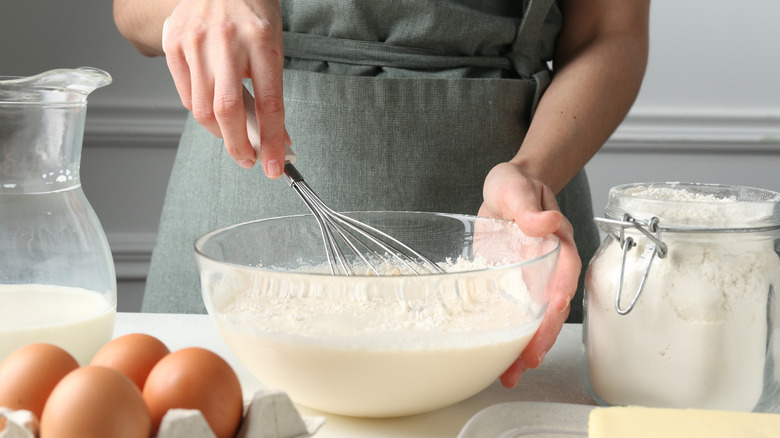
The answer lies in the batter's preparation. Once you've combined your dry and wet ingredients into a batter, stop mixing, even if there are still some small lumps. Overmixing encourages the formation of gluten, a protein formed when flour interacts with a liquid (like water, milk, or in the case of pancakes, buttermilk). While the formation of gluten is great for some baked goods that need structure, like pizza crust or bread, it's a side effect to avoid when making pancakes.
There's another less obvious reason to avoid overmixing: keeping some air bubbles in the batter. Naturally, as you stir dry and wet ingredients together, they won't immediately integrate perfectly. Instead, they'll be a little lumpy and retain some air pockets. Just as with the buttermilk and seltzer, these naturally formed pockets are essential for the lofty texture of the finished pancake.
Rest the batter after mixing
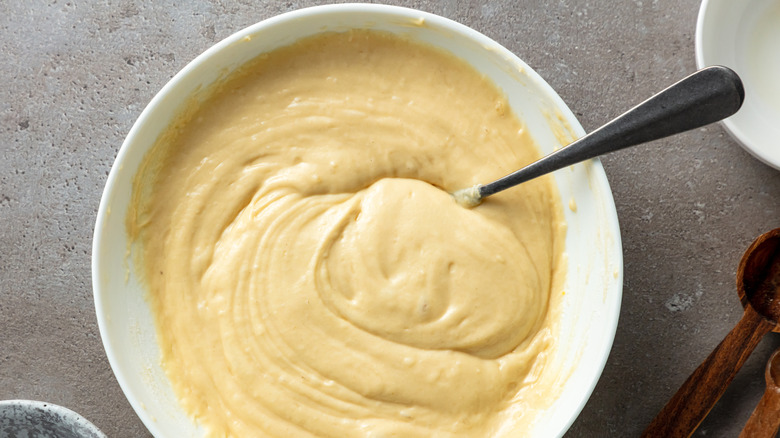
It's probably clear by now that air is essential for achieving the perfect pancake texture. Another way to manage air distribution inside the batter is by resting it — try 10 minutes or even overnight — once it's just barely combined (resist the urge to continue mixing, even if there are lumps). The batter's liquids will continue hydrating the flour, allowing those lumps to break down.
Leaveners like baking powder also need a little time to work. Better air bubbles that provide better lift in the pancakes will form as the batter continues to sit, and as the baking powder interacts with the flour. The bubbles that form will naturally distribute themselves throughout the batter as it rests.
However, this rule has one very important exception: If you've decided to include seltzer for lift in the recipe, don't rest the batter, as it would simply allow the seltzer's air bubbles to escape. (If you left a glass of seltzer overnight, there'd be practically no bubbles left by morning, and the same is true once you mix this ingredient into pancake batter.) If you do choose to rest your batter for longer than a few minutes, make sure it's refrigerated.
Add your mix-ins once the pancakes hit the griddle
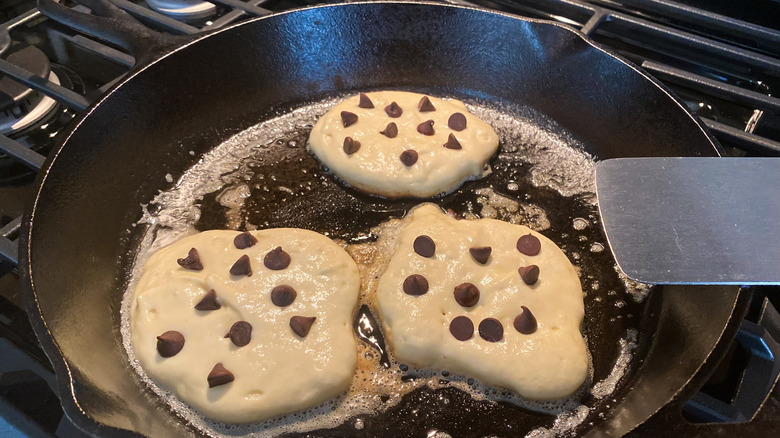
It's tempting to stir a bunch of chocolate chips or blueberries into your entire batch of pancake batter, but for mix-ins like those, it's best to wait and simply add them to each individual pancake once you pour the batter onto the griddle. That's often how diner cooks make specialty pancakes — not least because they need to make some pancakes with blueberries, some with chocolate chips, some with bananas, and so on.
But there's a valid food-science reason for waiting to add those ingredients, too. If you mix them in with the batter itself, they can sink to the bottom of the bowl, leading to uneven distribution. Even if you're careful about stirring everything up evenly, they might still sink to the bottom of the pancake itself. Due to their high sugar content, they could burn before the batter gets a chance to cook. Frying the pancake longer on the first side than the second will prevent the fruit or chocolate chips from burning while still heating them through perfectly.