

The Disadvantages Of Using A Drip Coffee Maker
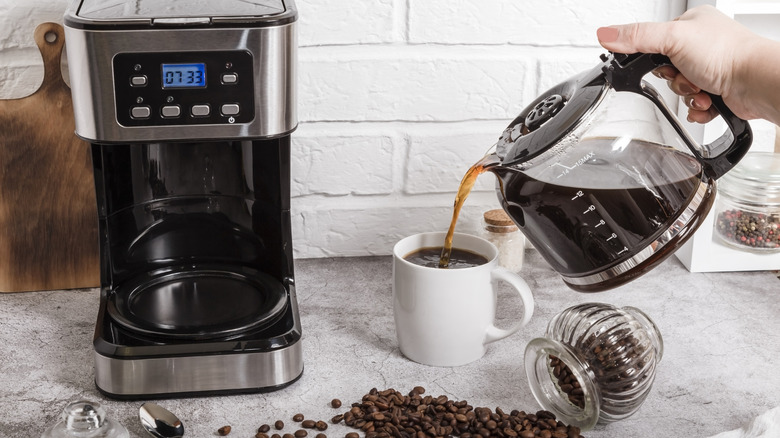
It should come as no surprise that coffee is a globally beloved beverage, and various unique coffee drinks are enjoyed all over the world. In the U.S., a study conducted by National Coffee Data Trends (courtesy of the National Coffee Association) showed that hundreds of millions of Americans consume coffee every week. Many people use drip makers to prepare their cups. These devices are affordable and user-friendly, but drip coffee does have a few drawbacks, and we curated the most common complaints about the machines here.
The most prevalent concern is flavor, as other brewing methods can yield a tastier, more nuanced cup of joe. Drip devices can also leave coffee tasting burnt, and they're not the easiest to clean and care for. Fortunately, you have lots of options when it comes to coffee machines, from simple pour over devices to fancy espresso makers. And while high-end machines used to be far outside the budget of many households, they're a lot more accessible these days. If you want to upgrade your current setup to something more sophisticated, here's how much you should spend on a good coffee maker.
You have less control over flavor and quality
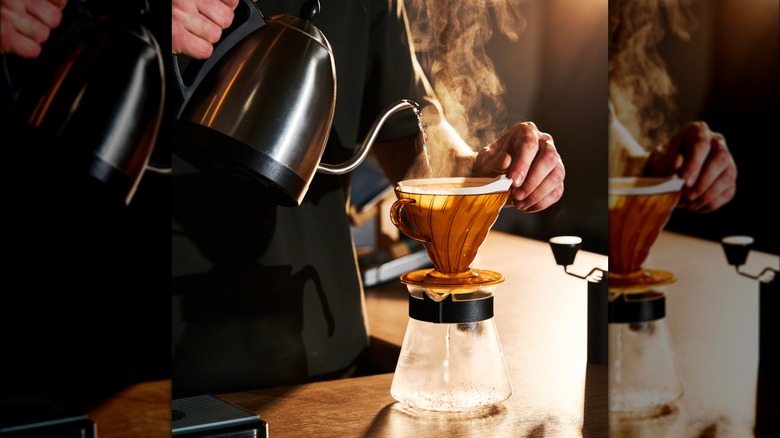
Drip makers are great for quickly generating volumes of hot coffee, but they can't develop the bold, complex flavors associated with pour over techniques. That's because drip machines can't be fine-tuned like pour over devices can. Drip makers produce hot water with a heating element, and this water flows over ground coffee to extract flavors and oils. The end result is brewed into a glass carafe when the process is complete. Pour over coffee uses the same principle (hot water flowing over ground coffee into a pot), but manual brewers let you control factors like water temperature and the speed and direction of the pour.
Drip machines often have a temperature limit for safety reasons, while pour over devices require water to be heated in a kettle. Using a kettle makes it easier to hit the ideal brewing range of 195 to 205 degrees Fahrenheit, which creates a flavorful but not overcooked (aka, burnt) cup. Drip makers can also distribute water unevenly into the filter basket and may deposit water over the grounds too quickly, leading to a weaker brew. If you're a truly dedicated coffee snob aficionado, here is the best way to brew coffee (according to science).
Caring for drip coffee makers isn't exactly easy
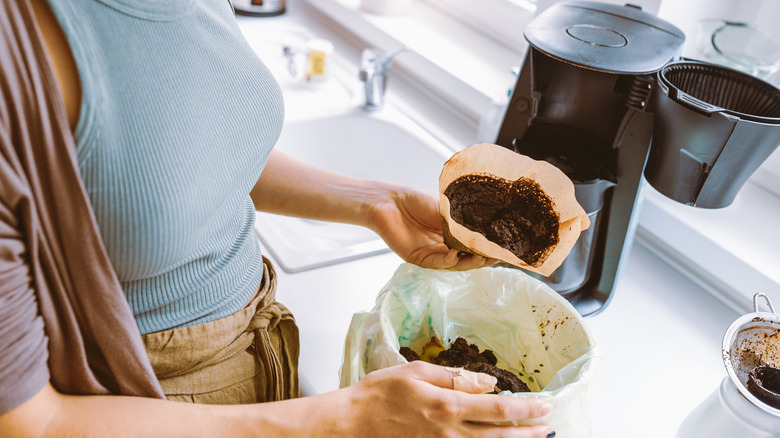
Although drip devices are automatic, they are labor-intensive when it comes to cleaning and care. The machines come with multiple components that must be cleaned, including glass carafes, reusable filters and baskets, and detachable water reservoirs, which can be removed and filled in the sink for greater convenience. Keep in mind that you should be cleaning your coffee maker more than you think; removable components should be washed every day, while descaling (running a mix of water and white vinegar through the device) should occur on a monthly basis.
Drip machines are high-maintenance compared to other coffee makers like a French press, which features a glass carafe with a plunger lid. To make French press coffee, grounds at the bottom of the carafe are steeped in hot water, then the lid's plunger is slowly lowered into the water. Unlike drip coffee makers, French presses can be disassembled for easier cleaning. Some are also dishwasher-safe, so you can fully clean your device after every use without the need for an additional descaling step.
Drip machines can sometimes cause coffee to taste burnt
Temperature is a huge factor in making (in the parlance of "Twin Peaks" protagonist Special Agent Dale Cooper) a d*mn fine cup of coffee. Low temperatures don't sufficiently pull all the lovely flavors from the grounds, while elevated or prolonged heat can lead to a burnt, unpleasant taste in your brew. The warming plate on drip coffee machines is a common culprit, as it can wind up overheating the coffee when the carafe lingers for too long.
Even if you're careful about heat exposure after brewing, issues with how drip devices are designed to function can also contribute to bitter coffee. Though regular cleaning and descaling are important, they can't always fully dispel buildup from interior components. When remaining coffee residue is reheated, it produces bad odors that can infuse unwanted flavors into your cup. Heating elements in older devices may also become defective and increase water temperature to the detriment of your coffee's flavor. Though bitter coffee can actually be rescued with salt, replacing a drip machine with a more streamlined brewing method is a more permanent fix.