

5 Ways To Tell The Difference Between High & Low-Quality Bourbon
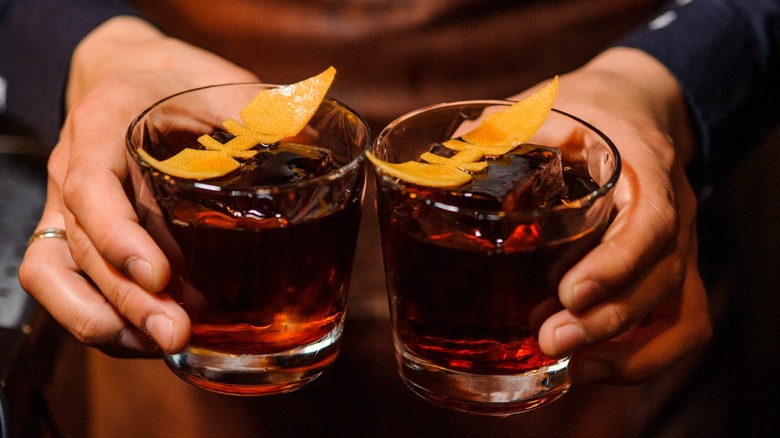
Whatever your appetite for dark liquors may be, there's no denying it: Bourbon has been booming for the last two decades. According to the Kentucky Distillers' Association, Kentucky bourbon production has increased 566% since 2000. A record 16.1 million barrels of bourbon (along with 1 million barrels of other spirits) are aging in Kentucky as of January 1, 2025, up more than double the 6.7 million total barrels in 2015. But some liquor market observers say that the bourbon boom might be starting to cool. In fact, industry data shows that U.S. sales of American whiskey, a category that includes bourbon, declined in 2025. With younger generations consuming less alcohol than their parents (via Gallup) as well as the added economic pressures of inflation and tariffs on the bourbon industry, it's possible that America now has more aging bourbon than it will know what to do with.
For consumers, whether you be a beginner or a longtime bourbon lover, the challenge becomes finding a great bottle amid the surplus of options lining liquor store shelves. As a bartender with over five years of experience (and a loyal whiskey drinker on my own time), I've learned that finding a favorite pour amid the deluge of options is ultimately a matter of informed trial and error. An impressive pedigree or price tag can make a bourbon appear promising, but neither tells you whether you'll enjoy what's inside.
These five pointers will help you evaluate a bottle's label and assess its flavor once you taste it. If you're hesitant to commit to a full bottle, order a pour at a bar or buy a smaller bottle when available. Knowing what to look for — and what to taste for — can help you choose the next addition to your bar cart.
Familiarize yourself with the history and terminology
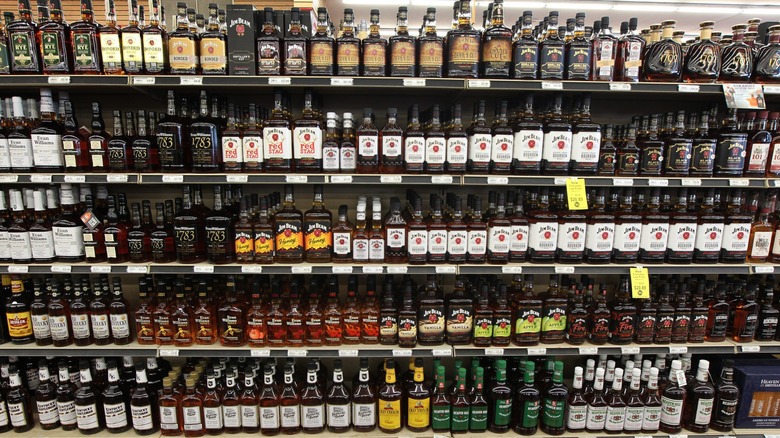
You don't need to be a walking encyclopedia of Kentucky distilling history to enjoy a delicious bourbon. But a little bit of background information goes a long way toward taking home a decent bottle. The history of bourbon predates many U.S. states, and the industry developed in parallel with American food and beverage standardization and regulation. Distillers like Buffalo Trace, Old Forester, and Four Roses can trace their bourbon-making histories for over a century, through wars, Prohibition, and economic highs and lows. This doesn't necessarily mean their liquor will be your favorite, but their status as industry pillars provides a good metric for commitment and consistency.
As we noted in our list of red flags to look for while perusing bottles of bourbon, some of the vernacular on a bourbon bottle can tell you a lot about the quality of its contents, while other words are more marketing than meaning. Age labels, distilling location, and terms like "straight bourbon" and "bottled in bond" have legal standards behind them. A 12-year age statement, for example, means the youngest bourbon in the bottle is at least that old. "Bottled in bond" requires that the bourbon be at least four years old, distilled by the same distiller at the same distillery during one distilling season, and bottled at exactly 100 proof.
These details don't guarantee a delicious pour, but they do give you something concrete to evaluate beyond the bottle's design. Terms like "small-batch," "artisanal," or "reserve selection," on the other hand, carry no legal standard or industry-wide guarantee of quality.
Age is something, but it's not everything
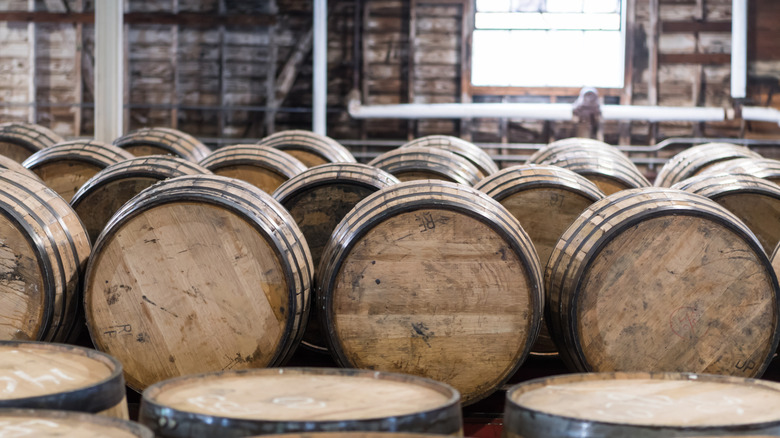
Aging is an integral part of making bourbon. Before entering the barrel, the freshly distilled spirit is a clear liquid known in the industry as "white dog." Bourbon must age in new, charred oak barrels, which give the spirit its amber color and distinctive flavors like vanilla, caramel, spice, and smoke. Once used, those barrels can hold other spirits, but they can't age another batch of bourbon.
However, longer aging does not necessarily mean a better bourbon. The higher price tag on a multi-decade-aged bottle often reflects the distiller's expense for storing it so long, not that it has demonstrated a better flavor. Barrel characteristics, aging conditions, and personal preference are among the intricacies that complicate the relationship between age and quality. For new buyers, a general rule of thumb is to treat an age statement as a useful starting point, with the real test being whether the bourbon delivers balanced flavors and a finish you enjoy.
At the liquor store, look for a bourbon that has spent enough time in the barrel to develop a complex flavor without being too overwhelmed by oak. Five to 12 years is a useful starting point. While bourbons younger than five years can still be delicious, they tend to taste harsher, as the spirit hasn't had sufficient time to mellow. The new oak that provides such interesting zest to bourbon also has a tendency to release strong tannins during the first handful of years of aging, flavors which need time to integrate smoothly. Bourbons older than 12 years, on the other hand, can possess some delightful and rare flavors but are also more prone to tasting too strongly of oak or feeling dry in your mouth.
A good bourbon shouldn't burn, but it will feel warm
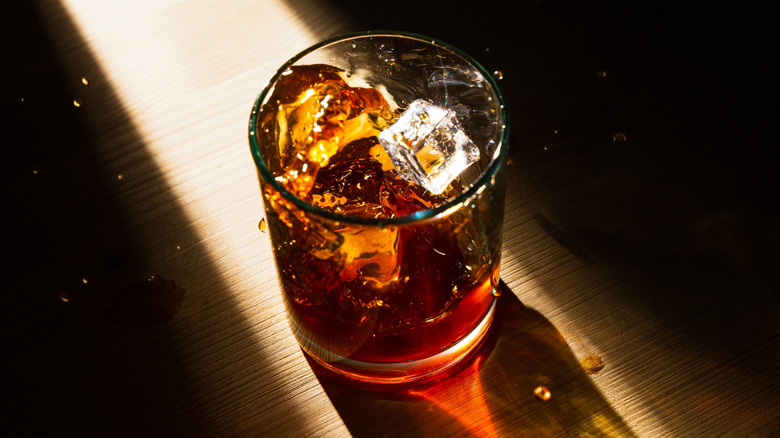
Now that you've used the above pointers to select a promising bottle, it's time to taste what's inside. Pour 1 to 2 ounces into a rocks glass — the correct glass can make a big difference in your tasting experience. A great place to start your tasting is with the physical sensation you get as the bourbon hits your mouth. Because bourbon is a high-alcohol spirit, some sensation of heat is to be expected and is even part of what gives all whiskeys their character. What matters is whether that good warmth is too strong and overwhelms the sip's other characteristics. This is called a burn, and while it's not always a deal-breaker, it is typically a symptom of a low-quality drink.
Warmth is a pleasant, radiating alcohol heat that feels comforting and cozy. Rather than feeling a shock to the front of your tongue, you feel warmth in the form of a delayed blooming sensation in your chest as the bourbon travels down your throat. In bourbon-loving circles, this warm sensation is known as a "Kentucky Hug," and a high-quality bourbon, regardless of price or proof, will give this hug lovingly without overwhelming the drink's underlying flavors.
Burn, on the other hand, is more jarring and immediate and feels like a sharp bite to the front and sides of the tongue or the top of the throat. Burn comes from spirits that are both high in alcohol content and underdeveloped in distillation. While high-proof bourbons have a higher chance of burning than lower-proof ones, it is certainly possible to distill a high-proof bottle with good warmth, so long as the distiller takes the care to blend and age it properly to smooth its flavor. This is all complicated by the fact that each individual palate experiences burn differently, and some may be far more sensitive to it than others.
If your chosen bourbon burns heavily, that particular bourbon may not suit your palate at that strength. Consider a lower-proof bourbon next time. If that still burns, you may want to move on to a different producer altogether.
Taste for complexity
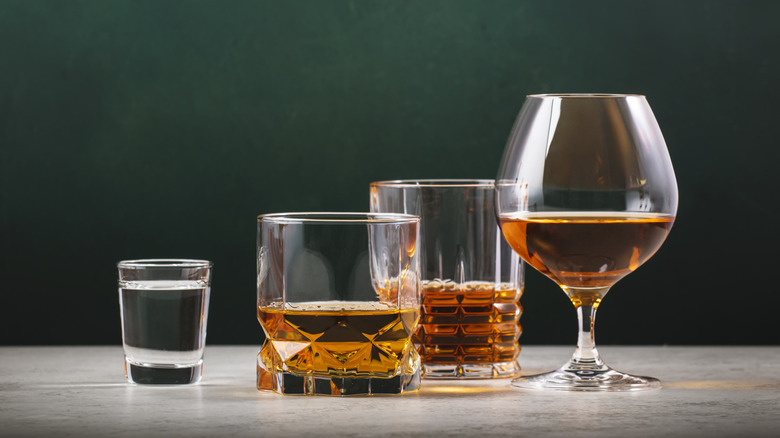
The Kentucky hug typically steals the show on the first sip of bourbon. On the next couple of tastes, it's time to look for the underlying flavor notes. There isn't a single flavor that signals a high-quality bourbon. Instead, pay attention to how its flavors interact and whether they develop as you sip.
At their worst, low-quality bourbons can taste of unripe corn or grain, wet cardboard, artificial sweeteners, or chemicals. These flavors jump out and dominate the sip, leaving little space for complexity. Other low-quality bourbons are less egregiously bad than this, but their flavors still lie flat and monotone on the tongue. It is possible, however, for these corn and grain notes to be done well — when they're balanced with the spirit's other characteristics.
There are a number of notes that can appear in a finely made batch, but what sets them apart is the way these flavors come together to create an interesting sip. Sweet flavors like caramel, brown sugar, and chocolate give way to deeper ones like oak, cherry, or earth. Those notes don't need to appear in a particular order, and you don't need to identify them all to enjoy a decent pour. Simply look for flavors that complement one another rather than compete, creating a sip you want to revisit.
Look for a pleasant, lingering finish
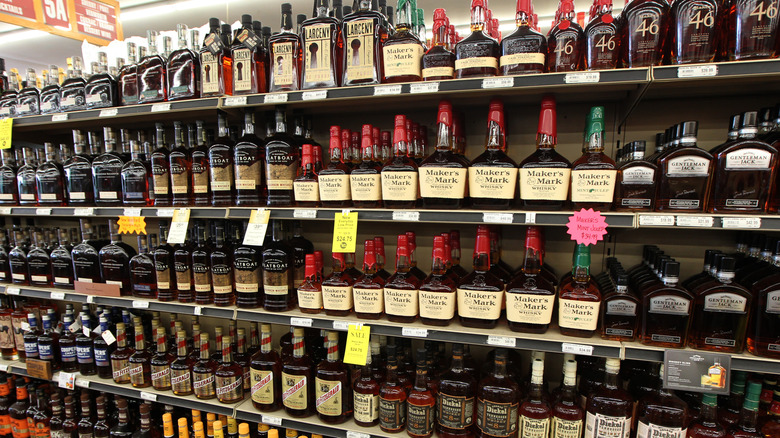
In bourbon tasting, the "finish" refers to the lingering flavors in your mouth after swallowing a sip, and it is one of the best ways to distinguish a quality bottle of bourbon. To maximize the effectiveness of this step in the tasting process, some bourbon aficionados even purposefully exhale slowly right after they swallow their sip, pushing the aromas from the spirit into the nasal passage. But whether you use this technique or not, a high-quality bourbon will stand out as having a long, unfolding finish.
As the bulk of the liquid leaves your tongue, subtler notes have the space to reveal themselves, such as baking spices and brown sugar in younger bourbons or even tobacco and leather in well-aged bourbons. The reason these flavors are highly indicative of quality is that they come from a well-executed distilling process. Spicier flavors, for example, come from the selection of grains in the batch's initial mash, while a well-done leather flavor is the result of longer aging in the charred oak barrels.
To make an ultimate assessment on your bourbon selection, you can compare the price point and bottle information with your tasting experience. For example, consider a bottle with a 12-year age label and a $100 price tag. You now know that the age identifier suggests that this bourbon is likely to be oakier and more complex and that the longer maturation lends itself to the higher price. But if it ultimately tastes overwhelmingly woody to you rather than pleasantly earthy, regardless of whether this means it is poorly made or just not agreeable to your palate, then it isn't a good fit. But if a $35 bottle feels balanced and delivers a smooth finish, that could be a far more worthwhile addition to your bar cart.
Legal designations signal production standards and help to establish expectations, and balance, warmth, and complexity offer useful tasting criteria. But your preferences ultimately determine which combination makes you want to go back for a second pour.