

Andrew Zimmern Has A Very Specific Way Of Eating White Meat Chicken

The first thing that comes to mind when thinking of Andrew Zimmern might be your favorite episode of "Bizarre Foods." It turns out that some of the moments he most enjoyed while filming the show involved chicken. Zimmern stated in a 2011 interview with Sierra magazine that during his travels he enjoyed the poultry feet, necks, bishop's nose, and even the skin that were sold grilled in night markets all across Asia. Part of the reason is that the meat is charred and liberally flavored with sauces and spices. "It's so much better than grilled white-meat chicken breast," he remarked. While he's less enthusiastic about the lighter portions of the bird, he's been known to wax lyrical about white meat when having "mouthwatering chicken," also known as kou shui ji. As Zimmern explained in an Instagram video, "This is the only dish that I will traditionally eat with white meat chicken."
A meal with roots in Sichuan, China, kou shui ji is decidedly not the basic chicken salad you find in the U.S. It has two main components: poached poultry and a spicy sauce containing Sichuan chile oil as its base. For the meat, Zimmern insists that the chicken be pulled instead of sliced. His version of the sauce contains chile oil, black vinegar, soy sauce, toasted sesame seeds, crushed peanuts, and Sichuan peppercorns, among other ingredients. He piles the chicken atop sliced cucumbers and pours a generous amount of the spicy sauce all over. Zimmern described the dish as "cool, hot, savory, sour, sweet, fragrant and numbing all at once."
A classic dish of Sichuan
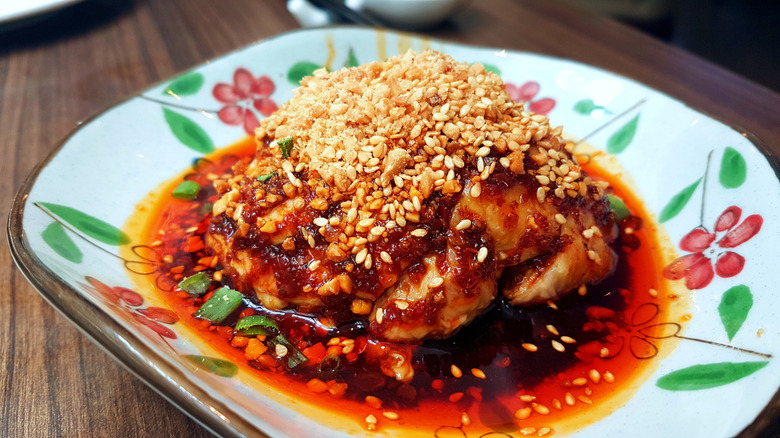
According to lore, the spicy salad hails from the Sichian Capital of Chengdu. Apparently, street vendors in the area historically sold cold chicken, which may explain why this mouthwatering Chinese dish is always served cold. The sauce component has a very potent flavor described as "mala," which translates to "numbing and spicy." It is said to make one salivate, which is why the name "kou shui ji" translates literally to "saliva chicken." The moniker was made more palatable with the descriptor "mouthwatering."
If Andrew Zimmern has inspired you to be adventurous, you can try recreating his Instagram recipe. However, getting a bunch of specialty ingredients can be a chore. Folks who would rather avoid that can head to a Sichuan restaurant and order a similar-sounding dish. However, the various versions may go by different names. The West Coast-based Chengdu Taste, for example, sells a cold "flavored chicken in chili sauce," and Little Pepper in New York has "steamed chicken with special chili sauce." So be sure to check with your server if the place you pick is actually serving kou shui ji.