

The Simple Magnet Trick To Check If Your Cookware Works On An Induction Stove
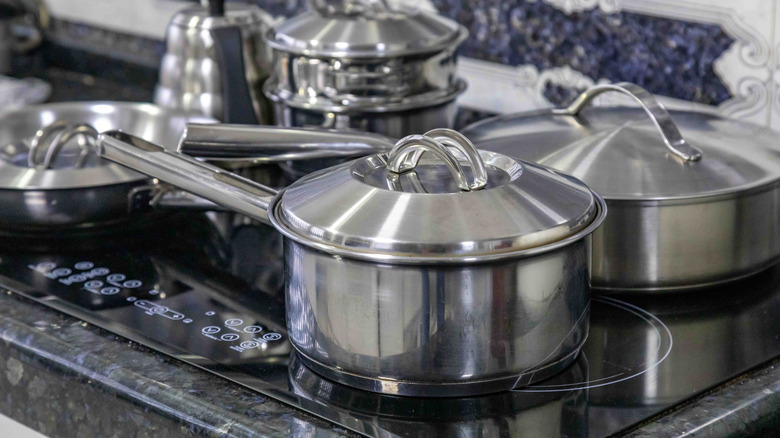
Induction stoves are changing the game for a growing number of home cooks. They're faster to heat, provide more precise temperature control, are easy to clean, and energy-efficient. Those considering an upgrade may have heard that not all cookware is compatible with induction burners, due to the unique way the process works. Before you buy an entire new set of pots and pans, there's a quick, simple test to check whether your current cookware is compatible: see if a magnet sticks to the bottom.
To understand why this straightforward check works requires some basic knowledge about induction cooking itself. The induction burner creates a magnetic field beneath the pot or pan, allowing a fast-moving electrical current to transmit directly into the cookware. This current generates heat that warms the vessel and cooks the food inside. It's a process that relies on the transfer of energy through a magnetic field, something only pans made of certain materials can achieve.
Compatible materials include cast iron, enameled cast iron, and several (but not all) varieties of stainless steel. Conversely, glass, all-copper, or aluminum cookware won't work on an induction stove unless the pot or pan has been specifically designed for such use. A small magnet is the quickest way to tell. If it won't stick to the bottom of the pan, it won't work. The more tightly it clings to the surface, the better it'll heat.
Converting to induction-compatible cookware may be worth it
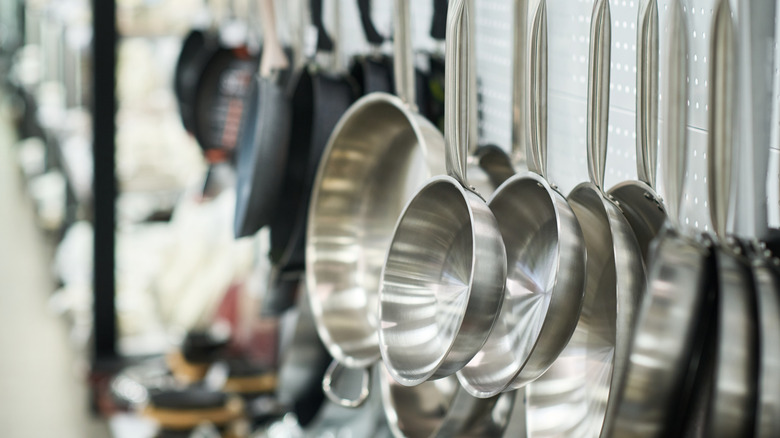
Depending on your current kitchen setup, switching over to induction might require anything from replacing one or two incompatible pans to updating your entire set of equipment. Fortunately, well-reviewed, induction-friendly pans are available in numerous packages and price points, from single Lodge cast-iron skillets for under $25 to a 12-piece Tramontina stainless steel set for around $300.
Although one's pot and pan choices are much more flexible with standard electric or gas stoves, many see the advantages of induction cooking. The fact that the burners aren't hot when pans aren't touching them is a clear cooking advancement, as is the improved air quality compared to gas models. Induction cooktops also respond to temperature changes faster than old-school electric burners, helping prevent burned food or adding a quick burst of heat.
The reality that not all pans can be used on these burners is one of the indisputable downsides of cooking on induction stovetops, along with their cost and the potential fragility of the glass cooking surface. That said, figuring out which pots and pans make the cut takes seconds and facilitates a cooking experience that gas and traditional electric can't compete with.