

Glass Vs Thermal Carafe: Is The Latter Worth The Cost?
We may receive a commission on purchases made from links.
Say you're in the market for a drip coffee maker after learning all about its advantages. While browsing, you may notice something interesting about prices: Machines that have stainless steel thermal carafes tend to be more expensive than the ones that use glass. For instance, the BT Speed Brew Classic by Bunn is the brand's cheapest thermal carafe option at around $175 on Amazon. If you check out Bunn's glass carafe options, you'll find that one of its lowest-cost models available on Amazon is the BX Speed Brew Classic, which sells for about $130.
That's not to say extremely pricey glass options don't also exist: The Ratio Eight Series 2 is a premium product with a regular price of $800 online. However, if you want an option without all the bells and whistles, makers with thermal carafes are generally more expensive. It's easy to see why. Stainless steel is a more expensive material than glass, and the design often requires more complex engineering. As for the question of whether a thermal vessel is worth the extra money, the answer is yes with an asterisk. It really depends on multiple considerations, including how long it generally takes you to consume a pot of coffee, whether you mind the amount of upkeep the carafe requires, and if you want something more shatter-proof than glass.
Glass carafes keep things practical
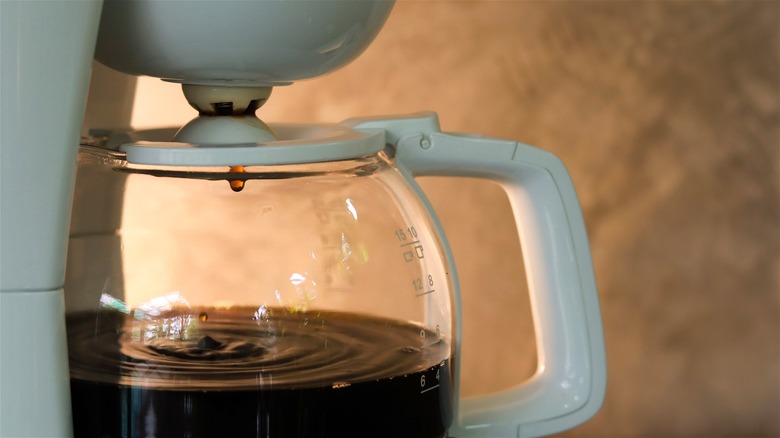
Glass carafes have a number of benefits in addition to the lower price point. The most obvious of these is their transparency. It's a lot easier to see how much coffee is left in the carafe, so you'll know exactly when you'll have to brew a new pot. You can also tell if you made some common brewing mistakes by the coffee's appearance; if the color's off or if it looks cloudy, you won't be taking any accidental sips of bad brew. Some people also prefer the look of glass over stainless steel, which is something to consider if you care about aesthetics.
Glass carafes are generally low-maintenance, which could be very helpful for busy folks. You can just pop them in the dishwasher when you're done getting your liquid caffeine. Should the worst happen, they're relatively easy to replace. The manufacturer of your coffee maker will likely sell replacement carafes if you need them.
What they're not too good at, however, is keeping coffee warm on their own. Most glass carafes need the assistance of a hot plate, which runs the risk of burning your brew. You could compensate for this by using an insulated model like the Fellow Stagg Double Wall Pour Over Glass Coffee Carafe, but these come at an added cost and might not even be a compatible size for your coffee maker.
Thermal carafes are all about the heat
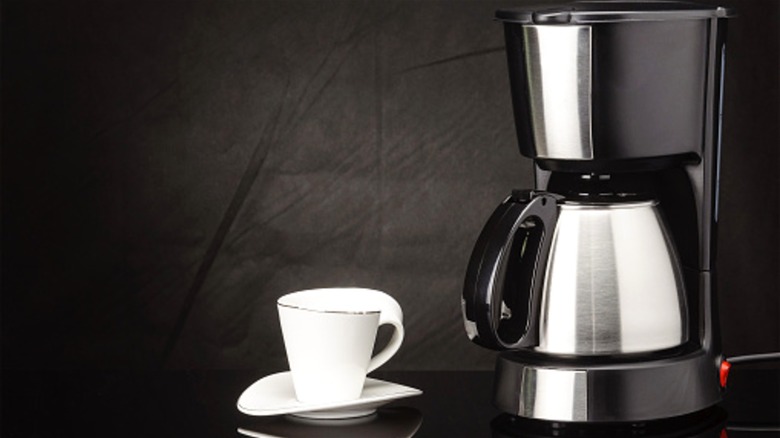
The main reason you might want to consider thermal carafes is their heat retention. They can keep your coffee hot without the need of a warming plate for about two hours. This figure appears to be a minimum, however, since some owners find that their brew stays hot for four or more hours.
Some coffee makers like the Technivorm Moccamaster 79112 KBT Coffee Brewer come with an additional lid that more fully seals the carafe. While this improves heat retention by preventing more heat from escaping, it has the bonus effect of helping your taste fresh for longer. The covering limits oxidization while also preventing the volatile compounds that give coffee its flavors and aromas from dispersing into open air. This doesn't mean that it'll keep your coffee tasting fresh forever, though. These compounds also become muted as the coffee cools, even if it takes longer to get there in a thermal carafe.
These lids contribute to one of the cons of thermal carafes as well. Because of the way they're designed, the coffee can sometimes dribble out instead of a straight, clean pour. Maintenance is also slightly more involved than glass carafes since coffee oils can actually stick to stainless steel. Under certain conditions, this can affect the taste of later brews as the oils go rancid. Washing the carafe regularly will lead to better coffee in the same way it does for moka pots and other stainless steel brewers.
So, when are thermal carafes worth it?
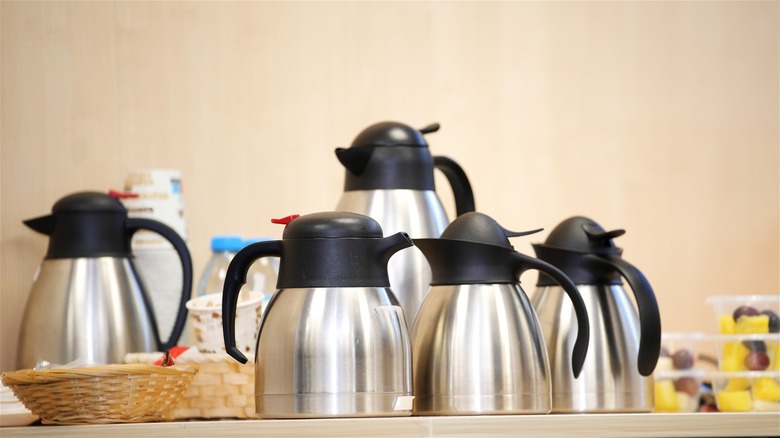
Given all these pros and cons, whether thermal carafes are worth spending extra money on depends entirely on your coffee habits. Glass versions might be a better match for your lifestyle if your household is the type to finish a pot fairly soon after brewing, and if you need to save a few extra minutes on upkeep. They might not be too great an idea if your home has kids who tend to get into accidents — glass is a lot easier for them to break than stainless steel, and the little ones might not be aware that it isn't a good idea to touch hot plates.
In a household where you need to stretch a single pot of coffee throughout the day, thermal carafes tend to offer better-quality coffee up until the last cup. If you can afford the higher cost and the slightly more maintenance time, there's really no reason for you to miss out on good coffee. For many folks, being able to enjoy a nice, hot cup of joe in the middle of a long day makes it worth every penny.
Whichever route you go with, you'll stand a better chance of getting the kind of coffee you want with proper use. A lot of us use our coffee makers all wrong without even realizing it. Little mistakes like using the wrong ratio of grounds to water can have a much more pronounced effect on the quality of your brew than the type of carafe.