

One Of The Biggest Advantages Of Switching To An Induction Stovetop
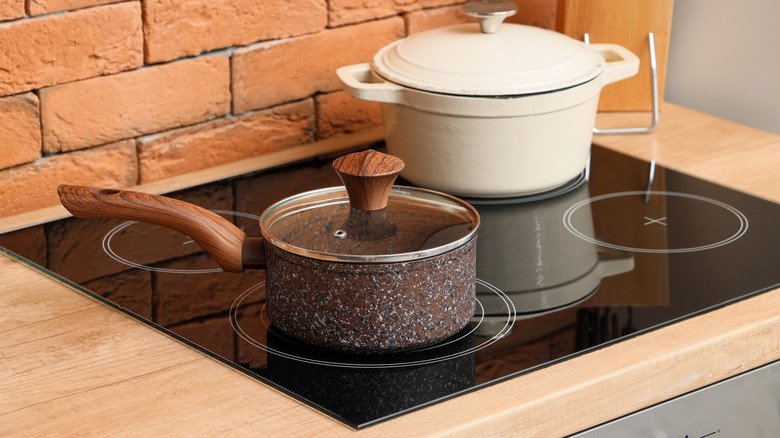
You may have noticed that induction stovetops are having a moment. Julian Baldwin, President of Global Tech & Durables at Nielsen IQ, says, "Consumers are interested in durable products that make their lives easier." Amen! A key reason why people love induction stovetops is the ease of cleaning.
Induction uses electricity and magnets to heat up pots and pans efficiently and precisely, without heating the entire stovetop — only the metal of the cooking vessel. An induction stovetop requires specific pans, has higher installation costs, and carries important health considerations for people who use medical devices like pacemakers. Despite the disadvantages of an induction stovetop, it's a practical option worth considering for your kitchen, especially if you'd prefer a cooking surface that can be cleaned in a matter of seconds after a meal.
Something else you should know about induction choices on the market is that price doesn't necessarily correlate with quality. For instance, Consumer Reports' lowest-rated induction option is also the most expensive (at $4,000), while its top recommendation costs less than half that ($1,600).
Cleaning is different with induction stovetops
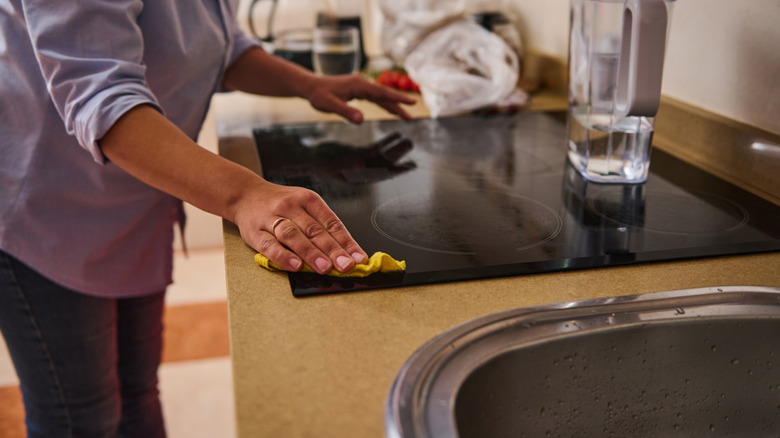
Thorough cleaning is crucial in the kitchen, and one of the advantages of induction cooktops is how simple it is to make them sparkle. Cooking can be messy, but smooth induction stovetops leave nowhere for crusted food, liquids, crumbs, or other spills to hide. Additionally, burned-on food doesn't build up nearly as much due to induction functionality. In this type of cooking, the cookware — not the surface of the appliance — is what heats up. Though it's tempting to skip, be sure to actually read the manual for your induction cooktop so you are aware of any nuances of your particular model.
As a general cleaning guideline, you should wipe down the stovetop after each use. Do not use anything abrasive or harsh, such as bleach, ammonia, or scrubbing sponges that can lead to scratching. This is tricky because ammonia is a common ingredient in most glass cleaners. Induction stovetops are made of glass or ceramic glass, so you could easily think something like Windex would be perfect, which isn't the case.
Water, white vinegar, baking soda, and dish soap are safe and effective options for cleaning induction stovetops. Let your chosen gentle cleanser soak if needed to loosen any buildup, then wipe gently with a clean, soft cloth. Rinse everything, and pat the glass dry. With this strategy in mind, the days of resorting to long soaks and aggressive scrubbing sessions only to lose the never-ending battle against messy pans (again) will soon be over!