

Cleaning Products You Should Never Use On An Induction Cooktop
We may receive a commission on purchases made from links.
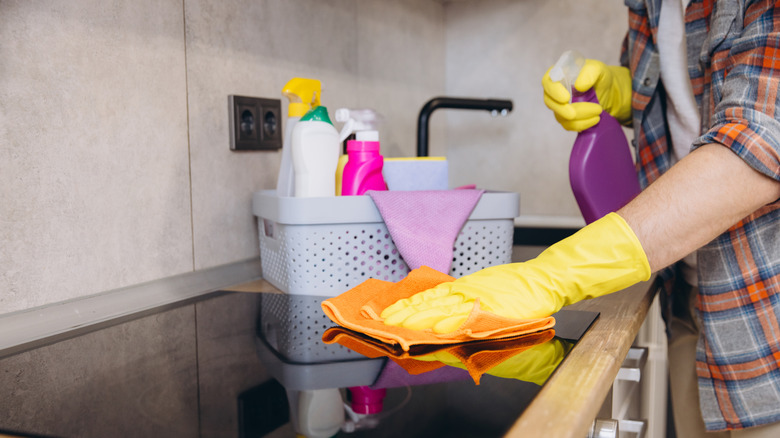
Induction cooktops have gained traction in the U.S over the years. These stovetops offer several notable benefits, including more precise control, built-in safety features, and easy cleaning. Keeping your induction stove spotless isn't as difficult as it would be for a gas stove's burners (one of the latter's disadvantages). That's due in large part to the solid, flat glass surface that sits on top.
Easy to clean doesn't mean impossible to damage, though. The surface is durable under normal cooking, but it can still be scratched or chemically worn down if you make certain mistakes during the clean-up process. To protect it, avoid abrasive cleaners as well as products containing potentially damaging chemicals such as bleach or ammonia. That even applies to oven-dedicated grease cutters such as Easy-Off, which contains the corrosive ingredient lye. The wrong product can leave dull spots, streaks, or stains that may be permanent.
One other important note: Although the cooktop is indeed glass, you should avoid using common glass or window cleaners like Windex because they sometimes contain ammonia. Plus, such products aren't designed to get hot — like they would if residue is left behind after you clean your stovetop with them. Some brands, however, do offer a glass stovetop-specific product such as Weiman Cooktop Cleaner & Polish, which won't cause those problems.
Why abrasive cleaners are bad and what to use instead
The tempered glass of an induction stovetop is covered with a thin layer that protects it during normal use. However, chemicals that are acidic (like vinegar) or basic (like bleach) can dull or wear down that protective barrier. Ammonia can have a similar effect, leaving behind permanent stains and streaks. Disinfectant wipes and cleaners, mold and mildew removers, glass cleaners, all-purpose cleaners, degreasers, and oven cleaners can contain either bleach or ammonia.
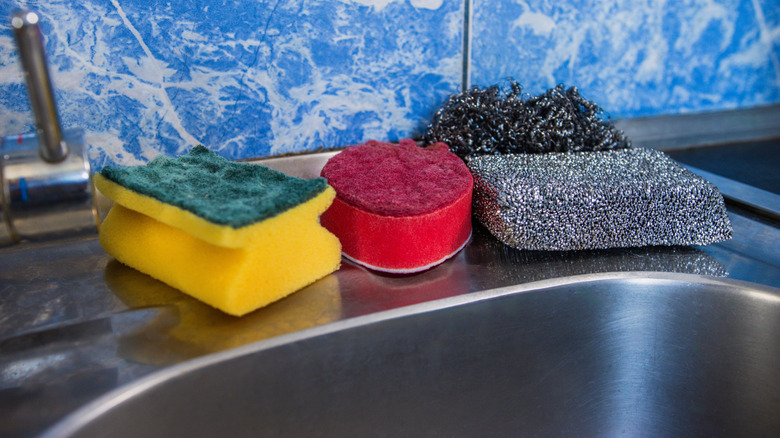
Abrasive cleaners get rid of stuck-on food using mechanical force rather than chemically dissolving it. Examples of these products include cleansers, steel wool, and scouring pads. While they're very handy for applications like sheet pans or kitchen sinks, they can scratch the glass top. Scrubber sponges pose a similar risk, and some manufacturers advise against using them.
Fortunately, you can tackle simple messes with soap, water, and a soft cloth so long as you clean the surface after every use or anytime there's visible food debris. When you need a stronger option, try using a specialized product like Scotch-Brite Glass Cooktop Pads, which are specifically designed for the job and unlikely to harm the surface. You can simply wet them with water and wipe away. Using them without any additional cleaning products can reduce the risk of accidental damage. Other manufacturers might recommend a plastic scraper or razor; though again, these are best used with caution.