

4 Disadvantages Of Gas Stovetops
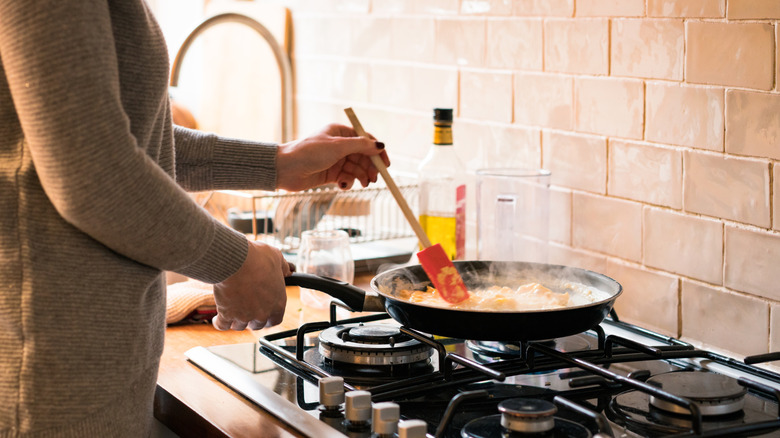
Stoves fueled by gas have been in existence for about two centuries, and have been commonplace in kitchens around the world from the late 19th century. When they were invented, they represented a major step forward from wood fires, which had been the standard for cooking and heating for millennia, and later, wood- and coal-burning stoves. Although gas stoves may be popular, they're not without their drawbacks. Those considering replacing a gas stovetop or adding a new one should be aware they can require a more complicated installation, worsen indoor air quality and heat up your kitchen, are less efficient at cooking your food, and are often more difficult to clean.
Before delving more deeply into these disadvantages, it's worth recognizing why gas stoves remain popular. Many home cooks prize gas stoves because they provide instant heat, as well as finer control over the temperature once cooking has begun. This is due to their ability to easily dial up and down the flame, rather than waiting for electric burners, which can take longer to heat up and cool down. In addition, the typical lifespan of a gas stovetop is often around 15 to 20 years, a few years longer than electric models. With fewer sophisticated parts than electric stoves, they're also simpler and cheaper to repair and maintain. Still, these pros may not outweigh the cons for some home cooks.
Gas stoves require more complicated installation
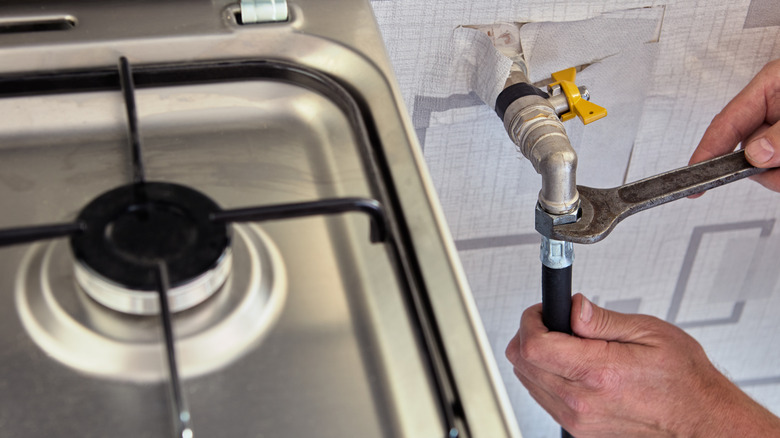
Installation and setup can be a significant difference between gas and electric stovetops, with the former facing more complicated planning and potentially higher costs. For electric models, it's often as simple as plugging it in, especially if you already have the 240V outlet that most full-size ones require.
Gas stoves require a connection to a gas line, either supplied by a local utility or personal, on-site tank. Because natural gas leaks can be potentially dangerous or even explosive, many experts recommend hiring a professional to ensure the process is done safely and reliably. That's particularly true if you need to install or move the connection to the gas line, which, while possible, can be expensive, time-consuming, and limited by other factors, such as your kitchen floor type, overall home structure, and local building codes. The extra time and expense this entails should be a consideration for those looking to minimize the overall disruption in their cooking.
Gas stoves can worsen indoor air quality
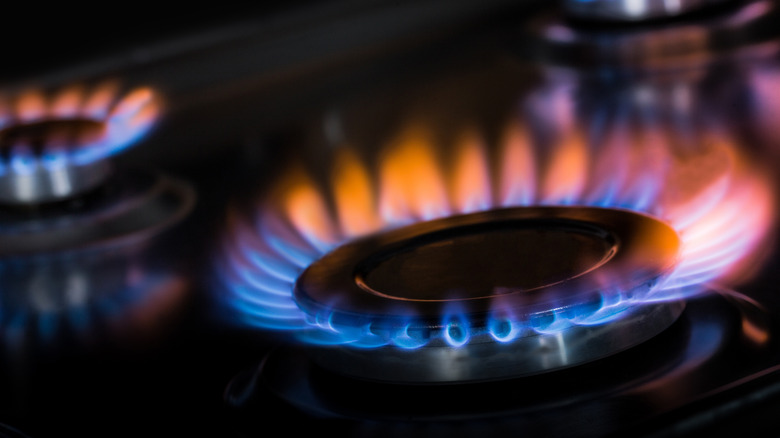
Burning any material produces byproducts that can be potentially harmful, and the gas used to power your stove is no exception. However, unlike grilling or campfire cooking, all of those substances are trapped in your home. According to StanfordReport, these include benzene, deadly carbon monoxide, and nitrogen dioxide, which has been linked to asthma, lung disease, preterm births, and even diabetes. These risks are particularly high if there's incomplete combustion (often signaled by an orange or yellow, rather than blue, burner flame), which can be caused by a variety of factors, including dirty or clogged burners. In these cases, the stove is directly releasing some of the fuel into the air rather than burning it, which can be a serious health and safety risk.
Electric stoves present no such problems. In fact, research has found nitrogen dioxide levels fall by over 50% when making the switch from gas to electric or induction stovetops, a difference that could have substantial long-term health benefits (per Energy Research and Social Science). These potential health benefits can be a major reason to master the switch from a gas stove to electric.
Gas burners are less energy-efficient and heat up the kitchen more
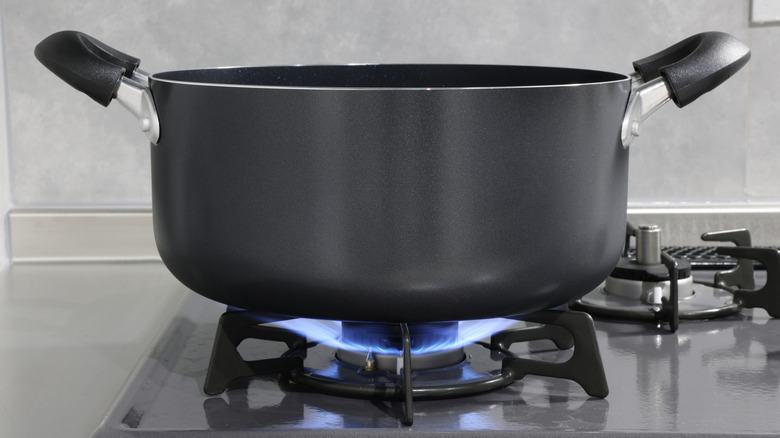
Energy efficiency is a key, and often underrated, disadvantage of gas stovetops compared to the alternatives. According to the Electric Power Research Institute, gas stoves convert 40% or less of their energy into usable cooking heat, compared to 70 to 80% for electric stovetops and 85 to 90% for newer induction models. On a practical level, this means paying for roughly twice as much energy to do the same amount of cooking, something most people would prefer to avoid.
And it's not just about your gas bill, either. Naturally, the roughly two-thirds of gas burner energy that doesn't get converted to cooking heat has to go somewhere. Unfortunately for most home cooks, that pours into their kitchen. In some cases, this can add up to 10 degrees Fahrenheit in the kitchen. This can make cooking uncomfortable while also potentially raising your utility bill further, if it requires additional cooling for your home, such as in the hot summer months.
Gas stovetops are harder to clean
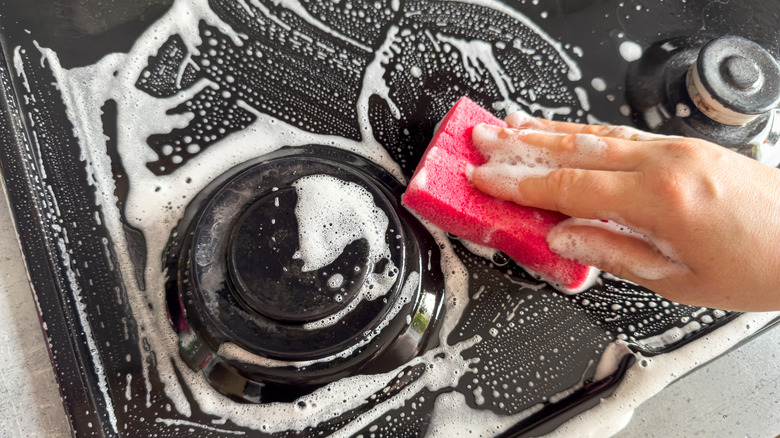
Scrubbing down a stove is rarely anyone's idea of a good time, but the differences between cleaning a gas and electric or induction one can be significant. Electric and induction stovetops generally have a smooth, flat cooking surface made of ceramic glass. This makes them fairly easy to keep tidy with cleaning spray, a cloth or towel, and some elbow grease.
Gas stoves are a far different proposition. First, there are more parts that need cleaning. These include the stovetop surface, metal grates that support the pots and pans, burners, and drip bowls. This requires a more involved and painstaking process, and over time, this can mean more hours spent just maintaining your stovetop that could otherwise be spent cooking or relaxing after a satisfying meal.
It's important to recognize there are also disadvantages to cooking on an induction stovetop, such as the upfront cost and their incompatibility with some pans. Meanwhile, we've already mentioned some of the downsides of traditional electric models, including less ability to quickly adjust the heat. However, the disadvantages for gas stovetops are significant and worth weighing strongly before adding or replacing one in your kitchen.