

This Common Wood Should Never Go On Your Grill Or In Your Smoker
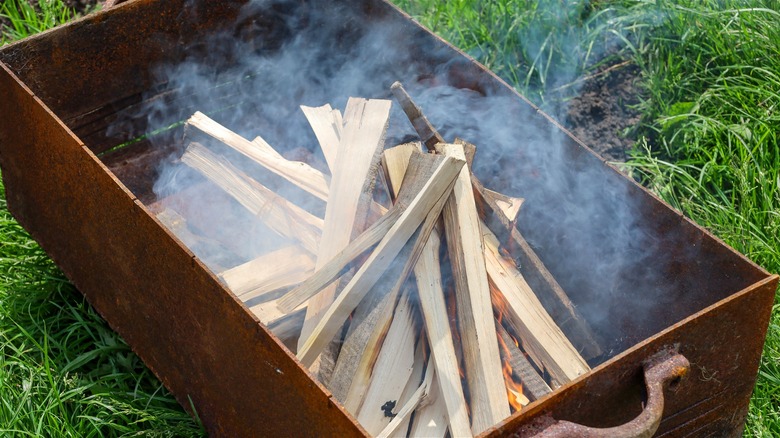
The type of wood you use when grilling and smoking food has a huge effect on flavor, and mastering cooking with wood means trying different kinds. With a little experimentation, you can whip up combinations like the best wood blend for smoked turkey, which uses oak, hickory, pecan, and cherry, many of which may grow abundantly near you. But if you want your food to stay tasty and safe, steer clear of eastern red cedar (Juniperus virginiana), one of the most common conifers in the eastern United States.
Softwoods like eastern red cedar tend to be less dense and contain more resin than hardwoods like mesquite, and this ruins your food in several ways. First, they burn too fast, creating more room for error with temperature. The sap and resin contribute to the production of dirty smoke, a result of incomplete combustion that leaves your meat tasting like ash. Burning the resin in conifers like eastern red cedar could produce compounds like retene, which introduce a harshness to the flavor of your meat. This can also result in creosote, a tarry substance that makes your food taste like turpentine, leaves your tongue feeling numb, and causes you to have to do extra cleaning sessions outside your regular grill maintenance schedule.
While the plant has had a long history in traditional medicine, eastern red cedar contains compounds that can sometimes irritate your skin and lungs, leading some folks to consider it toxic. Cooking methods that produce minimal smoke, like grilling fish on a cedar plank, may not be worth the risk, either.
Eastern red cedar contains potentially harmful compounds
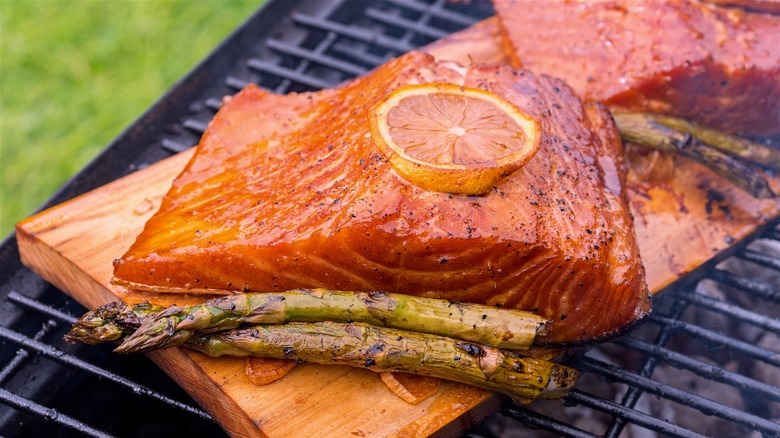
A 2004 study published in Holzforschung found light-colored streaks in eastern red cedar heartwood (also known as "included sapwood") contain the organic compounds thujopsene and cuparene, among others. However, a substance's toxic effects are determined by the amount you're exposed to. We encounter potentially harmful substances in everyday foods like potatoes — just not in concentrations high enough to hurt us. In the case of the compounds found in eastern red cedar, there isn't enough research to confirm whether they can leach into food via contact with the wood's natural oils or in what amount. Research on burning the wood is also limited, so it's hard to tell if hazardous concentrations of any toxic compounds could enter your system during smoking. When it comes to uncertainty about toxins, the safest option is to err on the side of keeping eastern red cedar away from your grill and smoker altogether.
To make something like smoked brisket or plank-grilled bourbon-glazed salmon, go with food-safe woods like maple instead. If you're absolutely adamant about getting some cedar flavor, you can try western red cedar (Thuja plicata), which is considered safe as long as you don't skip soaking the planks in water beforehand. If you plan on cutting the planks yourself, make sure to mask up — the plicatic acid in western red cedar wood dust can cause lung damage, according to a 1989 study published in the Journal of Allergy and Clinical Immunology.