

The First Thing You Should Do Before Buying An IPA Beer At Grocery Stores
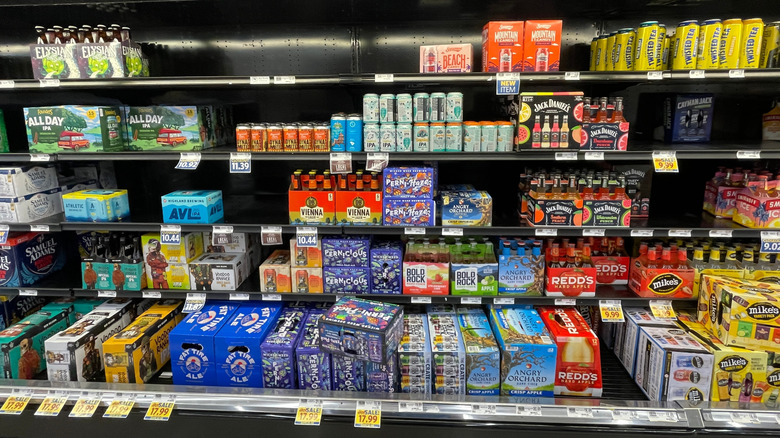
When grabbing a case of IPA (or India Pale Ale) from the store, you might think there are only a couple things to consider, like the price and whether you're in the mood for intensity or juicy haziness. But there's another key factor that a lot of buyers skip: the best-by date. This is the closest indication you have as to whether the product is still amber-hued and full of hoppy, fruity aromas or past its prime with a degraded hops flavor.
Generally speaking, it's safe to drink beer after its expiration date, and cracking open a rogue bottle that's been languishing at the back of the fridge for a while isn't that unusual. But best-by dates are especially important for IPAs, many of which undergo the process of dry-hopping. This means the hops are added late in the brewing process to preserve their scent and flavor, setting off an immediate freshness timer.
This freshness window changes depending on the IPA recipe and brewer. Plus, some breweries prefer to print the bottling date or a packaging code rather than a best-by date, which can lead to further confusion. Put simply, heavily scented and flavored beers are at their punchiest within a month of packaging, while hoppy and double IPAs start to lose their balance as little as three weeks after canning. A widely agreed-upon rule of thumb is to drink IPAs within three months of production.
How to determine if an IPA is fresh
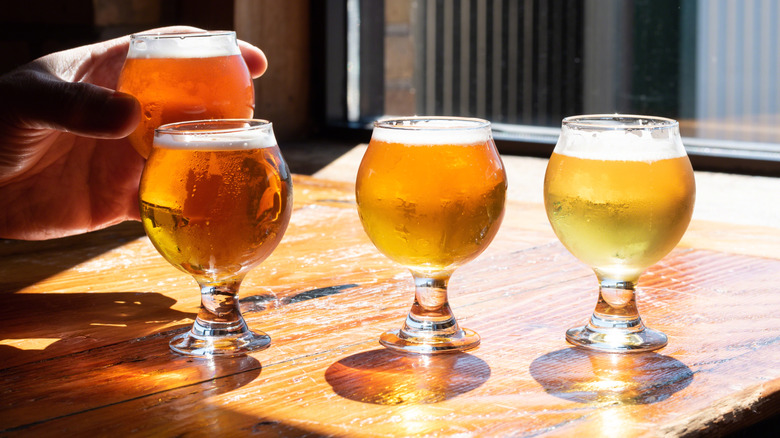
What if — with the elaborate sleeves on some modern cans, like the best IPAs of 2026 so far — the best-before date is illegible? Or there's a production code that's enigma-levels of tough to crack? Maybe you threw a six-pack into your cart while on autopilot, and now you're not so sure about it. Fortunately, you can still figure out when an IPA is at its peak using a few visual and auditory clues.
Firstly, that serotonin-spiking hiss that accompanies the cracking of a beer should always be present with IPAs. If this is nonexistent or a little timid, it could be a sign of a pressure drop and loss of carbonation. This goes hand in hand with a flattened taste.
Speaking of taste, your IPA shouldn't be overly sweet — beer often takes on caramel notes as it ages — nor should there be excess sediment lurking at the bottom. Finally, there's the smell. Cans do a pretty thorough job of blocking out light, but clear bottles can become "lightstruck." This term refers to sunlight spoiling a beer and giving it an off-putting, almost skunk-like whiff.