

How Long Does Ground Coffee Stay Fresh After Opening?
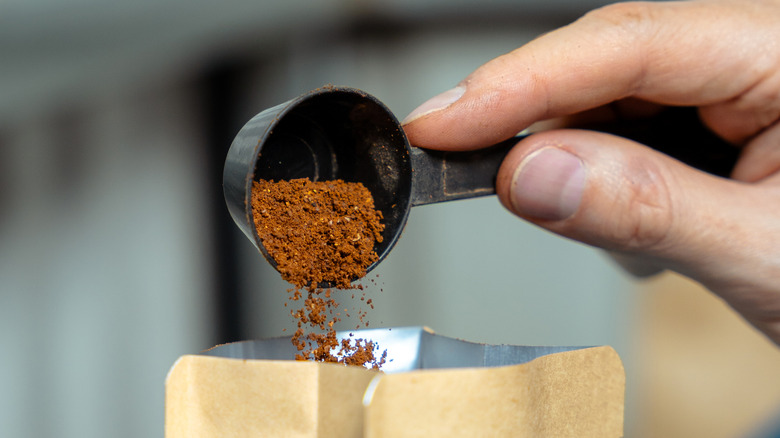
For many Americans, starting the day with a cup of joe is just standard procedure. But unless you're a pro-level barista, you've likely made the common coffee mistake of drinking your morning brew stale. Ground coffee only stays fresh for a week or two after opening. Of course, there are ways to slow that aging process and maintain peak freshness (like keeping it in a resealable container), but the gist is that once the beans are ground and the bag is open, coffee depreciates fast.
This is why those aforementioned baristas know the freshest brews come from grinding whole beans right before brewing. When coffee beans are roasted, they begin a process called "degassing," in which carbon dioxide gradually leaves the bean. This creates a small window for optimum dynamism, flavor, and aroma, but too much or too little of the molecule can result in a bitter or flat taste. Unfortunately, grinding your coffee quickens the degassing process and shortens that window, as it results in a carbon dioxide loss between 40% and 73% (via Journal of Agricultural and Food Chemistry).
That's why pre-ground coffee — sitting in a bag for days, or maybe weeks — is inherently going to taste flatter. Even so, through proper storage and buying tips, it's possible to keep those grounds fresher for longer. (Spoiler alert: Don't put them in the fridge!)
How do you keep ground coffee from going stale?
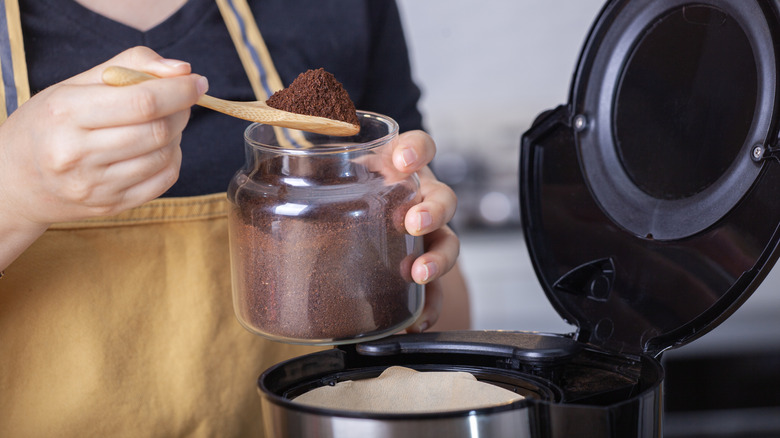
The biggest risk factors for coffee freshness are oxygen, light, heat, and moisture. The protective seal of your ground coffee bag maintains a slower degassing process. So, when you open it at home, oxygen continues to seep in through small crevices and dry out your coffee. Add heat, and this dries out the product even faster. Worth noting if you live in a humid area: Due to coffee's natural tendency to pull in moisture — and the fact that coffee carries mycotoxin, a natural byproduct of mold — it can develop an unpleasant taste.
Storing your grounds in a cool, dark spot and in a resealable container will reduce the negative effects of oxygen, light, heat, and humidity. While storing them in your freezer or fridge seems like a common practice, it's not necessarily the best idea. Because of coffee's porous nature, it will absorb moisture and aromas much quicker than many other foods, which can dry it out faster or influence its taste.
If you want to purchase ground coffee like the pros, check both the expiration date and the roasting date on the packaging. For best results, find a bag with a roasting date that's a few weeks (or less) from the date of purchase.