

8 Leftovers You Should Not Reheat In The Air Fryer
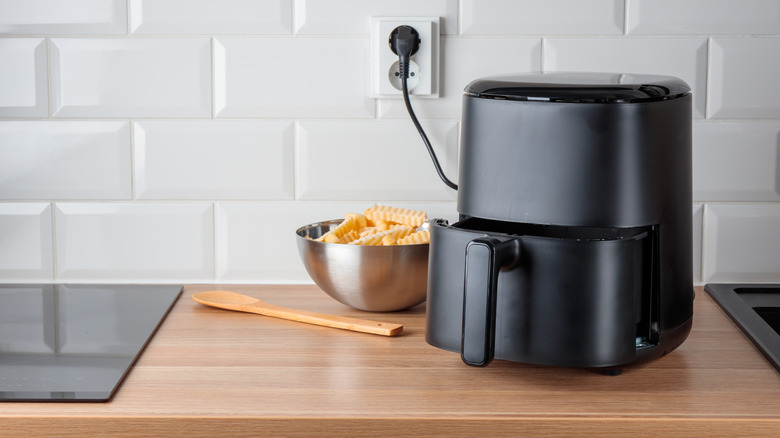
The air fryer is one of the most versatile cooking appliances ever invented. You can use it for baking, roasting, toasting, charring, and crisping. The only trouble some people have with air fryers is that they don't reheat food the way they expect. Take muffins, for example. They come out moist when baked in an air fryer, but when reheated in the same manner, they easily turn dry and crumbly. Similarly, raw salmon cooks nicely in the air fryer, but using it to reheat the leftovers can make the fish dry out completely.
Knowing which food tastes better when reheated in an air fryer helps you make the most of this appliance; knowing what not to air-fry helps you avoid wasting food. And so, we talked to two cooking experts to find out which leftovers should not be reheated in an air fryer.
Michelle Morey has a culinary arts degree, owned a baking business, and creates easy-to-follow recipes for her website, Barefoot In The Pines. We also talked to Sarah Hill, a recipe developer with a master's in public health. She also develops recipes for her website, Real Food with Sarah, featuring ingredients and tools that are staples in most households. With years of professional cooking and culinary experience under their belts, they know best which leftovers are often ruined by air frying. Let's begin.
Thin, lean meats
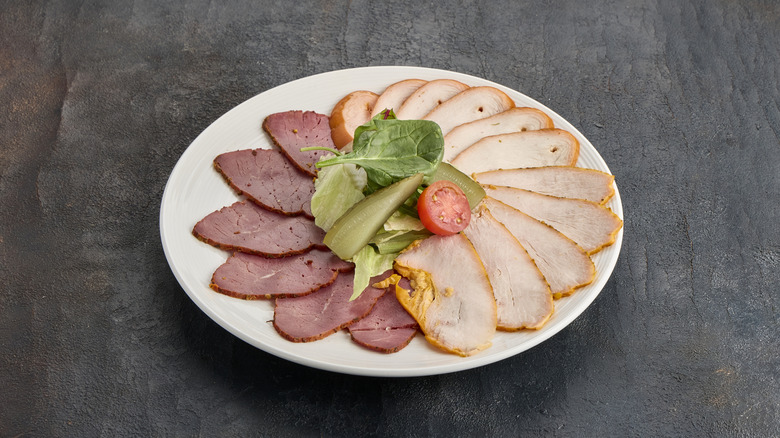
Most people instinctively reheat meat in the air fryer, but it would be a mistake if the meat is lean and cut thinly. "The biggest misconception is that an air fryer works like a deep fryer," Michelle Morey says. "It doesn't. ... A fan moves hot air around the food quickly instead of aiming direct heat at either the top or the bottom." But the hot air doesn't just transfer heat. It also removes moisture from food through evaporation.
This is why the thickness of the meat matters. When it comes to pork chops, for example, the cut and preparation matter for Sarah Hill. "A thick, breaded chop is a better candidate than a thin, lean, unbreaded one, which can become tough quickly," Hill says. But what about sprinkling water or brushing some oil on leftover meat, which some people believe will keep the food moist? Well, Hill says that doesn't really work. "Oil can help the surface crisp, but it doesn't replace moisture already lost from the center," she says. "With an air fryer, temperature, time, and the type of leftover matter more than brushing something on."
So, what should you avoid reheating with an air fryer? Hill says thin, lean meats like sliced chicken breast and boneless pork chops are a no-no. It doesn't take much to overcook and make them tough and dry.
Creamy pasta
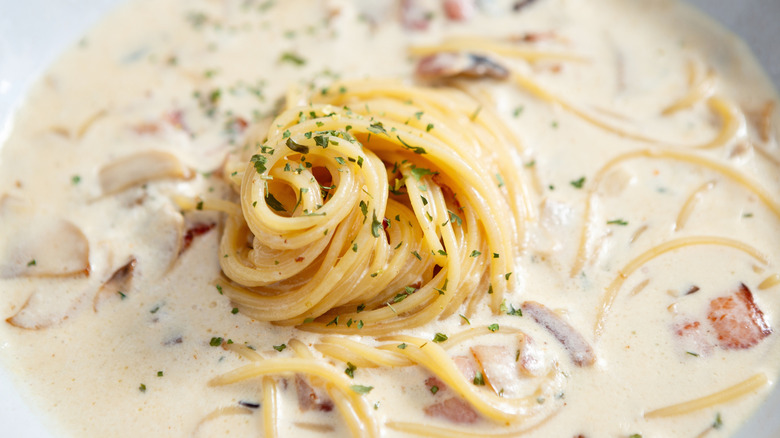
Creamy carbonara, cacio e pepe, fettuccine Alfredo — these delicious, saucy pastas are best eaten freshly cooked. But just in case you have leftovers from a restaurant or someone in the family cooked too large a batch, here's what our experts say about reheating leftovers with your air fryer: Skip the pasta.
"Pasta gets dry and overcooked in the air fryer," says Michelle Morey. True enough, some people have made this mistake, and they shared their dismal, dark results online. Someone on Reddit, for example, showed a photo of reheated spaghetti fresh out of the air fryer. The exposed noodles had been burned black. It would be better to reheat pasta in a microwave, but if it is leftover pasta bake, Morey says warming it in the oven is the best way.
Sarah Hill is also iffy about reheating pasta in the air fryer, especially creamy seafood pasta. "You're trying to protect three different things at once," she says. "Tender seafood, soft pasta, and a smooth sauce. The air fryer's dry, circulating heat makes that difficult." Hill says it would be better to reheat creamy seafood pasta in a skillet over low heat, with a splash of liquid and careful stirring to ensure even heating.
Deep-dish casseroles
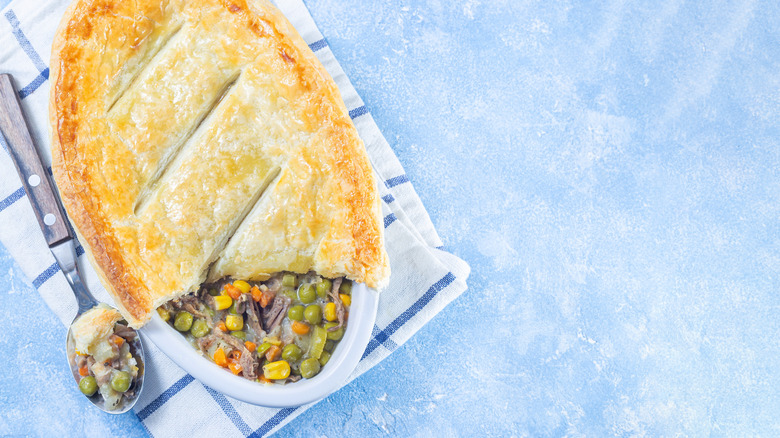
An air fryer is fundamentally a convection oven. Knowing that it's possible to use it to bake, broil, roast, and basically cook food the same way one does with an oven, many people see both appliances in the same light. And so, it's not entirely unusual that some people use air fryers to reheat casseroles.
However, the first step to reheating a casserole in an air fryer is finding a proper pan that fits, and that is a challenge in and of itself. It should be thick enough to hold the amount of heat required to warm up a deep-dish casserole, safe enough to use in an air fryer without cracking or breaking, and free of harmful chemicals that could leach into the food. All of these requirements are reason enough not to use an air fryer, in Michelle Morey's opinion. Besides, it may not even reheat the dish well. "They take forever to reheat, and I always burn their tops in the air fryer," she says.
Sarah Hill may allow air-frying for leftover casseroles, but only for a specific situation. "A shallow portion with a crisp topping can work in an air-fryer-safe dish," she says. "But a deep, creamy casserole is better reheated covered in the oven or in portions in the microwave."
Unbreaded seafood
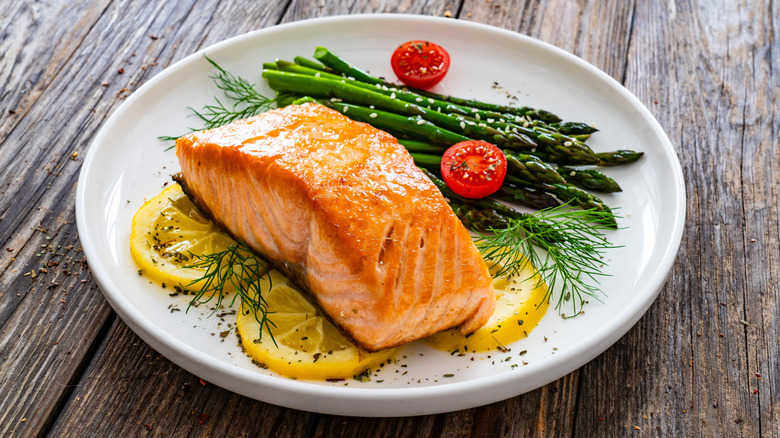
Most types of seafood cook very quickly. They have mild flavors that are easily overwhelmed by spices, condiments, and even the way they're cooked. This is why reheating leftover seafood is tricky; it's easy to overcook it, and adding liquids and sauces to keep it from becoming dry and rubbery can change the dish's flavor profile entirely.
"[Air-frying] already-cooked fish comes out tasting fishier and tough[er]," Michelle Morey says. Of course, there are ways to make this happen without completely spoiling the fish, such as wrapping the leftovers in foil and using air fryer settings designed specifically for seafood. But it probably won't taste as good. In fact, it might be better not to reheat fish at all and simply let it come up to room temperature. Morey has one condition before she'd consider reheating fish in an air fryer: It should be breaded. And she would "watch it like a hawk."
Sarah Hill has a slightly different opinion, though. She thinks reheating leftover fried fish in the air fryer is acceptable because it would have been cooked to have a crispy exterior. Air frying will restore its original crispiness. But, like Morey, she says it's important to keep an eye on it the entire time. "I'd watch it closely since the fish underneath can dry out quickly," she says.
Thanksgiving sandwiches
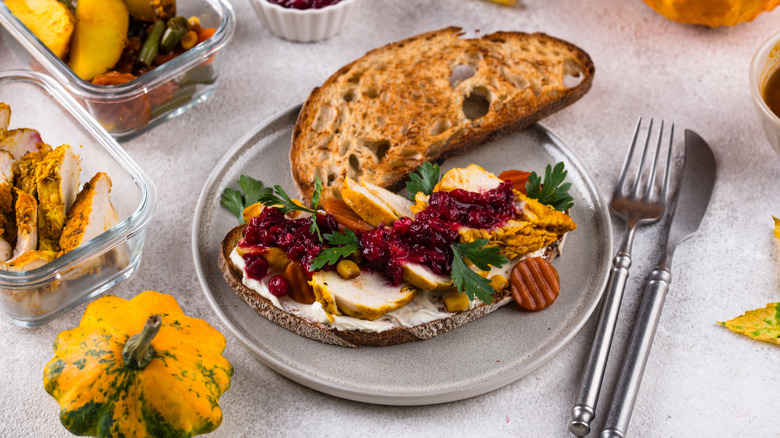
In most households, making sandwiches from Thanksgiving leftovers is just as much a tradition as the dinner itself. The leftover roast gets shredded, and any other leftovers that make sense in a sandwich — greens, olives, avocados, cheeses, salami, salad dressing, you name it — are all stuffed into sandwiches. Everyone does this, including celebrities and famous chefs who love making gourmet sandwiches from leftover turkey.
But while making sandwiches is one of the best ways to deal with Thanksgiving leftovers without wasting food, what if you have so much food that you end up with leftover sandwiches? The honest answer is probably: Don't reheat them, just eat them cold. "[Thanksgiving leftover sandwiches] are tough because they need to be open face-up to reheat at all," says Michelle Morey. These exposed sides inevitably become crispy, and any dressing or meat close to these sliced sides will dry out. This is honestly not too bad, but if the sandwich is thick and packed, Morey says the tops and sides could burn before the inside warms through.
Shredded meat
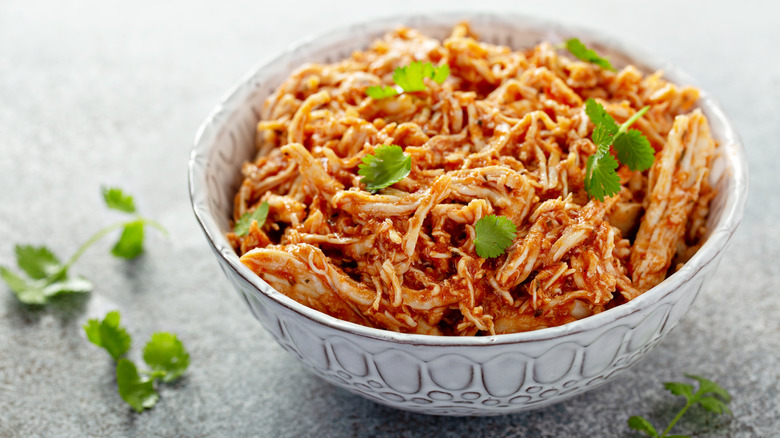
Speaking of Thanksgiving leftovers, it is common to have some roast chicken, stuffed pork loin or pork chops, glazed ham, and pot roast left over, especially if you had a big family dinner. Some would simply stuff the leftovers of each dish in food-safe Ziploc bags, then chuck them straight into the freezer. Of course, there are better ways to store Thanksgiving leftovers, and one of them is shredding the leftover meat.
You can use the shredded leftovers for sandwiches, as previously discussed, or cook them into stews or casseroles. But no one really wants to do more cooking the day after Thanksgiving, so some people will just reheat and eat their leftovers as is. If you find yourself in this situation and you have shredded roast chicken, pork, or beef in the fridge, don't use the air fryer to reheat it. "The air fryer will just turn it to jerky," cautions Michelle Morey. Her advice? Just use the microwave or bake the shredded meat in the oven with chicken broth. The former is the simplest and fastest way to reheat the leftovers, and the latter might inspire you to get creative and whip up a whole new dish.
Stuffed or rolled food with unsealed ends
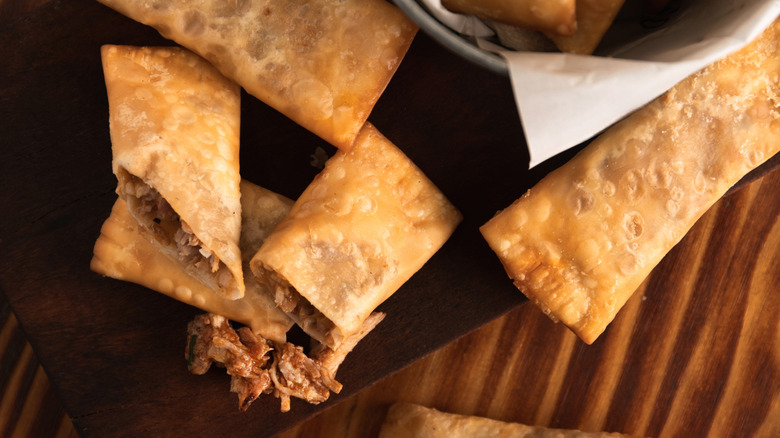
When we asked Michelle Morey if there's anything in particular that she wouldn't even think of reheating with an air fryer, she mentioned stuffed foods with an open end or anything that could burst open while heating. But it's not because they don't reheat nicely in an air fryer; it's because they usually leave behind a huge mess.
"The filling ends up in the bottom of the basket," Morey says. Ramekins and small baking dishes would be useful for containing the fillings, but Morey found that the glaze of these bowls develops tiny cracks. This can also apply to fried food with open ends, such as spring rolls or chiles rellenos. Fried food ordinarily reheats really well in an air fryer. Breaded fried food, in particular, retains oil, which makes the exterior crispy again (or crispier) once reheated.
According to Sarah Hill, fried food will be good as new if you arrange the pieces in a single layer, leave some space in between for hot air to circulate, and air-fry starting at 325 degrees Fahrenheit (for safety reasons, reheated leftovers should reach 165 degrees Fahrenheit before consumption, according to the USDA). But if there's a chance that the hot air will blow the fillings out and make a mess inside the basket, you can use the microwave or reheat the food on the stove instead.
Saucy food
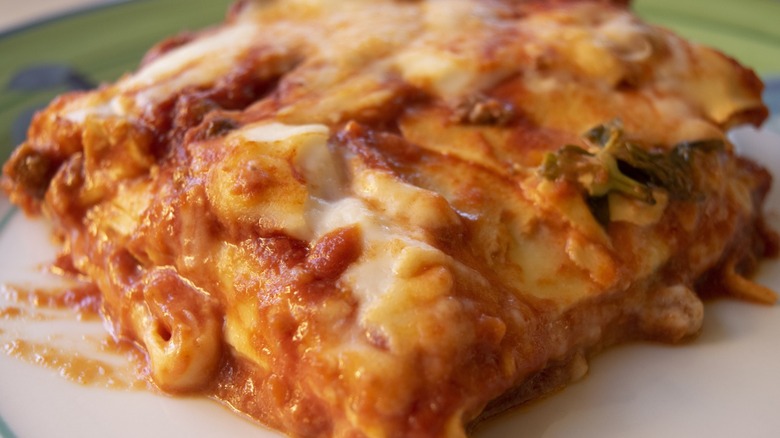
Many people like to reheat sauced chicken wings in an air fryer, which works because most sauces burn just enough to caramelize and develop a sharper flavor that many find delicious. But if the leftovers you want to reheat are drenched or have sauce that runs when heated, such as leftover lasagna, the air fryer may not be the best appliance for reheating. "Air fryers don't handle wet food well, and most baskets are full of holes," Michelle Morey warns. "Anything saucy just drips through."
Besides creating a mess that you'll have to clean up afterward, some sauces do not hold up well under a strong blast of hot air. Sauces with lots of fat or dairy, for example, can split or break their emulsion under high heat. This means the fat or dairy globules in the sauce will curdle or clump together, leaving behind a runny, diluted sauce that can splatter or simply evaporate. Once the sauce breaks, the other components of the dish often become exposed and more prone to overcooking and burning. Here is an important final takeaway from Sarah Hill about air-frying creamy food: "The air fryer is useful, but it doesn't need to handle every leftover in the fridge. If the food should be crisp, the air fryer is often a great choice. If it should be creamy, saucy, or delicate, another method will usually give you a better result."